.jpg)
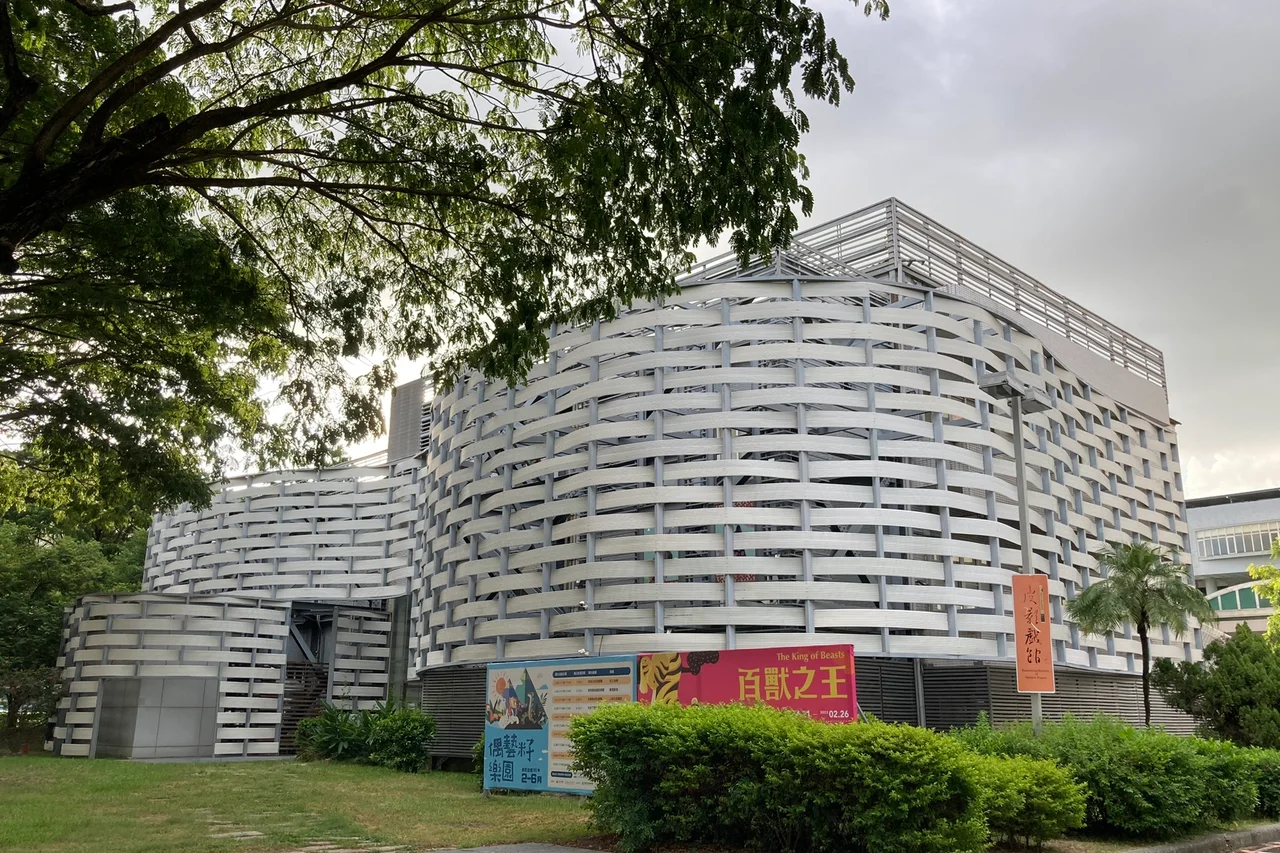
Kaohsiung Museum of Shadow Puppet
Behind a screen, a light source, and a pair of skilled hands lies one of Taiwan's oldest performing arts — and in Gangshan District, north of Kaohsiung, there is an entire museum built around it. Shadow puppetry, known in Chinese as pi-ying xi, arrived in southern Taiwan centuries ago and took particular root in the Kaohsiung region, where at its peak dozens of troupes performed at temple festivals and community celebrations. Today the Kaohsiung Museum of Shadow Puppet is the only institution in Taiwan dedicated entirely to this art form — a single building standing watch over an ancient tradition that once lit up village nights across the island's south.
The Art That Light Made Possible
Shadow puppetry is one of the oldest theatrical traditions in Chinese culture, and the form that took hold in southern Taiwan drew primarily on influences from Fujian province across the strait. The puppets are intricate figures cut from animal hide — traditionally cowhide or donkey hide — treated, dyed, and etched with extraordinary detail. Articulated at the joints, they are operated against a backlit white screen, their silhouettes performing stories drawn from folklore, history, and mythology. What makes Taiwan's shadow puppet tradition distinctive is how thoroughly it localized: the Kaohsiung area developed its own performance styles, its own puppet-making techniques, and its own repertoire of tales. Gangshan District, where the museum now stands, was historically one of the heartlands of this tradition. The flat, fertile plains of northern Kaohsiung supported dense communities of artisans and performers who passed their craft down through families over generations.
A Museum Built by Intention
The museum did not emerge spontaneously. It was the result of deliberate cultural policy stretching back to 1986, when Kaohsiung County Government began researching how to preserve and present the region's shadow puppet heritage — responding to guidance from the Council for Cultural Affairs and the Taiwan Provincial Government. Plans were proposed in 1987, the building was designed in 1988, and construction ran from 1991 to 1993. The museum opened officially on 13 March 1994. The building was designed by Chiu Kun-liang and organized across four floors and a basement, housing eight distinct sections: a lobby, a performance area, an exhibition area, a digital shadow play theater, an experience area, a reference room, a promotion and research center, and a creative cultural product area. The variety of spaces reflects a deliberate philosophy — this is not just a place to look at old things, but a place to understand, experience, and carry forward a living craft.
After the Storm
In September 2010, Typhoon Fanapi struck the Kaohsiung region, and the museum building sustained damage significant enough to require closure. For nearly eighteen months the museum was shuttered while repairs were carried out. It reopened in March 2012. The closure was a reminder of how vulnerable cultural institutions can be to the weather events that repeatedly test Taiwan's southern coast — typhoons arrive each summer with enough force to reshape the landscape and test every structure that stands in their path. The reopening brought the museum back to its role as a working cultural space, not just an archive. Visitors today can watch live performances in the dedicated theater, try their hand at operating puppets in the experience area, and examine the historical collections that document how troupes worked, traveled, and survived across generations of social change.
Walking Distance to History
The museum sits within easy walking distance south of Gangshan Station, served by both the Taiwan Railway and the Kaohsiung Metro — a piece of practical geography that means Taiwan's most specialized performing arts museum is also one of its most accessible. Gangshan itself is a mid-sized district with a strong military heritage, home to the Republic of China Air Force Academy just a few kilometers away. The juxtaposition is unexpectedly fitting: both institutions exist because of deliberate decisions to locate specialized training and preservation here, in the flat, open terrain north of the main Kaohsiung urban core. For a traveler connecting the two sites, the district offers a different kind of story about how southern Taiwan has held onto the past while building for the future.
Why It Matters Now
Shadow puppetry in Taiwan faces real challenges. The number of active performance troupes has declined sharply from the peak decades of the mid-twentieth century, when festivals and ceremonies provided reliable work for dozens of groups across Kaohsiung County. Television, and later digital entertainment, drew audiences away. The troupes that remain are often run by aging masters whose successors are fewer than their teachers would have hoped. The museum's existence is partly an acknowledgment of this vulnerability. The reference room and research center are not accessories — they are survival infrastructure for an art form that might otherwise slip away. The digital shadow play theater attempts something genuinely ambitious: translating an ancient form into new media without losing what makes it compelling. Whether that translation fully succeeds is a question each visitor gets to answer for themselves.
From the Air
The Kaohsiung Museum of Shadow Puppet sits at approximately 22.783°N, 120.298°E in Gangshan District, about 25 kilometers north of central Kaohsiung. Flying into RCKH (Kaohsiung International Airport), look north from the Kaohsiung metro area: Gangshan's flat agricultural plain is visible on the left (west) bank of the lower Zengwen River drainage. The ROC Air Force Academy, just west of the museum, is a recognizable complex from the air. Recommended viewing altitude: 2,000–4,000 feet MSL for a clear orientation to the Gangshan urban grid against the surrounding farmland. The Central Mountain Range rises sharply to the east, providing dramatic backdrop.
Nearby Stories
- Huang Family Historical Residence 3.1 km away
- Taivoan Language 9 km away
- Zhiben Hot Spring 12 km away
- Bunun Cultural Museum 26 km away
- Dongji Island 33 km away
- South Penghu Marine National Park 58 km away
- Orchid Island 79 km away
- Hong Kong 12 550 km away