
Kerma Museum
In 2003, in a ditch at Dukki Gel near the ancient city of Kerma, Charles Bonnet's archaeological team uncovered seven black granite statues. They had been deliberately smashed, pushed into a pit, and buried - an intentional, thorough act of iconoclasm carried out sometime in antiquity. Astonishingly, the pieces were nearly all there. The statues were reassembled. They turned out to be portraits of five Nubian kings who had ruled as the 25th Dynasty of Egypt: Taharqa, Tanwetamani, Senkamanisken, Anlamani, and Aspelta. Today they stand together in the central room of the Kerma Museum - Black Pharaohs who once ruled from Memphis to Khartoum, buried by someone who wanted them forgotten, and brought back to the same ground they were made for.
A Building Like a Vault
The Kerma Museum opened in 2008 directly in front of the Western Deffufa, the massive adobe temple that is the signature landmark of the ancient city. The building was designed by Dr. Abdullah Sabbar, a Sudanese architect originally from the Nubian region, who drew its form from the traditional Nubian vault - a graceful arched roof laid up in mud brick without any centering or temporary support, a technique still used in Nubian villages today. The result is architecturally honest to the place. Instead of a glass-and-steel box set down on historical ground, the museum reads as an extension of the older building traditions it is there to explain. North of the museum is a small hotel and garden. To the south, plans called for a cultural center for Nubian studies.
Five Kings, Seven Statues
The highlight of the collection is the statue hall. The seven reassembled pieces portray the late 25th Dynasty and early Napatan rulers: Taharqa, Tanwetamani, Senkamanisken, Anlamani, Aspelta. These are the Kushite kings who took Egypt and held it for three generations - Taharqa fought wars as far north as the Levant against the Assyrians, Tanwetamani was the last 25th Dynasty king to hold Egyptian territory. The statues are in remarkable condition: deliberately broken in antiquity, yes, but the pieces had all stayed together in the same pit, so the reassembly recovered the original forms nearly in full. To see them is to see the distinctive Kushite royal portrait style - braced stance, double uraeus crown, features carved with precision in black granite - displayed in the same landscape where these kings were raised.
A Panorama of Sudanese Archaeology
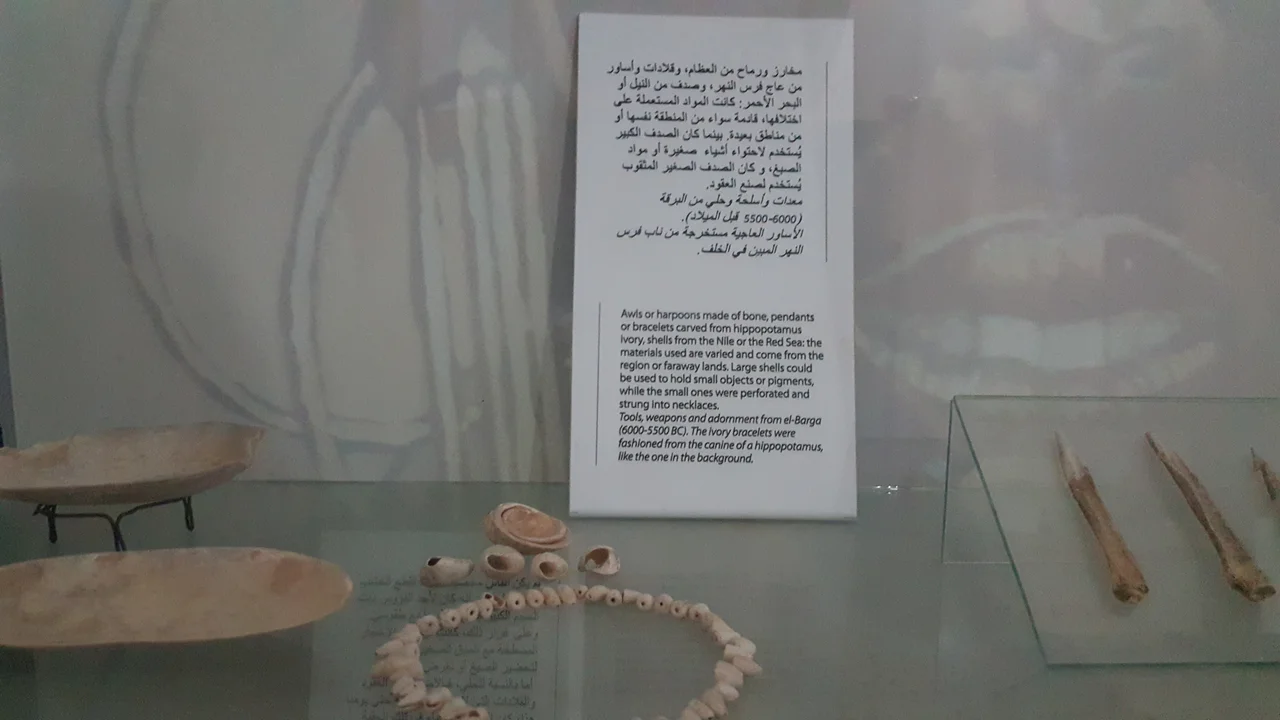
Beyond the statues, the museum presents an overview of Sudanese archaeology from prehistory onward. Pottery from different Kerma periods lines the cases. Items from the Napatan and Meroitic kingdoms, which succeeded Kerma and inherited parts of its territory, round out the picture. The exhibits draw heavily from the fieldwork and research of the Swiss Archaeological Mission under Charles Bonnet, who excavated at Kerma from 1977 to 2003 - the team whose patient work reshaped scholarly understanding of the site from "Egyptian outpost" to "Nubian capital." The museum attracts more than 30,000 visitors a year. For a site in a remote stretch of northern Sudan, that is an unusual number - and it signals how much the people of Kerma value a place that returns their deep history to them, on their own ground.
Heritage Under Siege
Kerma is in Sudan's Northern State, on the east bank of the Nile some 60 km southeast of Dongola. Sudan has been in civil war since April 2023, and the country's museums and archaeological sites have suffered - some looted, some damaged, some their collections scattered. The Kerma Museum, relatively remote from the major conflict zones of Khartoum and Darfur, has remained a bright point: cultural infrastructure tied directly to a deep and continuous Nubian identity. The museum's role is not only to display artifacts but to insist, visibly, that this civilization existed and is still here. From the air, Kerma itself shows as a wide archaeological zone along the Nile - the Western Deffufa rising 18 meters out of the plain, the modern museum in its arched silhouette a short walk away, and beyond both the vast cemetery with its 30,000 graves stretching into the desert. The land remembers. The museum is one of the instruments of that memory.
From the Air
Coordinates 19.60°N, 30.41°E, at the archaeological site of Kerma in Sudan's Northern State. The museum sits directly in front of the Western Deffufa. Nearest airport is Dongola (HSDN), about 60 km northwest. Recommended viewing altitude 2,000-5,000 feet to see the Deffufa, the museum, and the expansive necropolis.
Nearby Stories
- Dongola Reach 13 km away
- Sabu-Jaddi 15 km away
- Nubia 80 km away
- Napata 150 km away
- Selima Oasis 177 km away
- Semna (Nubia) 182 km away
- Northern State (Sudan) 197 km away
- Lake Ptolemy 407 km away