
Kunstmuseen Krefeld
Two hundred Deutsche Marks. That is what the director of a small museum in a Rhineland silk town paid in the late 1950s for two paintings by Piero Manzoni. Five hundred Deutsche Marks bought a Yves Klein. Paul Wember had almost no acquisitions budget at the Kaiser Wilhelm Museum in Krefeld. So he bought what no one else wanted yet - and within a decade his three buildings would be hosting some of the most radical exhibitions in postwar European art, in two private homes that one of the twentieth century's greatest architects had designed for a pair of silk manufacturers in 1928.
The Silk Merchants' Houses
Hermann Lange and Josef Esters ran textile mills in Krefeld. In the late 1920s, both commissioned new villas on adjoining lots on the Wilhelmshofallee, and both chose the same architect: Ludwig Mies van der Rohe, then vice president of the Deutscher Werkbund. Built between 1928 and 1930, Haus Lange and Haus Esters are two of Mies's most important early houses - long, low brick volumes with sweeping plate-glass windows that dissolve the wall between interior and garden. Hermann Lange's son Ulrich grew up in Haus Lange. In 1955, with the family no longer needing it, Ulrich offered his childhood home to the city of Krefeld free for ten years as an exhibition venue. The condition was simple: contemporary art only.
The Director Who Bought the Future
Paul Wember had been director since 1947. He was buying Romantic drawings and Impressionist sheets to round out gaps in the collection - normal work for a provincial museum on a shoestring. Then Haus Lange opened in 1955, and Wember found himself with a domestic-scale building that no traditional museum hang would suit. Mies's open plans demanded artists who could think spatially. So Wember went to the gallerists - Alfred Schmela in Düsseldorf, Rudolf Zwirner in Cologne - and bought what was selling cheap because nobody had yet decided it mattered. A first Yves Klein for 500 marks. Two Piero Manzonis for 200. Works by Tapies, by Joseph Beuys, by Lucio Fontana. He gave Klein his first - and as it turned out, only - museum retrospective during the French artist's lifetime, in 1961.
Yves Klein Sets the Garden on Fire
For that 1961 retrospective at Haus Lange, Klein lit temporary fire columns in the garden. He also took a small chamber, seven square metres of floor area, and whitewashed it in a grainy white he had mixed himself. That room - the Raum der Leere, the Room of Emptiness - exists today exactly as he left it. A year later Klein was dead at thirty-four. The pattern he established held: artists came to Krefeld and treated Mies's buildings as collaborators. In 1971, the Austrian collective Haus-Rucker-Co covered Haus Lange in an inflatable shell for an environmental exhibition. The same year, Christo wrapped its floors and walkways in fabric. In 2009, John Baldessari covered the great windows with photographic images of bricks, making the glass look solid from outside.
The Beuys Block
Joseph Beuys was born in Krefeld in 1921. His first commission, a small fountain for the Krefelder Edelstahlwerke in 1952, came through Paul Wember. Across the next twenty-five years the museum quietly acquired fifty-three further Beuys works. The centrepiece is the Barraque D'Dull Odde, bought in 1971 - a double shelf with lectern and seating into which Beuys had gathered, in his own arrangement, the relics of his artistic life. In February 1977 the artist himself spent two days and nights dismantling the work in its old room, then reassembling it in a newly whitewashed gallery where the windows had been covered over. He added a second room of installations in 1984. When a collector tried in 2010 to withdraw five Beuys pieces that completed the ensemble, the state of North Rhine-Westphalia stepped in to keep the group intact.
How to Visit
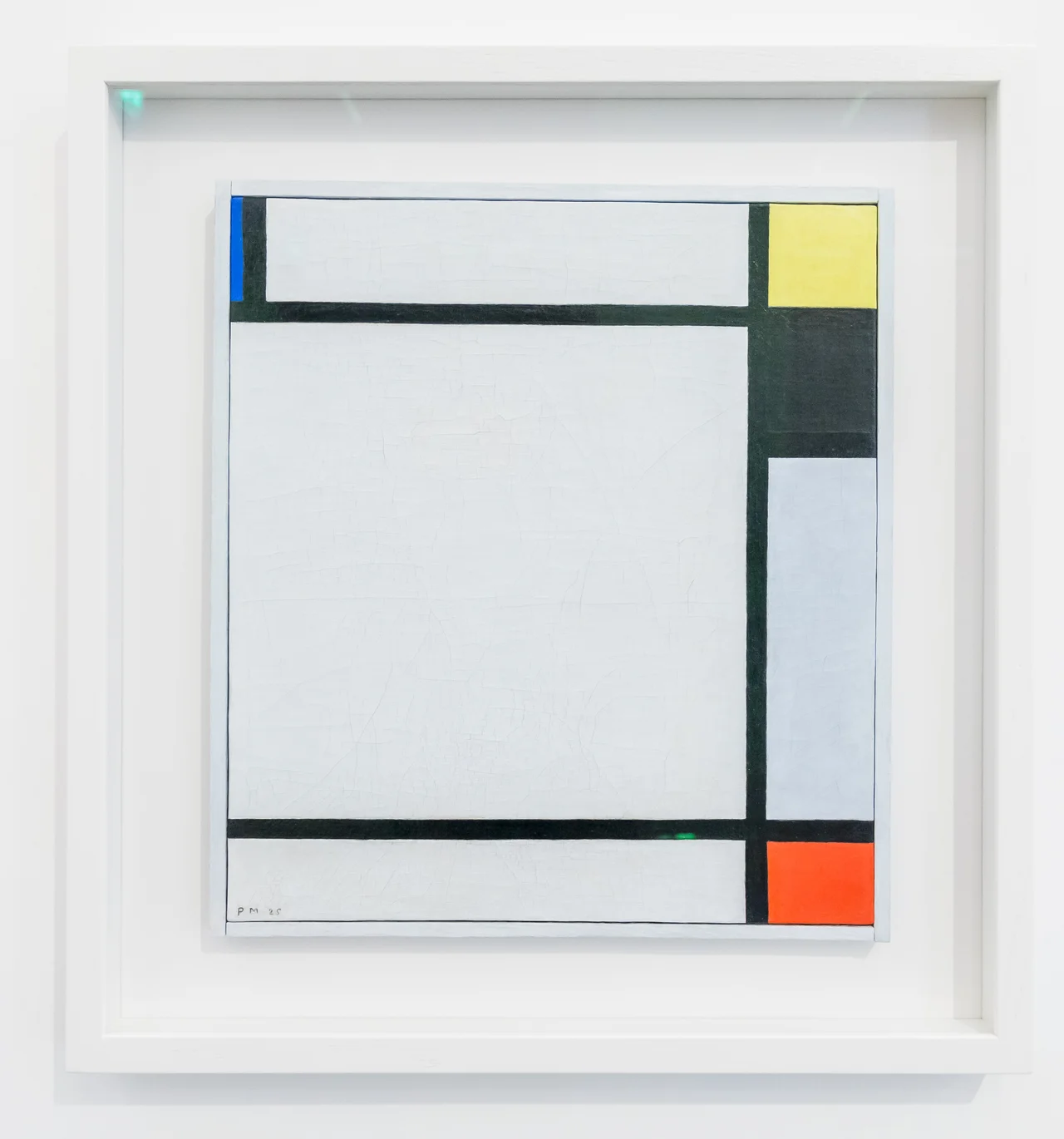
The Kunstmuseen Krefeld is three buildings under one administration. The Kaiser Wilhelm Museum in the city centre, founded in 1897 and renovated 2012-2016, holds the permanent collection: the Beuys Block, paintings by Monet and Mondrian, twelve thousand drawings and prints in the Graphic Studies Cabinet. A few kilometres south, Haus Lange and Haus Esters sit side by side on quiet residential streets, still showing rotating exhibitions of contemporary art. The whole institution has been led since 2016 by Katia Baudin, previously deputy director of the Museum Ludwig in Cologne. Walk the garden at Haus Lange and you can still find Yves Klein's white room exactly where he left it - sixty-five years of contemporary art history, preserved in seven square metres of carefully grained paint.
From the Air
The Kunstmuseen Krefeld span two locations. The Kaiser Wilhelm Museum stands at 51.330 N, 6.559 E in central Krefeld; Haus Lange and Haus Esters lie about 1.5 km south at the Wilhelmshofallee. From the air the museum complex is hidden among Krefeld's leafy southern villas. The nearest international airport is Düsseldorf (EDDL/DUS), 23 km southeast; Mönchengladbach (EDLN) lies 18 km southwest. The Rhine bends 8 km to the east. Best viewed at 1500-2500 ft AGL when light catches the long brick facades of the Mies villas.
Nearby Stories
- Krupp Decoy Site 6.2 km away
- Ysselsteyn German War Cemetery 8.2 km away
- Unterburg trolleybus turntable 8.2 km away
- Düren-Neuss railway 8.5 km away
- Mook en Middelaar 10 km away
- Haldern Pop 11 km away
- Maaseik 15 km away
- Gerleve Abbey 33 km away