.jpg)
Leigh Creek, South Australia
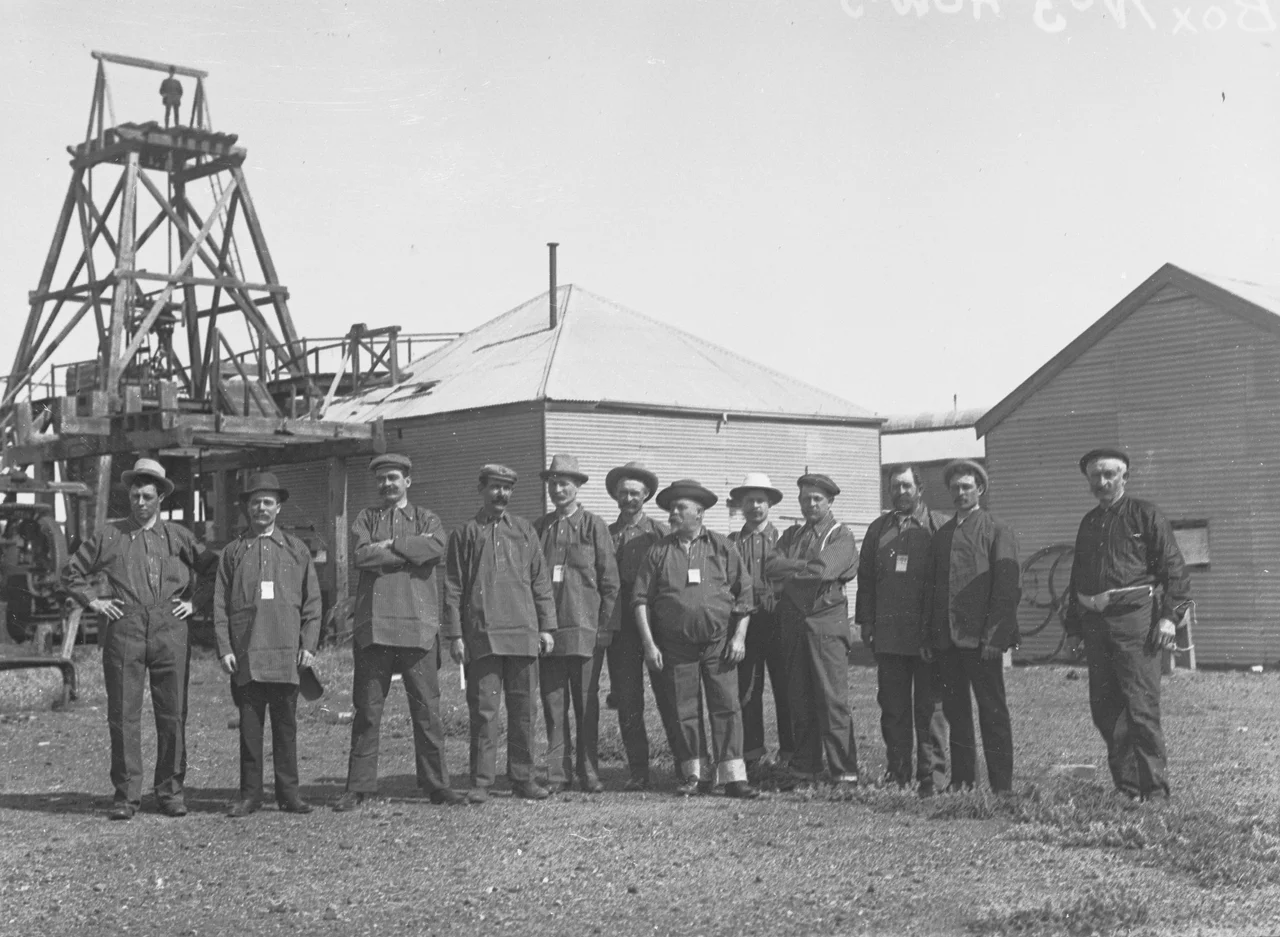
There are towns that die slowly, and there are towns that are physically picked up and relocated to get at what lies beneath them. Leigh Creek is the second kind. In the early 1980s the entire town was abandoned and rebuilt a few kilometres away, because the brown coal South Australia needed ran directly under the old streets. For decades that coal fed the state's power stations and kept the lights on. Then, in 2015, the mine closed for good - and the carefully relocated town found itself a settlement in search of a reason to exist.
Coal for a Self-Reliant State
The seams here are a low-grade, sub-bituminous coal - hard brown coal, miners call it - lying in nested, bowl-shaped beds several metres thick. It had been known since the 19th century but went largely unworked until the 1940s, when a single political anxiety changed everything. Premier Thomas Playford wanted South Australia free of its dependence on New South Wales coal; to attract industry, the state had to be seen standing on its own energy. Commercial mining began in earnest in the 1940s, and Leigh Creek's coal was loaded onto trains and hauled some 250 kilometres south to the power stations near Port Augusta, on Spencer Gulf. For seventy years, that black freight kept moving.
The Town That Moved
To mine the coal beneath the original township, the whole settlement had to go. Construction of a new Leigh Creek began in 1979; by 1980 the first family had moved in, and by 1982 the old town was emptied and flooded behind a retention dam. At its peak in 1987 the relocated town held around 2,500 people. Then came the long contraction. Restructuring cut a workforce of over 750 down to roughly 200. When Alinta Energy announced it would close its Port Augusta power stations, Leigh Creek's only customer vanished with them. Mining ceased on 17 November 2015, and the last coal train rolled south in 2016. By the 2016 census just 245 people remained - a town built for thousands, gone quiet.
Bringing the Wallabies Home
Not every story here ends in decline. South of the town, at Aroona, lies one of Australia's great quiet triumphs of land repair. By 1985 the country around Aroona Dam had been wrecked - stripped bare by rabbits and feral goats, the soil eroded to a talcum-fine dust that spawned visible dust devils and silted the dam. A rehabilitation program launched that year cleared the feral animals, controlled the erosion, and let the native bush return; over a million trees and shrubs came back. The recovery was complete enough that in 1996 the Aroona sanctuary became the site of the world's first release of captive-bred yellow-footed rock-wallabies - a vivid, surefooted little marsupial that had been hunted and competed out of the area, now bounding once more across the rehabilitated slopes.
What Comes After Coal
A mining town without its mine has to reinvent itself or fade. Leigh Creek has tried both. Proposals surfaced to extract gas from the abandoned coal seams by igniting them underground - a controversial technique that drew strong scrutiny. The town remains a service hub for the surrounding pastoral stations, Aboriginal communities and travellers pushing north into the outback, sitting as it does on Adnyamathanha country in the state's Far North. It is a place that has been moved, downsized, and left half-empty, yet still hangs on - a monument both to a state's hunger for energy and to the strange afterlife of a town that outlived its purpose.
From the Air
Leigh Creek sits at 30.58 degrees south, 138.40 degrees east, on the arid plains of the northern Flinders Ranges. From the air the scars of the open-cut mine and the relocated town's geometric street grid stand out sharply against the surrounding red, scrub-dotted country, with the ranges rising to the south and east. Leigh Creek Airport (YLEC) is right at the town and is the principal sealed airstrip for the whole northern Flinders region; Hawker (YHAW) lies to the south and Port Augusta (YPAG) is the main regional gateway. Recommended viewing altitude is 4,000-7,000 ft AGL to take in the mine void, the dam, and the line of the ranges together. Inland visibility is usually excellent, but expect strong summer thermals, heat haze and blowing dust by mid-afternoon; mornings are calmest.
Nearby Stories
- Farina railway station 20 km away
- Nilpena Ediacara National Park 20 km away
- Mount Chambers Gorge 46 km away
- Arkaroola 50 km away
- Beverley Uranium Mine 71 km away
- Marree Man 85 km away
- Olympic Dam mine 91 km away
- Port Augusta 193 km away