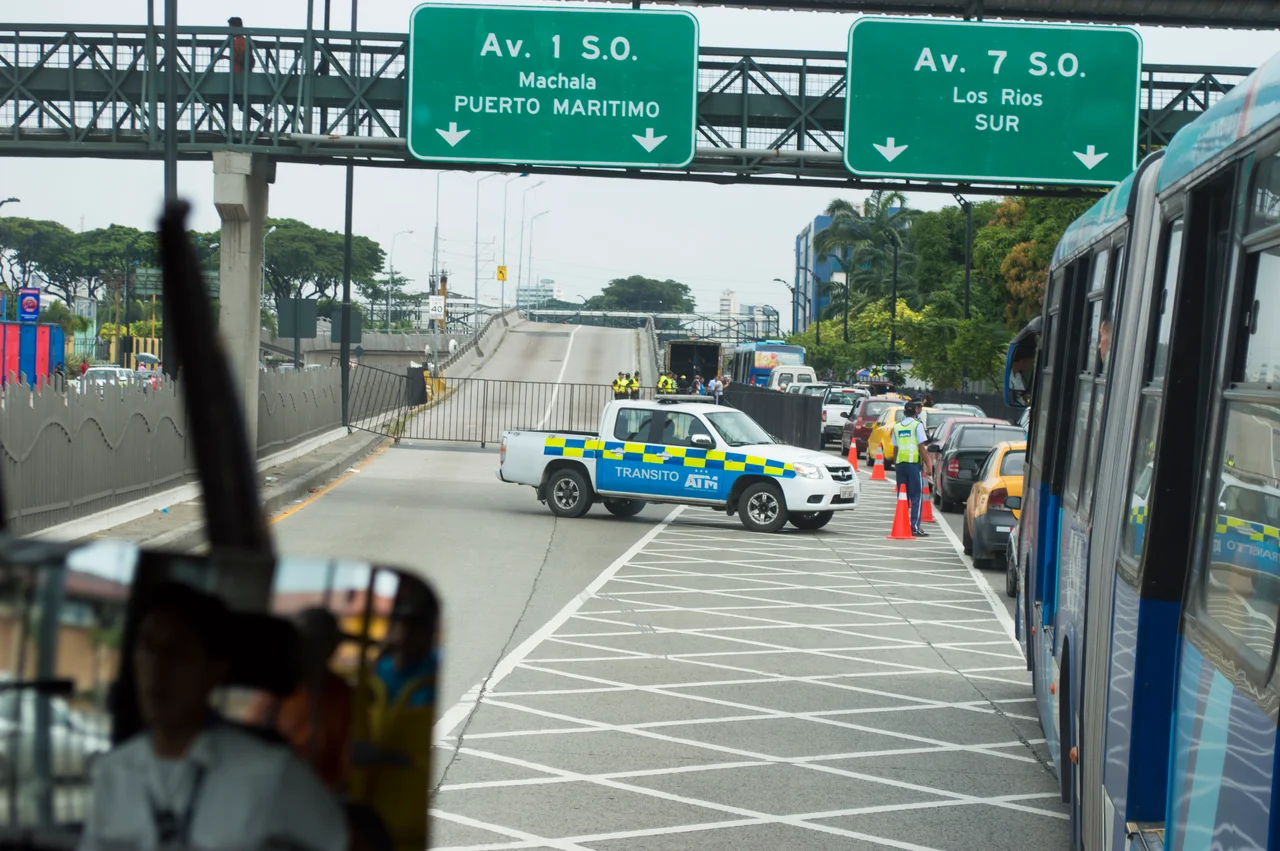

Machala
The bananas you ate this morning almost certainly started their journey here. Machala calls itself the Banana Capital of the World, and the title is not quite the polite exaggeration most towns reach for when they need a slogan. Ecuador is the planet's largest exporter of bananas, and the green fruit funneling out of the country passes through the port of Puerto Bolivar just west of the city center. The ships tie up, the fruit goes on, and two weeks later the cardboard boxes arrive in Pittsburgh and Portland and Los Angeles. In a roundabout near La Piazza, a statue of El Bananero stands with a stalk of fruit on his shoulder, monument to the industry that built this place.
The Fruit and the Port
Puerto Bolivar sits twenty minutes west of downtown by bus, a working port with seafood restaurants lining the waterfront and cranes hoisting pallets onto container ships. The bananas arriving here start their trip from farms spread across El Oro Province, where the climate is hot and the soil is reliably fertile. From the boardwalk you can watch the ships being loaded, green clusters disappearing into refrigerated holds. Ecuador has dominated the banana export market since the 1950s, when the industry here expanded dramatically to fill gaps left by disease outbreaks in Central American plantations. Most of the fruit heads to Europe, Russia, and the Middle East, with North America taking a smaller share, arriving yellow on supermarket shelves that never quite advertise where it came from.
Capital of El Oro
Machala is the capital of El Oro Province, the sixth-largest city in Ecuador with a population of 288,072 as of the 2022 census. The name El Oro means The Gold, a reference to mining country farther inland around the hill town of Zaruma. But Machala itself is flatland: a hot, humid grid of streets laid out on the coastal lowlands where the Gulf of Guayaquil curves south toward Peru. The central plaza is built around a large fountain, with the Machala Cathedral dominating one side and Parque Juan Montalvo offering shade in the afternoons. The city was founded during the Spanish colonial period, with roots going back to 1573, though its transformation into a commercial hub came later with the banana boom.
Gateway to Peru
Most travelers who stop in Machala are passing through. The Pan American Highway threads the city, and Machala is the last major Ecuadorian stop before the Peruvian border. Buses run several times a day to Tumbes and Mancora on the Peruvian side, with the through service operated by CIFA Internacional handling the border formalities. Northbound travelers reach Guayaquil in about three hours along a coastal route locals describe as a bit dodgy, meaning the occasional highway robbery has been known to happen. Inland, buses climb to Zaruma in three hours or to Loja in six. The brand-new Machala Bus Terminal handles most of this traffic, with a small mall of shops where passengers can stock up before another long ride.
A Cuisine in Between
Proximity to Peru shapes the kitchen. Machala's cooks pull from both sides of the border, blending Ecuadorian coastal dishes with Peruvian influences that never quite made it this far north in other Ecuadorian cities. Ceviche here uses Pacific shellfish and the sharp citrus styles of Lima. Chifa restaurants, the Ecuadorian Chinese cuisine born from 19th-century Cantonese migration to Peru, are widely available and taken seriously. Seafood dominates because the port is right there: shrimp from the nearby farms, fish from the Gulf, the occasional crab tossed into soups and stews. At the Paseo Shopping mall on the city's edge, fast food competes with local spots like La Tablita del Tartaro, where a plate of grilled meat with arroz con menestra is the working lunch of choice.
Heat and Humboldt
The weather here is not what equatorial math would predict. Machala sits only three degrees south of the equator, but the Humboldt Current, sweeping cold water up from Antarctica along the South American coast, keeps the climate cooler and drier than the tropics might suggest. The result is a hot semi-arid climate with persistent fog rolling in off the ocean and a short wet season between January and April when the current briefly weakens. The rest of the year is hot and cloudy, dust settling on the leaves of the banana plants that extend in every direction outside of town. In December the city lights up for Christmas, illuminations strung along the streets and across the fountain in Parque Juan Montalvo.
From the Air
Machala sits at 3.27 degrees south, 79.97 degrees west, in the coastal lowlands just north of the Peruvian border. Approach from altitude reveals the flat agricultural plain stretching inland from the Gulf of Guayaquil, with banana plantations forming the green grid visible from the window. The nearest airport is Santa Rosa International (SETR), about 10 kilometers south of the city, handling flights primarily to Quito. Recommended viewing altitude 8,000 to 12,000 feet for the best view of the port at Puerto Bolivar and the surrounding agricultural patchwork.
Nearby Stories
- 2023 Guayas earthquake 25 km away
- Saraguro People 27 km away
- El Cajas National Park 30 km away
- Girón, Azuay 36 km away
- Department of Tumbes 42 km away
- Puyango Petrified Forest 43 km away
- Las Vegas culture (archaeology) 93 km away
- Cerros de Amotape National Park 100 km away