
Manchester Art Gallery
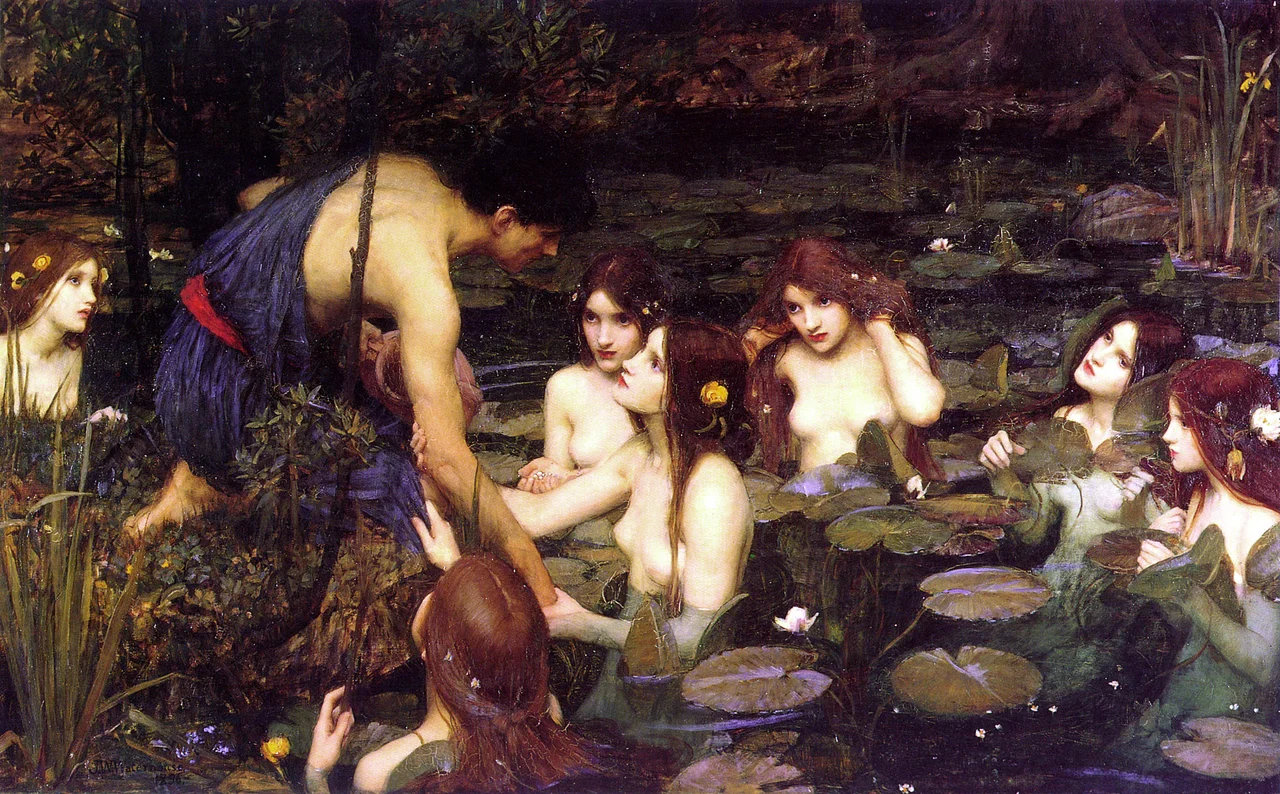
In 1827, just four years after a learned society on Mosley Street decided to start collecting art, the trustees of what would become Manchester Art Gallery spent their first acquisition money on James Northcote's portrait of Ira Aldridge, a young African American actor who was then playing Othello on the English stage. It is a remarkable opening move for a Victorian institution: a portrait of a Black classical actor as the first thing on the wall. Nearly two centuries later, in January 2018, the same gallery would lift down Waterhouse's Hylas and the Nymphs and leave a blank space asking visitors how women's bodies should be displayed. The painting was back within a week, but the question stayed.
Three Buildings, One Address
Charles Barry, the architect who would later design the Houses of Parliament, gave Manchester two of its finest civic buildings in quick succession. The Mosley Street gallery, in Greek Ionic style with a six-columned portico over a raised plinth, went up between 1824 and 1835 as home for the Royal Manchester Institution. Across the way, Barry's 1837 Athenaeum was built in the Italian palazzo style and absorbed by the Corporation a century later for extra gallery space. By the 1990s the two buildings, both listed, needed a connector. An architectural competition drew 132 entries; Hopkins Architects won and delivered an extension in 2002 that one critic called gratuitous spoilage and Private Eye awarded the Sir Hugh Casson Award for worst new building of the year. From the outside it works. From inside Barry's old rooms, it is still disputed.
What Hangs on the Walls
More than 25,000 objects pass through Manchester Art Gallery's care: 2,000 oil paintings, 3,000 watercolours and drawings, 250 sculptures, 90 miniatures, 13,000 decorative pieces. The oldest is an Egyptian canopic jar from around 1100 BC. The gallery's deepest strength is in Victorian painting, especially the Pre-Raphaelite Brotherhood, but the smaller rooms reward the slower visitor. In one of them Pierre Adolphe Valette, a Frenchman who taught L. S. Lowry at Manchester School of Art, hangs near a Cezanne, and you can see Lowry's apprenticeship in real time: foggy bridges, soft light, the dignity of working streets. Annie Swynnerton, who was born in Hulme and became the first woman elected to the Royal Academy in 150 years, is represented by sixteen paintings. Her friend Susan Dacre has seventeen.
First Acquisition
The portrait of Ira Aldridge by James Northcote, bought in 1827, still hangs in the collection. Aldridge had been born in New York around 1807 and emigrated to England as a teenager because America offered no path for a Black classical actor. He played Othello, Lear, Shylock, and Macbeth across Britain and Europe and is buried in Lodz. That a provincial English learned society in the 1820s reached for his portrait first, before anything else they could have bought, is a strangeness worth sitting with. It does not redeem the long Victorian rhetoric of empire that fills other rooms of the building, but it does mean that the gallery's founding gesture, made in the same Manchester that would campaign hardest against the Confederate slave economy during the cotton famine, was a refusal to look away from a Black man's face.
The Blank Space
In January 2018, curator Clare Gannaway took down John William Waterhouse's 1896 painting Hylas and the Nymphs and left an empty rectangle of wall with a stack of Post-it notes for visitors to comment on. The premise: have a conversation about how women's bodies are represented in Victorian painting. The reaction overwhelmed the gallery, with accusations of censorship and political correctness flooding in. Hylas was rehung within a week. The episode had landed two months after a campaign to remove a Balthus painting from the Metropolitan Museum of Art had failed. It also landed in a Manchester that was rediscovering its own suffragette history; the gallery would mount a major Sylvia Pankhurst show that same year. Whatever one makes of the experiment, the gallery has not stopped trying to think out loud about its own holdings.
Free to Enter, Open to Argument
Manchester Art Gallery is free, six days a week, closed Mondays. More than half a million people walked through its three connected buildings in the year ending April 2014. It shares a director, Alistair Hudson, with the University of Manchester's Whitworth Art Gallery a mile south, a deliberate fusion of council and university stewardship. The collection holds a Constable, a Turner, four Lowrys including the 1954 Piccadilly Gardens, four pieces of William Burges furniture, and a small Wynford Dewhurst Impressionist canvas called The Picnic that the painter, who was born in Manchester, almost gave away. Visitors who plan one room rarely manage to leave it. Visitors who plan three usually find a fourth.
From the Air
Manchester Art Gallery sits at 53.4786°N, 2.2414°W on Mosley Street in central Manchester, two blocks east of Albert Square and the Town Hall. Recommended viewing altitude 1,500-3,000 ft AGL. From the air, look for the small classical portico on Mosley Street nestled among taller commercial buildings. Nearest ICAO airports: Manchester (EGCC) 7 nm south-southwest, Manchester Barton (EGCB) 6 nm west-northwest, Leeds Bradford (EGNM) 36 nm east-northeast. Visibility is often limited by Manchester's typical low cloud; the city centre cluster of Victorian stone and modern glass towers is best picked out in the cleaner light of mid-morning.
Nearby Stories
- National Science and Media Museum 0.2 km away
- Jodrell Bank Observatory 3.2 km away
- Siege of Lathom House 5.6 km away
- Chester Zoo 6.2 km away
- Whalley Abbey 8.9 km away
- Haddon Hall 10 km away
- Wentworth Castle 16 km away
- Blackpool 16 km away