
Masjid al-Haram
Mimar Sinan, the Ottoman chief architect who designed the Süleymaniye in Istanbul and dozens of other masterpieces, was commissioned in 1570 by Sultan Selim II to renovate the Great Mosque of Mecca. He replaced the flat roof with calligraphy-decorated domes. He installed new support columns. Those columns are the oldest surviving parts of today's building. Everything else, every minaret, every expansion wing, every marble tile and escalator and air-conditioned gallery, has been built and rebuilt in the centuries since, through floods and sieges and crane collapses, to make room for the relentlessly growing number of pilgrims who come to circle the Kaaba at its heart.
The Largest Mosque on Earth
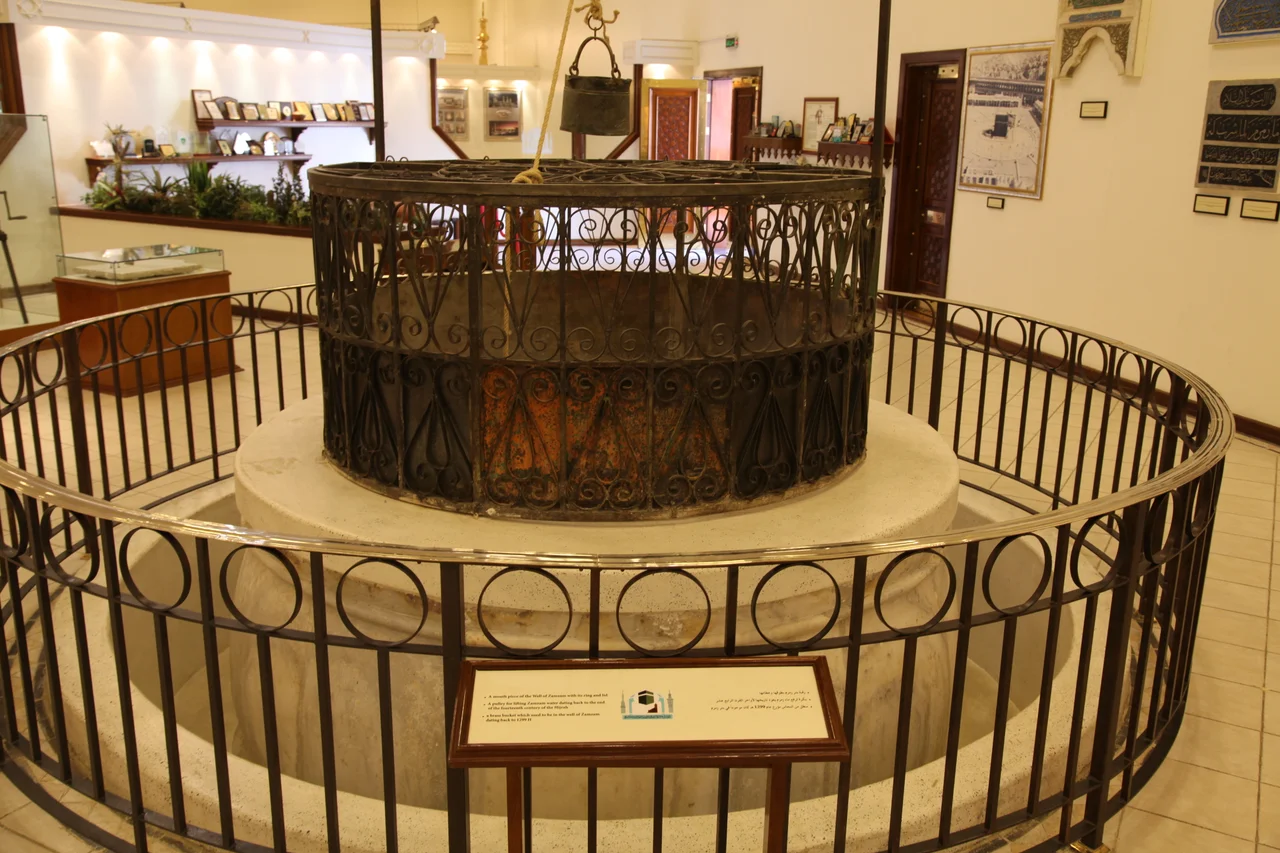
Masjid al-Haram is both the largest mosque in the world and, by most accounting, the most expensive building ever constructed. It encloses not just the Kaaba but also the Well of Zamzam, the Maqam Ibrahim (a stone Muslims believe carries the footprints of Abraham from when he stood to build the Kaaba's upper walls), and the hills of Safa and Marwa, now enclosed in a climate-controlled gallery where pilgrims walk the saʿi ritual. The title of its custodian, held by the King of Saudi Arabia, is simply Custodian of the Two Holy Mosques. The mosque has passed through the hands of caliphs, Umayyads, Abbasids, Ottomans, and Saudis, each leaving their architecture and their ambitions layered into the structure.
From Abraham to Mimar Sinan
According to Islamic tradition, Abraham and his son Ismail raised the foundations of the Kaaba on a site Allah had shown him, near the Well of Zamzam. When Muhammad returned victorious to Mecca in 630 CE, he and his companions broke the idols around the Kaaba and dedicated the sanctuary to the worship of Allah alone. The first major renovation came in 692 under Abd al-Malik ibn Marwan, who raised the outer walls. By the end of the eighth century, Al-Walid I had replaced wooden columns with marble and added the first minaret. Floods in 1621 and 1629 forced renovations under Sultan Murad IV; three new minarets were added, bringing the total to seven, and the marble floor was retiled. That Ottoman configuration stood for nearly three centuries, largely unaltered, until the Saudi era began.
The Saudi Expansions
The first Saudi renovation ran from 1955 to 1976. Four more minarets went up, the Mas'a gallery connecting Safa and Marwa was enclosed, and many Ottoman features (including Mimar Sinan's original support columns) were demolished. The second expansion, under King Fahd between 1986 and 1994, added a new wing reached through the King Fahd Gate and an outdoor prayer area. From 1987 to 2005 more minarets rose, along with a royal residence overlooking the mosque, 18 new gates, three domes, and nearly 500 marble columns. Escalators were installed. Heated marble floors, air conditioning, and drainage were engineered in. Six dedicated prayer halls for worshippers with disabilities were built, complete with ramps and free electric carts. In 2008, King Abdullah announced a third expansion, eventually budgeted at 40 billion riyals (10.6 billion dollars), that would raise capacity from 770,000 to more than 2.5 million worshippers and bring the total number of minarets to eleven.
Two Catastrophes
On 20 November 1979, extremist insurgents led by Juhayman al-Otaybi seized the Great Mosque, taking thousands of pilgrims as hostages and calling for the overthrow of the Saudi royal family. The siege lasted two weeks. Violence is strictly forbidden within the sanctuary, and the event shook the Islamic world. Hundreds died before a multinational force retook the mosque. Thirty-six years later, on 11 September 2015, a construction crane toppled in a storm and crashed through the roof of the mosque; at least 111 people were killed and 394 injured. Construction paused, was delayed further by the 2010s oil glut, and did not resume until September 2017. Two disasters, generations apart, in a place where no harm was ever supposed to come.
The Cost of Expansion
The relentless growth of the mosque has come at a cost measured in heritage. Archaeologists estimate that some 95 percent of Mecca's historic buildings, many more than a thousand years old, have been demolished in the last forty years to make room for expansion, hotels, and transportation infrastructure. The house of Khadija, Muhammad's first wife. The house of Abu Bakr. The Islamic school where Muhammad first taught, flattened to lay marble tile. The house of Abu Jahal, replaced by public washrooms. A dome over the Well of Zamzam, removed. Ottoman porticoes within the mosque itself, demolished. The counterargument is equally pragmatic: more than five million Muslims perform the Hajj every year, and the rituals physically require proximity to the Kaaba. The tension between preserving the past and accommodating the present is, in Mecca, measured in human bodies.
From the Air
Masjid al-Haram is centered on the Kaaba at 21.4225°N, 39.8261°E in downtown Mecca, Hejaz region of western Saudi Arabia. Elevation approximately 277 m. Nearest airport is King Abdulaziz International Airport (OEJN) in Jeddah, 70-75 km west. Mecca airspace is restricted; the city is closed to non-Muslims. The Abraj Al Bait complex, topped by the 601-m Makkah Royal Clock Tower, sits immediately adjacent to the mosque and is the dominant landmark visible from the air for many miles around.
Nearby Stories
- Al-Balad, Jeddah 23 km away
- Jeddah Tower 33 km away
- Battle of Turubah 123 km away
- Red Sea Rift 143 km away
- Ghadir Khumm 159 km away
- Al-Baha 162 km away
- Thee Ain 206 km away
- Hejaz 214 km away