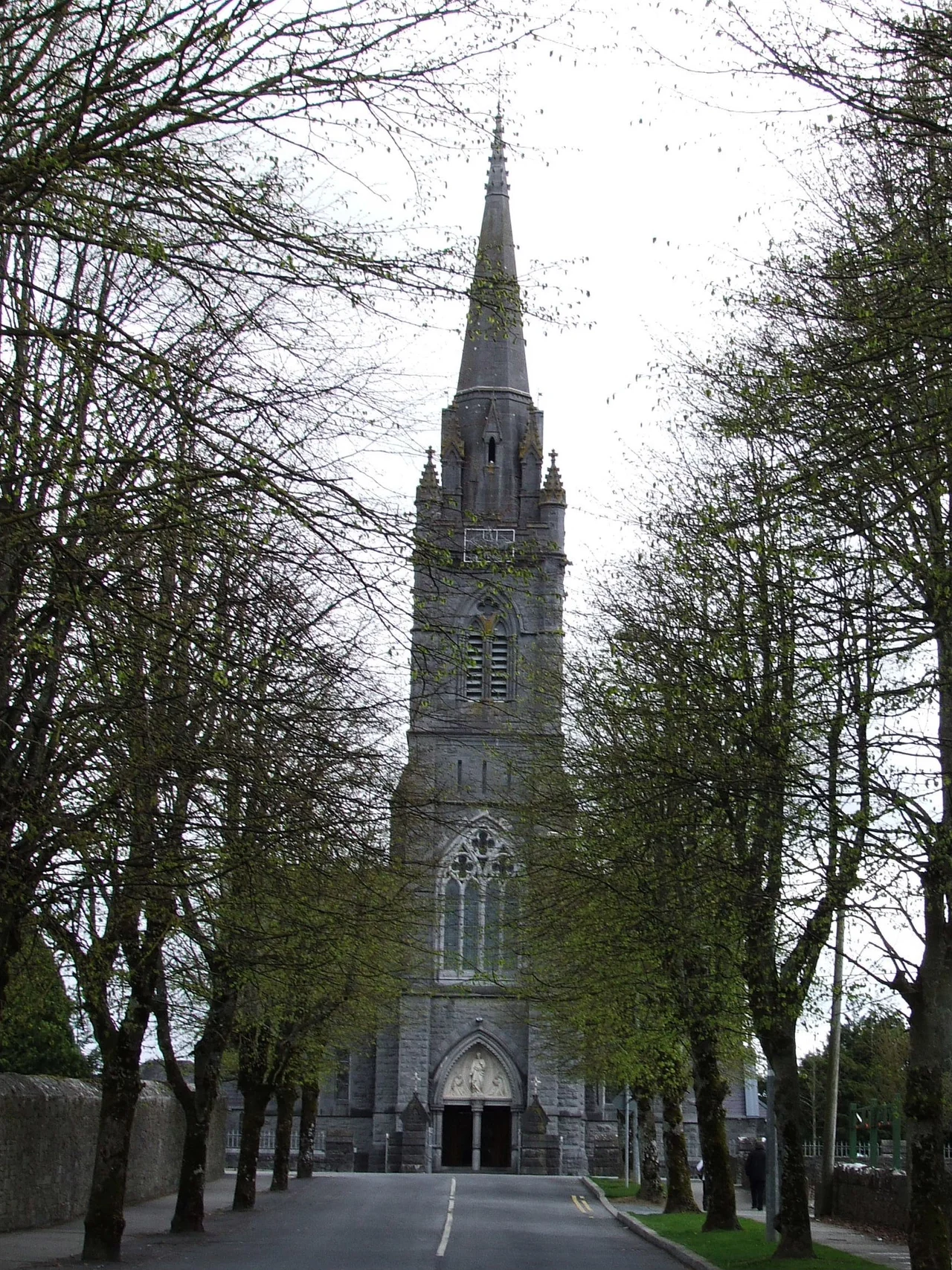

McCan Barracks
On 13 February 1922, three months after the Anglo-Irish Treaty was signed in London, two officers met inside a barracks in the small Tipperary town of Templemore. Major Phibbs, Officer Commanding the 10th Battalion of the Northamptonshire Regiment, signed the documents on behalf of the British forces. Commandant Sean Scott, Officer Commanding the 2nd Battalion, 2nd Mid-Tipperary Brigade of the Irish Republican Army, signed on behalf of the Republican side. The British Army marched out. The IRA marched in. The barracks - originally Richmond Barracks, built by the British in the 1810s - was renamed McCan Barracks, after Pierce McCan, the Sinn Féin MP for Mid-Tipperary who had died in Gloucester Prison in 1919 during the influenza pandemic that closed the First World War.
The Ursuline veto
The barracks should not have been in Templemore at all. The first site the British War Office selected, in the early nineteenth century, was beside the River Suir at Thurles - closer to the main roads, with better water and easier supply. But the chosen site was adjacent to the convent of the Ursuline Sisters, and the nuns objected. Their objection was, somehow, successful. The War Office moved the project north to Templemore, where the proximity of the railway station - then under construction - turned out to be a strategic blessing, allowing rapid movement of crown forces throughout the province of Munster. By coincidence, in 1865, an elderly Templemore woman was sentenced to one month in prison for stealing a key from the door of Captain Thomas Borrow of the 11th Battalion. Borrow was the father of the novelist George Borrow, who as a child accompanied his father's battalion to Templemore. George Borrow later mentioned the town in his books - describing his wanderings on horseback up the slopes of the Devil's Bit mountain west of the town.
The Fenian taint
In the late 1850s and early 1860s, the Fenian Brotherhood was being organised secretly across Ireland and the diaspora. The brotherhood targeted Irishmen serving in the British Army, hoping to swear in enough soldiers that when the rising came it would have professional military support. Templemore, where the 11th Depot Battalion was largely composed of Tipperary recruits, was a particular concern. By 1885 the situation had become serious enough that Dublin Castle ordered the entire battalion broken up and transferred to Newry and Enniskillen, replaced with the 59th Regiment from Glasgow. The Nenagh Guardian reported drily that the troops being moved had been 'tainted with Fenianism' and that even after transfer to Enniskillen two of them were arrested for singing Fenian songs in a pub. When arrested, one of the soldiers remarked that the whole company to which he belonged might as well be arrested as him.
The German POWs
When the First World War began in August 1914, the British government immediately needed places to hold the German prisoners that were already being taken from the Western Front. Richmond Barracks - the future McCan Barracks - was chosen. By the end of 1914 it held over 2,000 German and Austrian prisoners, including a substantial number of Prussian Guards. The barracks parade grounds were divided into four compounds surrounded by barbed wire entanglements, each with a high sentry tower with a machine gun and searchlights. The prisoners marched on Sundays to their respective churches - the prisoners were about equally Catholic and Protestant - and one of each faith died in captivity and was buried in the local cemetery. Their remains were later transferred to the German National War Cemetery at Glencree in the Wicklow Mountains, where they still lie. In early 1916 the German prisoners were transferred to England, partly because of rumours that the South Tipperary Volunteers were planning their release.
Training for the Somme
After the German POWs were moved out, Richmond Barracks became a training centre for the Royal Munster Fusiliers. Thousands of recruits were trained here for the Western Front - for the battlefields of Passchendaele in 1917 and the Somme in 1916. To practise, the recruits sometimes marched the 90 kilometres from Templemore to the firing ranges at Kilworth, in north Cork, and back. They dug full-size practice trenches, complete with redoubts and zig-zag communication trenches, on what is now the Garda College golf course. The chaplain to the Munster Fusiliers here was a local priest, Father Francis Gleeson, who would go to France with the regiment in 1915 and was photographed - in what became one of the iconic images of Irishmen in the war - blessing the men of the 2nd Munsters at Rue du Bois on 8 May 1915, the night before they were almost destroyed in the Battle of Aubers Ridge. The photograph still hangs in barracks across Ireland.
1922-1929: the Irish Army takes the keys
After the handover on 13 February 1922, the 2nd Mid-Tipperary Brigade IRA took over under Brigadier James Leahy. Within months the Civil War broke out and the garrison declared for the anti-Treaty side. Pro-Treaty National Army troops occupied Templemore town and were preparing to attack the barracks when Dr John Harty, then Archbishop of Cashel and Emly, intervened. He negotiated a peaceful evacuation; the anti-Treaty garrison left without a fight. After the formal establishment of the Defence Forces of Ireland in October 1924, the Irish Army remained in possession until 1929. The barracks was vacant during the 1930s. When the Second World War - the Emergency, in Irish - began in 1939, the 10th Southern Battalion of the Irish Army garrisoned it heavily again, and remained until the Emergency ended in 1945.
1964: the third career
In February 1964 the barracks took on its third major role. The Garda Síochána training school, until then housed at Garda Headquarters in Phoenix Park in Dublin, was moved to Templemore. The barracks was completely redesigned and reconstructed by the Department of Justice. After a closure for further modernisation in 1987, it reopened as the Garda College in 1989. Today every member of the Garda Síochána passes through this site at the start of their career. The 3rd Field Artillery Regiment is still based here, sharing the campus with the police college. From 1815 to 1922 the barracks served the British Crown; from 1922 onwards it has served the Irish state. The renaming - from Richmond to McCan, after the dead Sinn Féin MP - was meant to mark the change. McCan died in Gloucester aged 36, having been on hunger strike. The barracks named for him has, in the century since, trained the soldiers and the police of the country he never lived to see.
From the Air
McCan Barracks is at 52.792°N, 7.842°W in Templemore, North Tipperary. Best cruise altitude 2,000-3,500 ft. The barracks complex with its parade grounds, training fields and golf course is the largest built-up area in Templemore and easily visible from the air. The Dublin-Cork railway line runs through Templemore (station 2 km from barracks). The M7 motorway is 12 km north; the M8 is south near Thurles. The Devil's Bit mountains rise west of the town. Nearest airports: Shannon (EINN) ~80 km west, Dublin (EIDW) ~140 km northeast.
Nearby Stories
- Birr, County Offaly 0.6 km away
- Killaloe 2.6 km away
- Sack of Cashel 4.5 km away
- Abbeyleix 10 km away
- 2003 Derrybrien Landslide 12 km away
- Knocktopher 14 km away
- Portarlington, County Laois 15 km away
- Croom Castle 20 km away