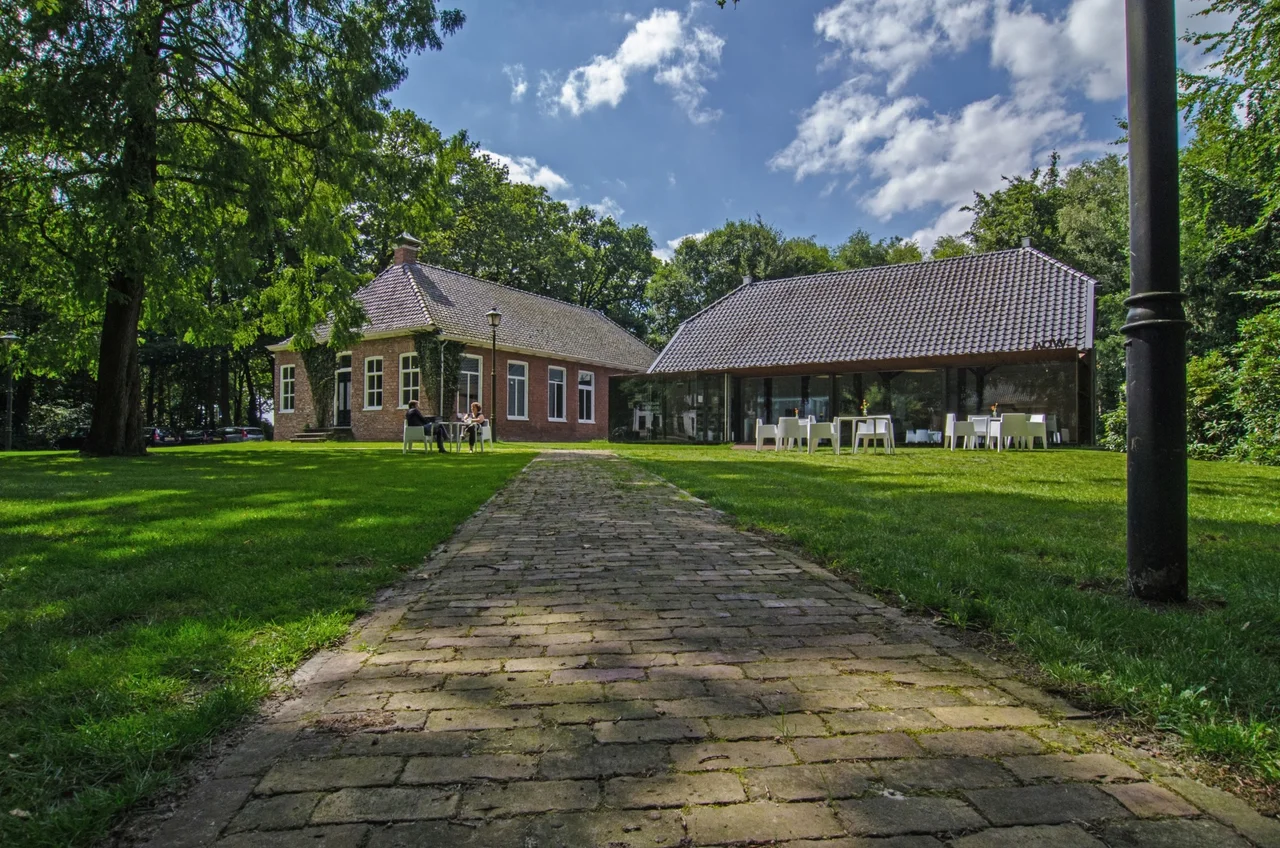

Museum de Oude Wolden
In 2010, someone broke into a small village museum in the eastern Dutch province of Groningen and took seven hand-painted icons - religious panels from the seventeenth, eighteenth, and nineteenth centuries that the museum had displayed quietly for years among its everyday collection of farm tools and regional paintings. A reward was offered for tips that would help recover them. The icons have not, as of public record, come back. Museum de Oude Wolden carried on. It is the kind of place that carries on. Located in the village of Bellingwolde, opened in 1973 by the local mayor in a building the state had quietly restored through a subsidized employment project, the museum has spent half a century being one of the lesser-visited museums in Groningen and one of the most genuinely beloved by the people who do find it.
A Village With a Museum, on Purpose
Most Dutch villages of around 2,500 people do not have a museum. Bellingwolde does, because in the late 1960s the province of Groningen decided that the regions of Oldambt and Westerwolde - this far eastern strip of the country, often overlooked, with its own folk history and farmhouse architecture - deserved a home for their objects and their art. The national government refused to fund the new museum directly, but agreed to pay for restoration of a building using subsidized labor. The Streekmuseum de Oude Wolden - the Regional Museum the Old Wolds - opened on 10 August 1973, with mayor Jurjen Jan Hoeksema cutting the ribbon. The first decades were modest. The displays were what you would expect: nineteenth-century grocery store inventories, farm implements, photographs of harvests, the everyday material of a region whose history had mostly been written by its rivers and its weather.
The Painter Who Moved In Across the Street
In 1987, Lodewijk Bruckman arrived in Bellingwolde. He was 84, Dutch by birth, a magic-realist painter who had spent decades abroad - in Italy, in the United States - building a quiet reputation for meticulous still lifes whose porcelain bowls and antique cups seemed at once perfectly real and faintly impossible to inhabit. He moved into a hotel directly across the street from the museum and lived there for two years before moving on. He died in 1995. After his death, Bruckman's paintings began appearing in the museum, and in 1999 the institution mounted a serious Bruckman exhibition. By 2012, after a renovation that added a glass entrance and reorganized the galleries, his work became the museum's permanent display. The hotel where he had lived was, by then, gone or changed; but his paintings now hang permanently in the building he had stared at from his window.
The Other Family on the Walls
Bruckman's paintings share the museum with works by De Ploeg - the Plough - an artist collective founded in the city of Groningen in 1918. De Ploeg's expressionist landscapes of the surrounding Groningen countryside, their thick paint and bold colors, have always sat somewhere between regional pride and serious modernism. Their work appeared in Museum de Oude Wolden from the late 1990s onward, and in 2003 De Ploeg celebrated their 85th birthday with an exhibition here - in Bellingwolde, hours from the city where they were founded, in a museum few outside the region had heard of. The temporary exhibitions since the 2012 renovation have ranged widely: Chinese painter Zhuang Hong Yi, the history of canalization in Westerwolde, quilting collectives, an exhibition about the First Münster War of 1665-66 called Onder Vuur - Under Fire - and a 2017 show of work by artists from Tyumen, Siberia. A small museum in a small village reaching out, year by year, to anywhere that will reach back.
Numbers and Persistence
About 4,683 people visited in 2015 - a peak year, after which the museum became an independent foundation in 2017 while keeping its building and collection officially owned by the municipality. Visitor numbers have always been small by big-museum standards. In 2007, only 1,792 people came through. Most years sit between two and three thousand. Funding is mostly local. Peter Yspeert has chaired the foundation since 2017. The icons stolen in 2010 are still missing. The Bruckmans are still on the wall. The temporary exhibitions still rotate every few months. The museum sits in the registered list of Dutch museums again, having been off the list between 2009 and 2016. None of this is the stuff of headlines. All of it is what keeps a regional museum alive in a country that is full of bigger ones.
Why a Place Like This Matters
Museum de Oude Wolden is a small case study in what happens when a community decides to take itself seriously. The Oldambt clay grounds produced wealth in the nineteenth century, and the Westerwolde sand ridges produced a stubborn rural culture with its own language inflections and its own self-image. The museum is what holds those two regions together as a single story, in a single building, on the Hoofdweg in Bellingwolde. You can see a Bruckman still life and a De Ploeg landscape and a photograph of a turn-of-the-century grocery store and a wall about the First Münster War - all in an afternoon, all in a building that any provincial city would consider a side gallery. There are no signs from the highway. The opening hours depend on the season. The volunteers know each painting personally. And if you ask about the icons, someone will probably remember exactly which case they used to be in.
From the Air
Museum de Oude Wolden sits at 53.11°N, 7.16°E on the Hoofdweg in the village of Bellingwolde, in Westerwolde municipality, eastern Groningen province. From altitude the museum is a single small building along the village's long linear street - not individually visible, but the village itself appears as a north-south ribbon of buildings on a sand ridge immediately west of the Dutch-German border. Recommended viewing altitude 2,000-3,500 feet. Nearest airports: Groningen Eelde (EHGG) about 45 km west, Bremen (EDDW) about 110 km southeast. The Meyer Werft shipyard at Papenburg is visible about 25 km east; the IJkdijk test field sits about 4 km north.
Nearby Stories
- Bourtange moor 3.9 km away
- De Poll 6.7 km away
- Tjaskers in Germany 6.9 km away
- Westerbork 8.2 km away
- Zuiderduintjes 11 km away
- Jever Air Base 15 km away
- Bad Zwischenahn 18 km away
- Cloppenburg (district) 20 km away