
Osnabrück Zoo
Walk far enough into Osnabrück Zoo and the ground itself becomes the exhibit. Down a flight of stairs and through a low corridor, naked mole-rats tunnel past glass at eye level. Black-tailed prairie dogs scurry overhead in cross-section, their burrows rendered in cutaway. Tarantulas pace behind acrylic. This is the Unterirdische Zoo - the Underground Zoo - opened in 2009 on the slope of the Schölerberg hill, and it is the kind of idea you only get when your zoo is built on a steep wooded ridge and you decide to dig.
From Heimattiergarten to Hillside Park
The zoo opened on July 26, 1936, founded by a group of local enthusiasts who called themselves the Community of Friends of the Home Zoo. The original collection was modest: a badger, a fox, and a bear, paid for by donations. War nearly ended it. By April 1945 the menagerie was small, the grounds damaged, and the books in deficit. Rebuilding came in stages - a warm house and the first elephant enclosure in the late fifties, the first Indian elephant Toni arriving in April 1961, the sea lion pool in 1973. In 1970 the institution dropped Tiergarten from its name and became simply Zoo Osnabrück. The expansion never really stopped after that.
Tips and Taps
In the Kajanaland section, modeled on the northern European taiga, two unusual cubs were born in January 2004: hybrids of polar bear and brown bear, the first such animals bred at the zoo. They were named Tips and Taps and became the climate-change mascots of an interactive exhibit called Klimatopia, opened in April 2013. The hybrid bears - sometimes called grolar bears - drew international scientific attention. On March 11, 2017, Tips ended her hibernation, slipped through an electric fence, squeezed through a forty-centimeter gap into the adjacent silver fox enclosure, and bent a section of fence with her body weight until it gave way. About four thousand visitors were herded into animal houses. Tips knocked over a keeper and lunged at staff trying to corral her. Anesthetic would have taken ten to twenty minutes to work. The zoo shot her. Her body was later sent to the State Museum of Natural History in Stuttgart for hybrid bear research.
Continents Stacked on a Hill
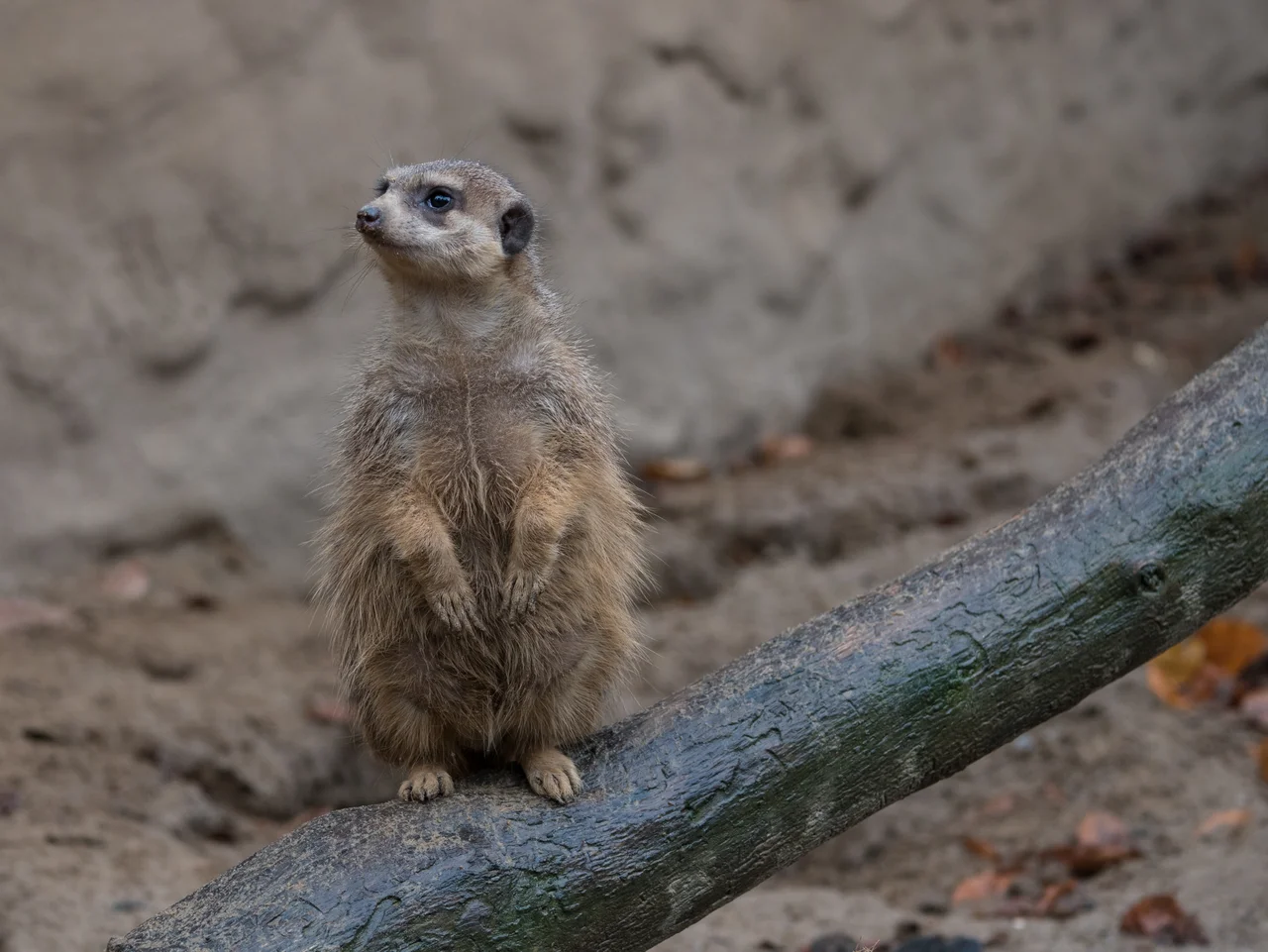
The zoo's 23.5 hectares are organized as a tour of biomes. Samburu, opened in 2004, recreates a Kenyan reserve where giraffes, ostriches, and meerkats share two hectares - you can dine in a safari camp and watch them work. Takamanda, named for a national park in Cameroon, holds eighty animals across 5.5 hectares of savannah scrub, with chimpanzees, drills, and a tree-house village called Makatanda. The Angkor Wat area in the center is built as an Asian temple complex, complete with a walk-in monkey temple and an enclosure for a painting orangutan named Buschi whose canvases fund tapir conservation in South America. Manitoba, opened in October 2018, brings wood bison and Hudson Bay wolves to a 3.5-hectare slice of Canadian north.
The View from the Treetops
Kajanaland comes with a feature unique among German zoos: a tree-height boardwalk that lets visitors look down into the enclosures from up to six meters above. Lynx, wolverines, reindeer, raccoons and Gute sheep wander below the path - you watch from a perspective normally reserved for owls and the occasional climbing bear. Tucked at the zoo's western edge is something stranger still: a replica megalithic grave, assembled in the 1980s from stones moved over from the large stone graves near Nahne. The redesigned 2011 route bypasses it, so the megalith now sits quietly off-trail, a Neolithic monument hidden in a Lower Saxon zoo.
Why Visitors Keep Coming
British zoo expert Anthony Sheridan's European rankings repeatedly put Osnabrück near the top of zoos in its visitor class - second place in 2011 and 2013, tied for third in 2015 with the Münster Allwetterzoo. A 2012 customer survey of twenty German zoos ranked Osnabrück first for visitor experience. The zoo recorded 865,000 visitors in 2010. The natural history Museum am Schölerberg sits at the gate, sharing tunnels with the underground exhibit. The whole place rises with the hill, an unusual ecosystem of architecture: African savannah at one elevation, Asian temple at another, Northern taiga somewhere up the slope, all walked end to end by people in sensible shoes.
From the Air
The zoo lies at 52.25°N, 8.07°E on the south side of Osnabrück, draped across the wooded slope of the Schölerberg ridge. Recommended viewing altitude: 2,500-4,000 ft AGL. The hill rises about 126 m and is visible as a green wedge south of the city center. The Autobahn 30 runs immediately south of the zoo grounds. Nearest airport: Münster Osnabrück International (EDDG / FMO), about 30 km southwest.
Nearby Stories
- Sparrenberg Castle 6.4 km away
- Ohne, Germany 7.5 km away
- St. Ludger Church, Billerbeck 8.6 km away
- Warendorf 10 km away
- Emsland Railway 12 km away
- Quakenbrück 14 km away
- Bielefeld conspiracy 31 km away
- Schnoor 62 km away