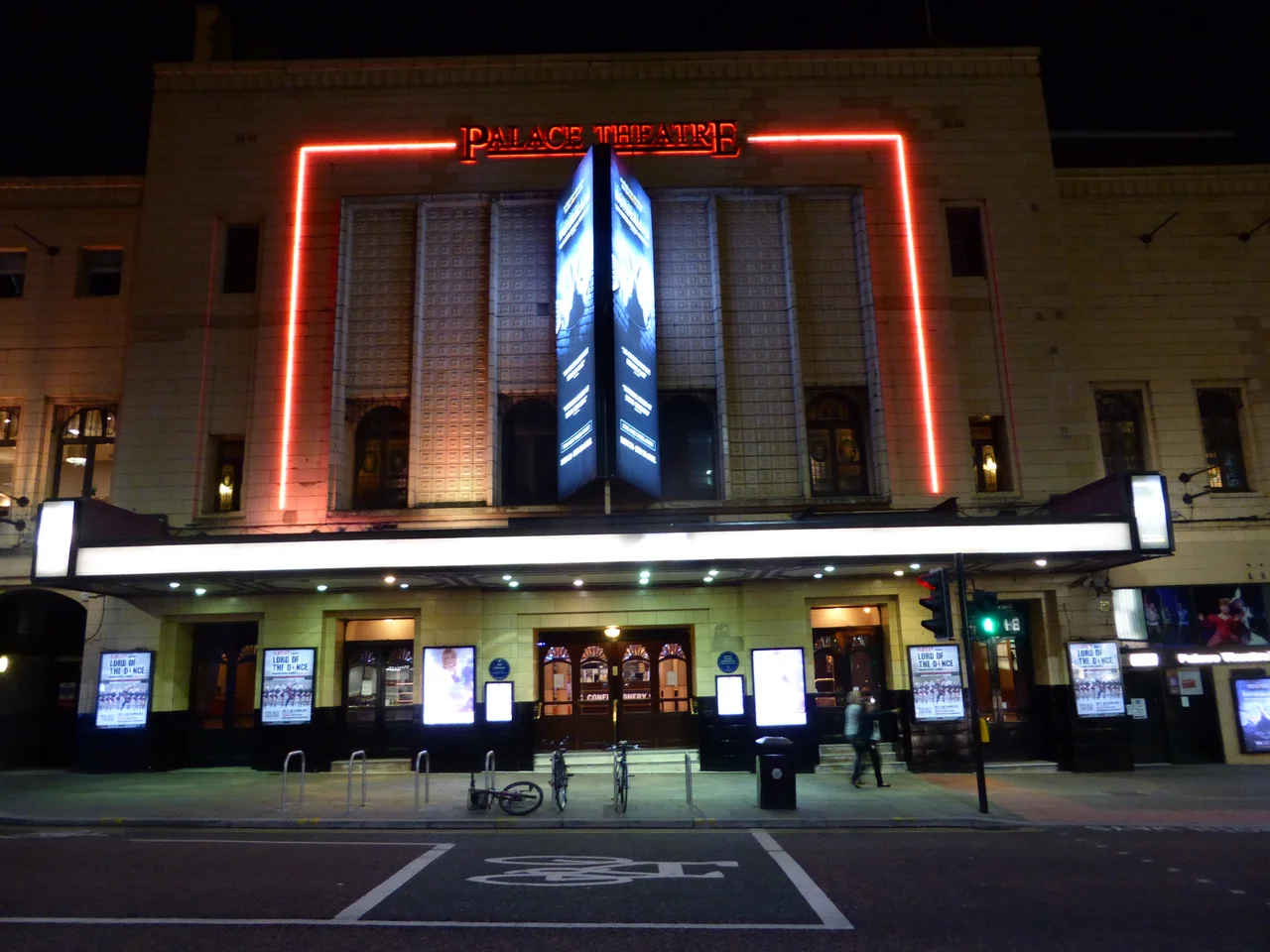

Palace Theatre, Manchester
The locals have called it the Grand Old Lady of Oxford Street since long before any of them were born. The Palace Theatre opened on 18 May 1891 with a capacity of 3,675 — a sea of plush seats and a stage broad enough for full-scale ballet — and it has been one of the busiest receiving houses in the north of England almost ever since. The capacity is smaller now (1,955), the décor has been redone three times by three different giants of theatre design, and a German bomb once dropped through the roof. None of that has stopped the touring lorries from pulling up to the Oxford Street loading bay every Sunday night.
Three Architects, Three Skins
Most theatres get designed once. The Palace has been redesigned by three of the most significant theatre architects in British history. Alfred Darbyshire built the original in 1891 for £40,500. Five years later Frank Matcham — the man behind the London Palladium, the Hippodrome and dozens of provincial houses — was brought in to redecorate and improve the building, returning in 1899 to add a pass door so the manager wouldn't have to walk outside in the rain to reach backstage. In 1913 Bertie Crewe undertook a seven-month interior renovation, reopening with a reduced capacity of 2,600 and an interior closer to what audiences see today. Three different decades of theatrical taste have left their fingerprints on this building, layered like sediment. The 1977 Grade II listing protects all of it.
Direct Hit, September 1940
In September 1940 the Manchester Blitz began, and one of the bombs found the Palace. A direct hit; substantial damage; the kind of strike that closed many wartime theatres for the duration. The Palace patched, reopened, kept going. Manchester had lost the Free Trade Hall to bombs that same December. The Royal Exchange was damaged on Christmas Eve. The decision to keep theatres running through bombing was at least partly about morale — about the idea that if Hitler could shut the curtain on Oxford Street he had won something. The same calculation, slightly updated, was made after the 1996 IRA bomb on the other side of the city centre. The Palace went on.
Who Has Played Here
The opening night was a ballet of Cleopatra to a capacity audience, and the variety era brought everyone who mattered. Danny Kaye played the Palace. Gracie Fields, born just over the Pennines in Rochdale, played it many times. Charles Laughton, Judy Garland, Noël Coward, Laurel and Hardy. From the late 20th century onwards the bill turned toward touring musicals: Les Misérables ran for thirteen months from 1992 to 1993, an extraordinary commercial residency for a regional house. Miss Saigon got its regional premiere in 2001. Chitty Chitty Bang Bang in 2006, Mamma Mia! over the 2006–07 Christmas. The Producers in 2007 had Peter Kay as Roger De Bris for the Manchester dates — Kay being one of those Lancashire comedians who never quite leaves the region. The Book of Mormon's UK tour opened here in June 2019. On 11 November 2023 the first UK and Ireland tour of Hamilton opened at the Palace for a fifteen-week season, the kind of booking that confirms a venue's standing on the national circuit.
The Royal Opera House That Wasn't
In 2008 the Royal Opera House and Manchester City Council began planning something genuinely ambitious: a permanent annual northern season for the Royal Ballet and Royal Opera, based at a refurbished Palace Theatre. The intention was eighteen weeks a year — sixteen opera performances, twenty-eight ballet performances, smaller productions in the gaps. The Lowry, Salford's prestige arts venue, objected loudly enough that an open letter went to the Secretary of State for Culture. The two venues eventually settled their differences. Then, in 2010, the arts-funding cuts that followed the financial crisis quietly killed the entire scheme. It is one of the great what-ifs of Manchester cultural history — for a brief moment the Royal Ballet might have had Oxford Street as a second home. The Palace continued doing what it does so well anyway: receive the best touring productions in the country and put them in front of full houses.
Sister Venues
The Palace is owned and operated by the Ambassador Theatre Group, which bought it in 2009, and runs in tandem with its sister venue the Opera House on Quay Street, a fifteen-minute walk away on the other side of the city centre. In March 2020 both theatres acquired Charitable Incorporated Organisation status — a structural recognition that, even in a commercial chain, regional theatres of this scale serve a civic function. On a typical week the Palace might host a major touring musical at one venue and a stand-up comedy night at the other, the dressing rooms of Manchester filled with everything from West End leads to lighting riggers from Birmingham. It is the workhorse of the city's touring circuit, the place a show plays when it wants to know whether it can survive outside London.
From the Air
Located in central Manchester at 53.475°N, 2.241°W, on the north-east corner of Oxford Street and Whitworth Street, a short walk from Oxford Road station. Manchester Airport (EGCC) is about 12 km south; Manchester Barton (EGCB) is roughly 8 km west. From a low cruise the theatre's domed corner tower at the Oxford Street / Whitworth Street junction is the visual marker, set in the dense Victorian commercial fabric between Manchester city centre and the universities.
Nearby Stories
- National Science and Media Museum 0.2 km away
- Jodrell Bank Observatory 3.2 km away
- Siege of Lathom House 5.6 km away
- Chester Zoo 6.2 km away
- Whalley Abbey 8.9 km away
- Haddon Hall 10 km away
- Wentworth Castle 16 km away
- Blackpool 16 km away