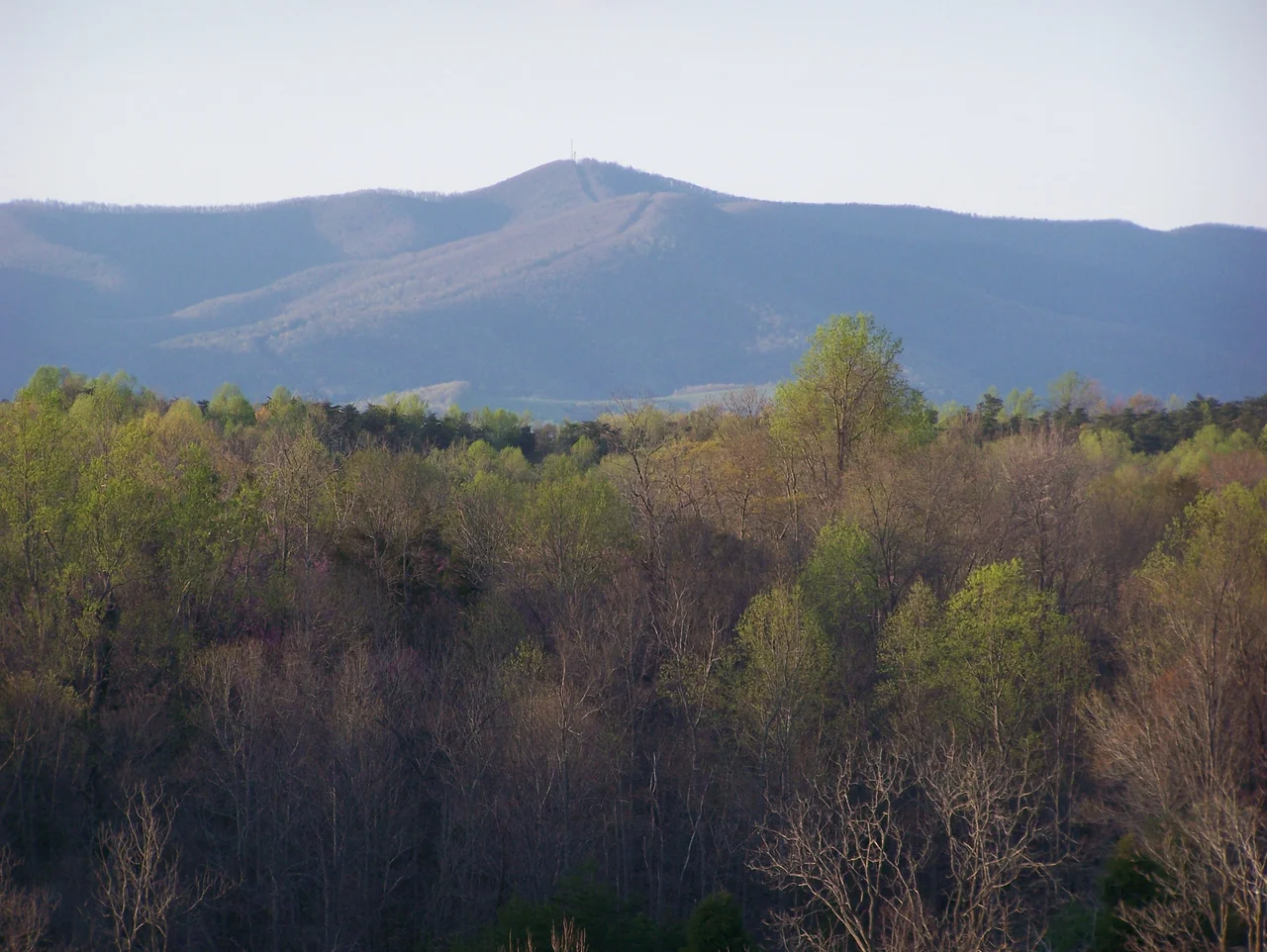

Patrick County, Virginia
Bob Childress moved a mountain — not the geological one but the one inside the hearts of Blue Ridge people who had given up on each other. Born in Patrick County in 1890, the moonshining son of a moonshining father became a Presbyterian minister and built six rock churches across Patrick, Carroll, and Floyd counties from local stone, the way you'd build a barn — to last. The book that told his story, Richard C. Davids' 1970 The Man Who Moved a Mountain, became the kind of regional bible that Blue Ridge families pass down in copies missing their dust jackets. Patrick County has produced larger reputations than Childress's — J.E.B. Stuart was born here, R.J. Reynolds was born here — but few of them have lasted as well in the local memory.
A County Named for an Orator
Patrick County was carved out of Henry County in 1791. Henry, in turn, had been named in 1777 for Patrick Henry — "give me liberty" — and when the southwest portion of Henry got too big to govern from one courthouse, the legislature divided it and gave each half one of his names. Patrick County's first European settlement, however, came earlier. Fort Mayo, a Virginia frontier outpost on the North Mayo River, was built in 1756 as part of a chain of forts stretching from the Potomac to the North Carolina border. George Washington toured Fort Mayo personally that same year as a young colonel inspecting the Virginia frontier during the French and Indian War. A state historic marker is all that remains.
The Stuart Born on Laurel Hill
On February 6, 1833, Elizabeth Letcher Pannill Stuart gave birth to her seventh child at Laurel Hill Farm. They named him James Ewell Brown Stuart, and history remembers him as J.E.B. He grew up here, riding the hills, learning to handle horses on land his family had farmed since the 1700s. He went west to West Point, fought in Kansas as a young cavalry officer, and by the time the Civil War erupted he had become arguably the finest cavalry commander either army produced. He was Lee's eyes and ears. He was killed at Yellow Tavern in May 1864 at age 31. Laurel Hill Farm still stands in Patrick County, preserved as the J.E.B. Stuart Birthplace, marked with the Confederate battle flag and the more complicated discussions that birthplace now requires.
Mabry Mill
If you have seen a photograph of a Blue Ridge mountain mill — with its weathered wooden flume, the water wheel turning lazily beside a millpond reflecting the sky — you have probably seen Mabry Mill. It sits at milepost 176 on the Blue Ridge Parkway just over the Patrick County line in Floyd County and is, by widespread consensus, the most photographed structure on the entire 469-mile Parkway. Ed Mabry built it between 1903 and 1910 as a gristmill, sawmill, and blacksmith shop. The National Park Service has operated it since the Parkway opened in the 1930s. On October mornings, photographers line the edge of the millpond before sunrise to catch the fog rolling off the water, the maples turning, and one of America's most reliably beautiful images coming together for free.
The Wood Brothers and the Speed Mountain
Patrick County is the home of Wood Brothers Racing, the oldest active team in NASCAR Cup history, founded in 1950 by Glen Wood — a Stuart, Virginia, native who is in the NASCAR Hall of Fame. The Wood Brothers' shop is in Stuart. So was the heartbreak. On October 24, 2004, a corporate aircraft carrying ten people from rival team Hendrick Motorsports crashed on Bull Mountain in Patrick County, killing all aboard. They were flying to Martinsville Speedway, only thirty miles east, for that day's NASCAR race. Patrick County's hills, which have grown three generations of stock-car drivers and built the country's most photographed mill, also caught the airplane that the Hendrick family never recovered from.
Covered Bridges and Fairy Stones
Patrick County has long been one of the great tourist destinations of Virginia. The Blue Ridge Parkway forms the county's western border. Fairy Stone State Park, named for the cross-shaped staurolite crystals you can still pick up from the ground there, sits in the county's northeast. The Bob White Covered Bridge — one of Virginia's last seven — washed away in a September 2015 flood near Woolwine, but the Jack's Creek Covered Bridge still stands. Mayberry, the unincorporated community on Mayberry Creek, may or may not have inspired Andy Griffith's fictional Mayberry; Griffith grew up in Mount Airy, North Carolina, just across the line, but he visited his Patrick County cousins often. The Rocky Knob American Viticultural Area, defined by the federal government, has wineries that take advantage of slopes ranging from 900 to over 3,000 feet — terrain shaped, like everything in Patrick County, by the meeting of the Piedmont and the Blue Ridge.
From the Air
Patrick County centers at 36.68 N, 80.29 W, on the Virginia-North Carolina border along the Blue Ridge escarpment. Blue Ridge Airport (KMTV) at Martinsville lies just east of the county line, and Mount Airy/Surry County Airport (KMWK) sits 15 nm south in North Carolina. From cruising altitude, look for Mabry Mill's pond at Parkway milepost 176; the Blue Ridge Parkway forms a serpentine line along the county's western border. Fairy Stone State Park is in the northeast. The Bull Mountain crash site is in the county's northwest. Smith Mountain Lake (KW91/Smith Mountain) is 40 nm northeast. Terrain ranges from 900 ft in the Piedmont to over 3,000 ft on the Blue Ridge scarp; expect orographic lift on east winds.
Nearby Stories
- Floyd County, Virginia 3.8 km away
- Galax, Virginia 5.7 km away
- Chinqua Penn Plantation 9.4 km away
- 2014 Dan River Coal Ash Spill 20 km away
- Wytheville, Virginia 21 km away
- Bethabara Historic District 26 km away
- Smith Mountain Lake 28 km away
- North Wilkesboro Speedway 33 km away