
Qi'ao Island
The oldest things on Qi'ao Island are broken pots. In the ancient ruins of Housha Bay and Dong'ao Bay, archaeologists have found colored pottery and white pottery dating back 4,500 to 5,000 years — the earliest evidence of human habitation in what is now the city of Zhuhai. Dong'ao Bay has been identified as the most complete gravel-bed ruin site in the Pearl River Delta. The pottery predates the Song dynasty temples and the Qing dynasty palaces and the socialist-era heroes and the artist's reunion statue by so many centuries that it reframes everything else on the island: all of it happened in the blink of an eye, geologically speaking, on a piece of land that people have been returning to for a very long time.
Twenty-Three Square Kilometres of Quiet
Qi'ao Island covers 23.8 square kilometres in the northeast of Xiangzhou District, 13 kilometres from Zhuhai's urban center. About 1,900 people live there. Forest coverage reaches 90 percent — which means that almost the entire island, except for its villages, its farms, and its shoreline paths, is trees. That density of green on a Pearl River Delta island, this close to one of China's most developed coastal corridors, is not an accident. It's the result of geography and, more recently, designation: in 2000, the island was identified as an ecological tourist zone.
The fishing is still the point for many people who come. Qi'ao is known for its oysters and for Niwei chicken, a local breed. There's a particular quality to food eaten on an island where most of the surrounding land is forest — the sea feels closer, the supply chain more visible.
Seventeen Temples and a Long Memory
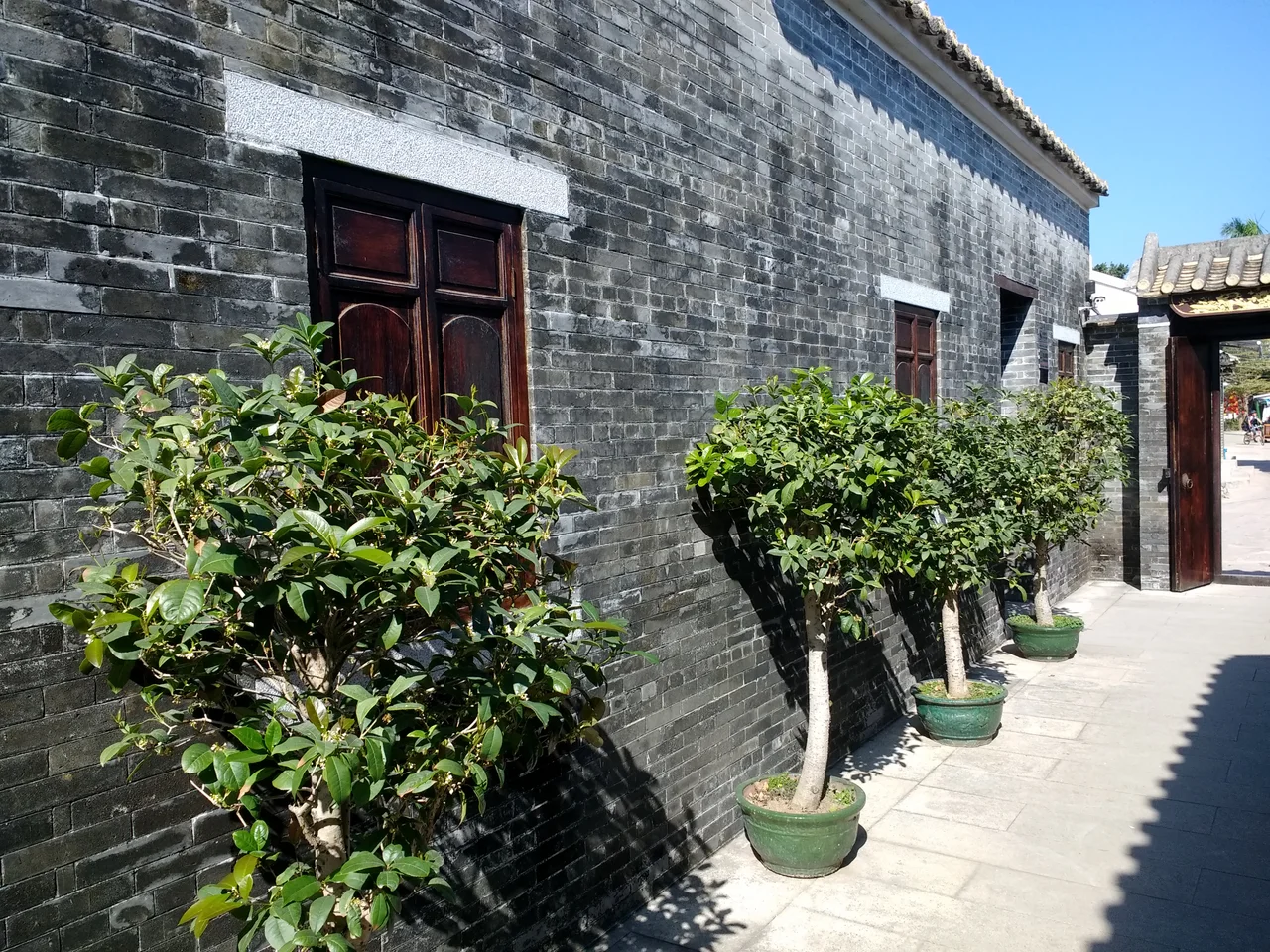
Qi'ao Island has 17 temples. That number, for an island of fewer than 2,000 people, suggests a particular kind of community relationship with religious practice — dense, local, persistent across dynasties. The oldest, Cundong, began construction during the Song dynasty (960–1279 CE). Wenchang Palace dates to the Qing dynasty, built during the reign of the Tongzhi Emperor (1861–1875). Between those two endpoints stretch nearly a millennium of island life: fishing seasons and typhoon seasons, harvests and droughts, the slow accumulation of devotion expressed in stone and incense.
The temples are not museums. They remain active places of worship, maintained by the community they serve. Their presence on an island that the national government later designated an educational base suggests something about how Qi'ao holds its history — not as an archive, but as a living practice.
The Qi'ao Cun Event and the Patriotic Thread
In 1833, an event took place on Qi'ao — referred to in historical records as the Qi'ao Cun Incident — that the island community remembers as an act of resistance. The details of the incident are part of what led, in 2000, to twenty members of the Chinese People's Political Consultative Conference proposing the island as a nationwide patriotic education base.
The island also carries the memory of Su Zhaozheng, a labor leader and Communist Party member born here in 1885, whose former residence has been preserved as a heritage site. Su Zhaozheng organized major labor strikes in Hong Kong and Guangzhou in the 1920s and is commemorated as a revolutionary figure. His home on Qi'ao Island remains a pilgrimage point — a reminder that this quiet forested island, which looks today like a retreat from modern China, was once deeply connected to the country's political upheavals.
Pan He's Reunion
Pan He is the sculptor who made Zhuhai's Fisher Girl in 1982 and the companion piece Mother River in 2015. In between, to commemorate the 1999 handover of Macau from Portugal to China, he installed a 9.9-metre statue called Reunion on Qi'ao Island. The work's Chinese title is 重逢 — a word meaning the joy of meeting again after separation, with a specific emotional weight that captures something about the Macau handover: two territories with a shared history, reunited after a long colonial interval.
Three Pan He works now mark the geography of this corner of the Pearl River Delta — the fisher girl on Zhuhai's shore, the reunion figure on Qi'ao, the mother in Doumen. Together they form a kind of sculptural conversation about belonging, return, and the lives that continue after the mythological and historical dramas resolve. Qi'ao Island holds one of those three, along with its pots and its temples and its 90 percent forest and its oysters.
From the Air
Qi'ao Island is located at approximately 22.4162°N, 113.6372°E, in the northeast of Xiangzhou District, Zhuhai, in the Pearl River estuary. From the air, the island is clearly visible as a heavily forested mass distinct from the surrounding reclaimed and developed land; its high forest canopy gives it a darker green color compared to adjacent agricultural areas. The Qi'ao Bridge connects the island to the mainland. Zhuhai Airport (ZGSD) is approximately 35 km to the southwest. Macau International Airport (VMMC) is approximately 20 km to the south. Hong Kong International Airport (VHHH) is approximately 35 km to the east across the estuary. At 3,000–5,000 feet, the island's forested interior and the surrounding Pearl River channels are clearly distinguishable. The Hong Kong-Zhuhai-Macau Bridge is visible to the south as a reference line across the water.
Nearby Stories
- Sai Kung District 3.7 km away
- Second Battle of Chuenpi 12 km away
- Birds' Paradise 16 km away
- Hac Sa Beach 17 km away
- Yamen, Guangdong 20 km away
- Hong Kong 12 38 km away
- West Lake (Huizhou) 49 km away
- Jiangmen Underground Neutrino Observatory 72 km away