
Republic of China Air Force Museum
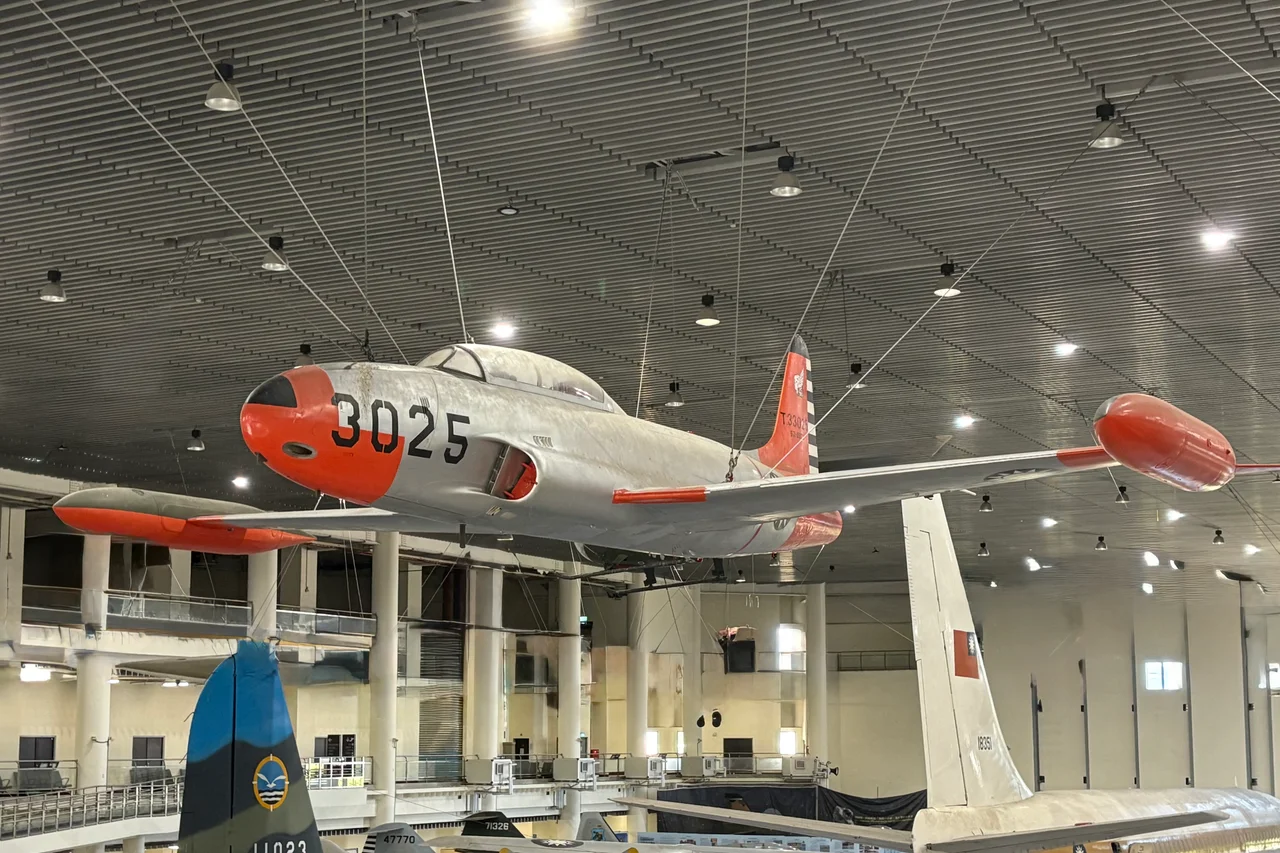
The skies above Gangshan have meant something particular to Taiwan for a very long time. This flat district north of Kaohsiung became home to the Republic of China Air Force Academy, and within its grounds stands a museum whose collection has spent decades collecting the machines that carried Taiwan's defense into the air. Open to the public on a three-hectare campus, the Republic of China Air Force Museum tells the story of an air force that has existed in a state of permanent alert — and the aircraft it has flown through decades of tension across the Taiwan Strait.
Gangshan and the Air Force
Gangshan's association with military aviation stretches back to the Japanese colonial period, when the flat terrain of northern Kaohsiung County proved well-suited to airfield construction. After the Republic of China government relocated to Taiwan following 1949, Gangshan became a key installation for the reconstituted ROC Air Force, and the Air Force Academy was established here to train the pilots who would defend the island. The museum grew from the Academy's campus planning: the museum building was completed on 14 August 1987, formally incorporating the historical collections that had accumulated over decades of institutional memory into a dedicated exhibition space. The proximity to an active training academy gives the museum a lived context that purely civilian institutions often lack — the history on display here is continuous with the institution still operating beside it.
Three Hectares of Airpower
The museum's exhibition area spans three hectares — an expanse that makes it, in effect, a park of aircraft as much as a conventional museum. The collection includes various airplanes displayed in the open air alongside artifacts, archives, and weapons gathered from across the ROC Air Force's operational history. Open-air aircraft museums carry a particular kind of drama: the machines are real in a way that enclosed display cases rarely achieve. A jet fighter at rest on concrete looks exactly like what it is — a vehicle designed to carry a human being to extraordinary altitudes at extraordinary speed, in service of something extremely serious. Walking among the aircraft, visitors can read the silhouettes against the sky and understand, at least in outline, why Taiwan invested so heavily in maintaining this capability.
The Weight of History
The ROC Air Force's story is inseparable from some of the most consequential events of twentieth-century East Asia. Pilots trained in the tradition this museum preserves flew in conflicts that shaped the region — and after the ROC government moved to Taiwan, the air force became a crucial element of the island's defense posture. The collection of artifacts and archives held here documents that history through the objects that survived it: uniforms, instruments, records, and the aircraft themselves. Every fighter on the tarmac carries decades of maintenance history, modifications, and the accumulated attention of mechanics and engineers who kept it airworthy. These are not simply machines. They are the material residue of decisions made under pressure, by people who understood that the airspace over the Taiwan Strait was not simply geography.
A Museum at the Academy's Edge
The museum's location within the Air Force Academy campus shapes the experience of visiting it. The Academy is a working institution — cadets train here, the traditions of the service are actively maintained, and the formality of a military environment is palpable. The museum exists within that context rather than apart from it. This means visiting the Republic of China Air Force Museum is not simply a cultural outing — it is a step into an institution that takes its own history seriously, that measures its past against ongoing responsibilities, and that presents its collection not as nostalgia but as foundation. From Gangshan Station, the museum is accessible on foot or by the short connections of Kaohsiung's transit network, placing it within reach of the broader Kaohsiung metropolitan area without requiring private transport.
From the Air
The Republic of China Air Force Museum sits at approximately 22.783°N, 120.272°E in Gangshan District, Kaohsiung — about 25 kilometers north of RCKH (Kaohsiung International Airport). The Air Force Academy campus is a clearly recognizable compound from the air, with its runway infrastructure and organized building clusters. When approaching RCKH from the north, the Gangshan area appears to the left (west) with distinct military compound geometry. Recommended viewing altitude: 1,500–3,000 feet MSL on approach or departure. Note that airspace over and around active military installations requires awareness of local NOTAMs and restrictions.
Nearby Stories
- Huang Family Historical Residence 3.1 km away
- Taivoan Language 9 km away
- Zhiben Hot Spring 12 km away
- Bunun Cultural Museum 26 km away
- Dongji Island 33 km away
- South Penghu Marine National Park 58 km away
- Orchid Island 79 km away
- Hong Kong 12 550 km away