
Rio Doce State Park
Forty-two lagoons sit inside this forest, and none of them are connected to the river that gives the park its name. They are perched twenty meters above the Doce, filled with water that never mixes with the murky flow below, some of them deep enough to swallow a ten-story building. The deepest, Lagoa Dom Helvécio, drops 32.5 meters into darkness. The system is the third largest in Brazil, after the Amazon and the Pantanal, and it hides inside the last great stand of Atlantic Forest in Minas Gerais - 35,970 hectares of jequitibá trees and black capuchins and the occasional jaguar, bordered on two sides by rivers the lakes refuse to join.
What an Archbishop Saw
In the early 1930s, Dom Helvécio Gomes de Oliveira, Archbishop of Mariana, looked at the shrinking Atlantic Forest around the Doce River and did something unusual for a clergyman. He began lobbying for a state park. The Atlantic Forest was already in retreat across Brazil, losing ground to coffee plantations, cattle ranches, and the iron-and-steel industry rising in the Vale do Aço. After more than a decade of campaigning, his vision became law on 14 July 1944 - the first state-level conservation unit in Minas Gerais. The largest of the park's lagoons now bears his name. The archbishop never lived to see what his protected corner became: the only place in the state where contiguous Atlantic Forest still stretches across 1,129 plant species, 77 mammals, 325 birds. A man of the cloth, remembered by the wild.
The Lake That Floats
Lagoa Dom Helvécio covers 6.7 square kilometers - the largest natural lagoon in Brazil. Stand on its white-sand beach, and you can rent a kayak, tour the perimeter by electric motor, or swim within the cord of buoys where lifeguards watch on long weekends. The park asks only that fishermen use earthworms as bait, that boaters not disembark along the far shore. The strangeness of the place reveals itself slowly. The lake sits at 300 meters elevation, twenty meters above the Doce River that flows past the park's eastern boundary. The lagoons are not fed by the river and do not drain into it. They are their own hydrological country, governed by rainfall and springs, isolated enough that 27 species of native fish evolved in them - until tucunaré, piranha, and oscar were introduced and rearranged the food chain.
The Fire and the Return
The park's early years were rough. Without monitoring or fences, poachers took what they wanted. Then the dry season came, and a fire tore through 9,000 hectares of forest and killed twelve people. The park lay wounded for years. By the 1970s, some tourism infrastructure appeared - trails, a few buildings - but the real renovation ran from 1986 to 1993, when the park was reopened to the public. Land tenure was slowly resolved: by 2002, the state had acquired 82 percent of the titles. Today the park's managers contend with urban sprawl pressing up against Timóteo, with road kill on the Ponte Queimada road, with illegal hunters who still slip through the boundary. Recovery, here as everywhere, is a practice rather than an event.
A Roll Call of the Rare
The Northern muriqui lives here - one of the largest monkeys in the Americas, and one of the most endangered. So does the solitary tinamou, a shy ground bird whose mournful whistle carries through the understory. Jaguars still cross through, though they are glimpsed more often than seen. Capybaras graze along the lagoon edges in the pink light of evening. Seven primate species share the canopy, among them the black-fronted titi monkey and the black capuchin. Twelve of the park's mammals appear on Brazil's endangered species list. Twenty of the 325 bird species are threatened. The Rio Doce is not just a park - it is a bank vault for creatures whose accounts are running low elsewhere.
Visiting the Bishop's Pond
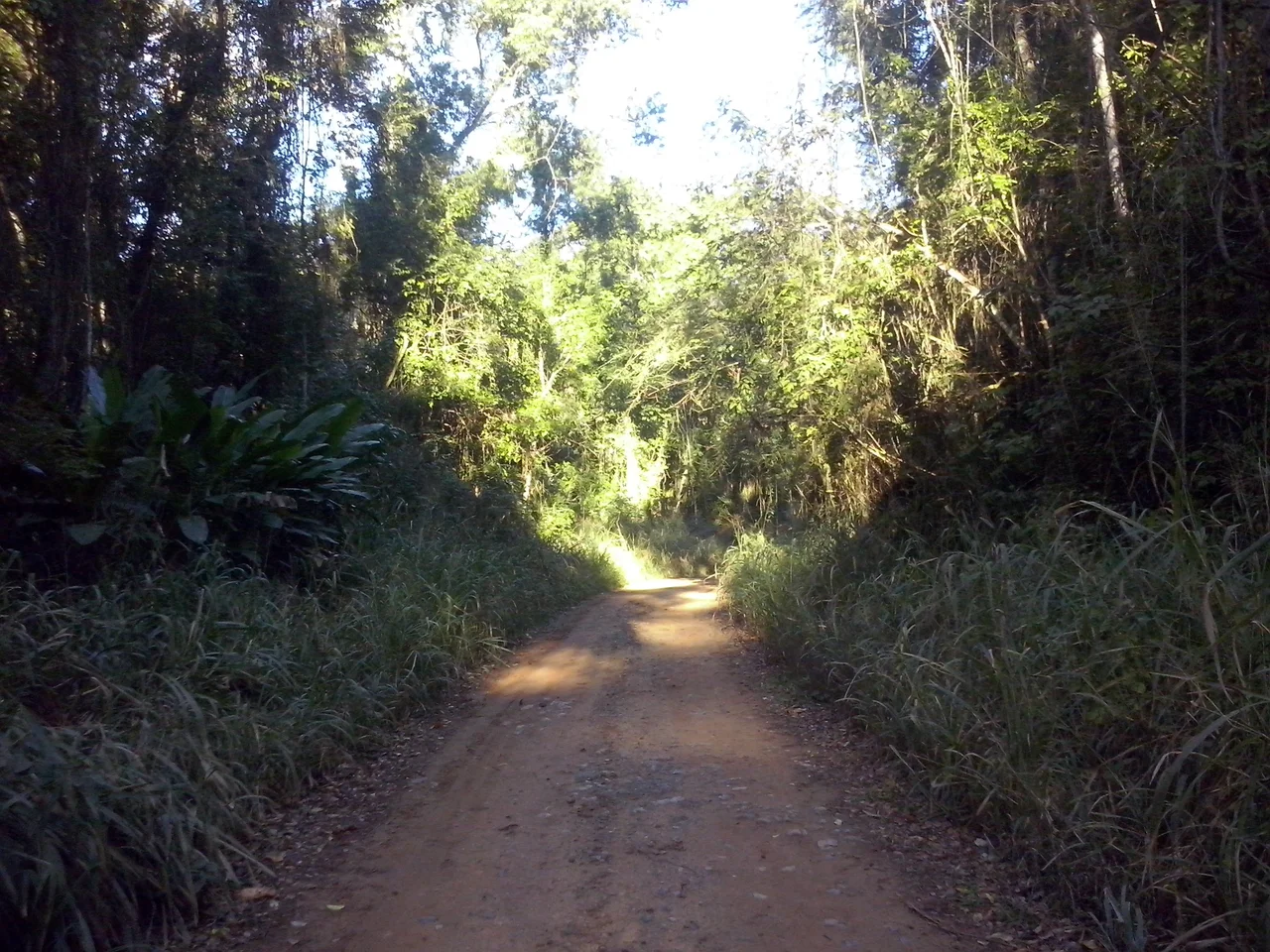
From the entrance gate, it is six kilometers of red-dirt road through semideciduous forest to the public beach on Lagoa Dom Helvécio. The park is open Tuesday through Sunday from 8 in the morning until 5 in the evening. There are hiking trails, a camping area, a small restaurant, a visitor center. Kayaks and paddle boats are rented by the hour. Sports fishing is permitted with limitations - earthworms only, no lures. The water is cool and clear, the sand is pale and soft, and the forest keeps its own counsel at the edge. Twenty-one thousand visitors came in the year 2000. The trees around them had been standing, in many cases, since well before the archbishop ever made his case.
From the Air
Coordinates 19.65°S, 42.54°W, in the Vale do Aço region of eastern Minas Gerais. Recommended viewing altitude 6,000-9,000 feet AGL to appreciate the distinctive cluster of forty lagoons set inside unbroken green Atlantic Forest. The Doce River forms the eastern boundary, the Piracicaba the northern. Nearest airport is Usiminas Airport (SBIP) at Ipatinga, about 30 km northeast. Tancredo Neves International (SBCF) at Belo Horizonte is 248 km southwest.
Nearby Stories
- Feliciano Miguel Abdala Private Natural Heritage Reserve 14 km away
- Santo Antônio do Rio Abaixo 40 km away
- Santa Bárbara, Minas Gerais 56 km away
- Vila Império 65 km away
- Morro Velho 65 km away
- Robert Quayle (1814 ship) 83 km away
- Pedra Azul State Park 105 km away
- Poté 170 km away