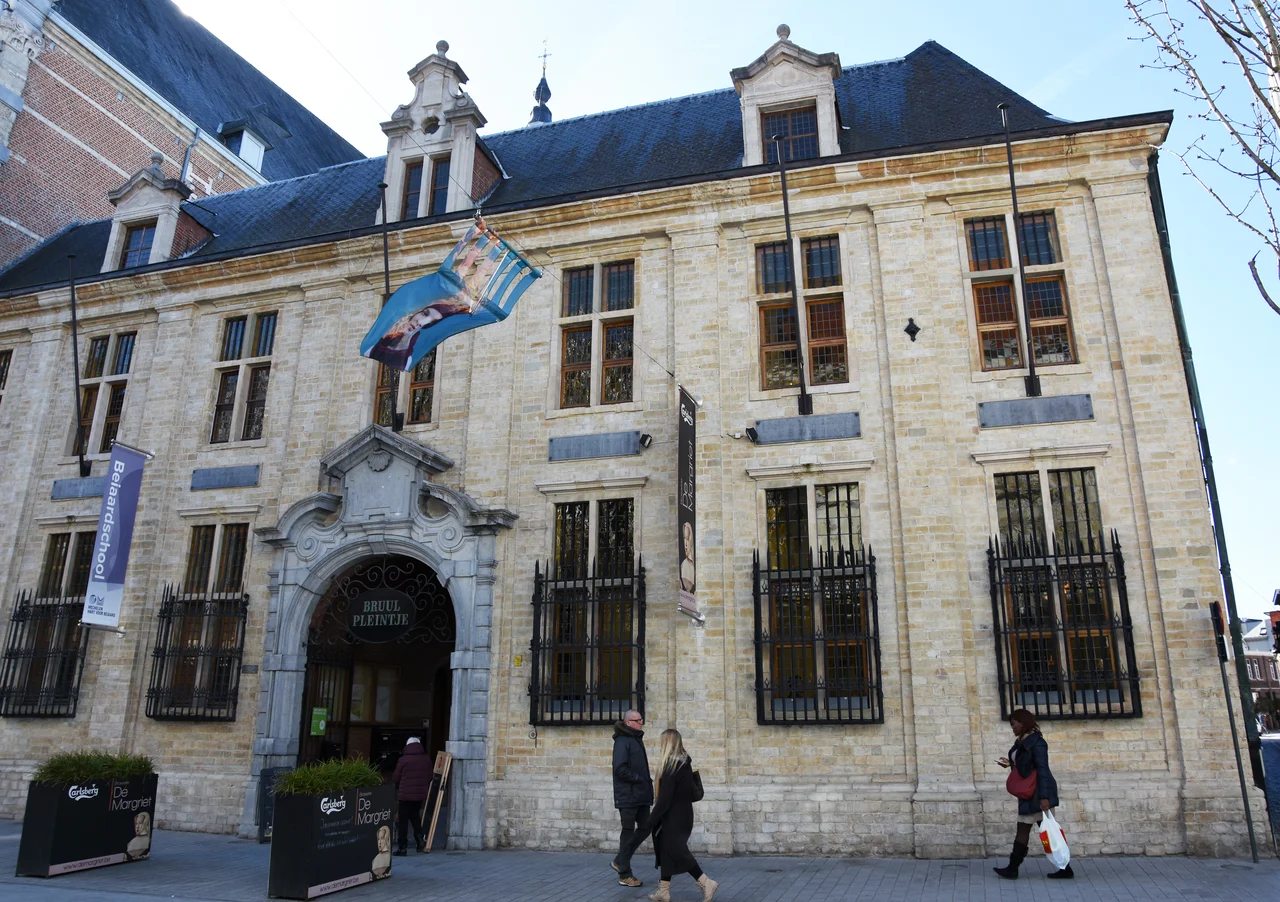

Royal Carillon School "Jef Denyn"
In 1914, the German invasion of Belgium destroyed dozens of bell towers across Flanders. Carillons, the chromatically tuned sets of bronze bells played from a keyboard, were a Low Countries invention that had nearly vanished even before the war. Most of the master carillonneurs were old men. Their apprenticeships were informal. There was no school. After the war, an American mining engineer named Herbert Hoover, who had run the Commission for Relief in Belgium, decided this would not stand. He and John D. Rockefeller put up the money. William Gorham Rice, an Albany lawyer obsessed with Flemish bells, did the organizing. On August 12, 1922, the world's first carillon school opened in Mechelen under the direction of city carillonneur Jef Denyn. Tuition was free.
The Man Who Saved the Tradition
Jef Denyn was born in 1862. His father had been carillonneur at St. Rumbold's before him, and Jef took over the post as a young man and held it until his death in 1941. By 1900 he was already famous for two innovations. He had redesigned the carillon baton keyboard so that a player could control volume with the force of a fist, something not previously possible with mechanical bell linkages. And he had begun staging summer evening concerts at St. Rumbold's, lit by torchlight, that drew audiences from across Europe. Crowds of two thousand listened in silence in the square below while Denyn played transcriptions of opera arias on the great bells overhead. When the school opened, his name was on the door. When he died, the school was renamed in his honor.
Students from Forty Countries
The school's student list reads like a map. Carillonneurs have come to Mechelen from Australia, Canada, China, the Czech Republic, France, Germany, Ghana, Japan, New Zealand, Poland, Portugal, Russia, Switzerland, Taiwan, Ukraine, the United Kingdom, and the United States. Adèle Colson, born in Mechelen in 1905, became the first woman in the world to earn a carillon certification, graduating from the school in the 1920s. Gladys Elinor Watkins took the training back to Wellington, New Zealand, and became the carillonneur of the National War Memorial. Émilien Allard returned to Montreal and played the bells of Saint Joseph's Oratory. Sally Slade Warner trained the next generation of American carillonneurs at the Cohasset Carillon in Massachusetts. The Flemish romantic style they all learned, with its emphasis on dynamic shading and expressive rubato, is now the global standard for carillon performance.
The Queen Fabiola Competition
Every five years since 1987, carillonneurs from around the world have converged in Mechelen for the Queen Fabiola Competition, the most prestigious contest in the field. The repertoire requirement is brutal. Each competitor must play one baroque work, one romantic, one twentieth-century, and one piece of their own composition or arrangement, all on the city carillon in St. Rumbold's tower. The jury sits below in the square, listening to bronze bells played by someone they cannot see. Queen Fabiola, the Spanish-born wife of King Baudouin, conferred her royal protection on the school in 1984 and remained its patron until her death in 2014. The competition still bears her name. Winners typically become city carillonneurs in their home countries, completing a circuit of training and patronage that started with American philanthropic money a century ago.
The Mobile Carillon
In 2016 the school acquired a portable carillon, a smaller set of bells mounted on a wheeled platform, housed in its own pavilion in the Sinte-Mettetuin garden. It changed how the school teaches. The old practice was to send advanced students up the 514 steps of St. Rumbold's tower for rehearsal time on the real bells, which limited practice and constrained scheduling. The mobile carillon brought the instrument to ground level. Most lessons happen on practice keyboards now, mechanical mockups that produce no sound; the seven practice rooms run all day. Students still must perform their final exam recital on the city carillon, with the jury listening from below, but the daily work happens in the school's building on the Bruul, Mechelen's main shopping street, where the bells are silent and the keyboards click.
From the Air
Located at 51.03N, 4.48E in central Mechelen, Belgium, on the Bruul shopping street near the cathedral. The school's mobile carillon stands in a pavilion in the Sinte-Mettetuin garden nearby. The Mechelen city carillon used for final exams is in St. Rumbold's tower, 600 meters north. Brussels Airport (EBBR) is 15 km south. The cathedral tower at 97 meters is visible from cruising altitude; the school building itself is not. Recommended viewing altitude 3,000 ft to identify the tower and the compact city center where the school operates.
Nearby Stories
- Sonian Forest 2 km away
- Laarne Castle 4.5 km away
- Battle of Landen 8.6 km away
- Basilica of Our Lady of Scherpenheuvel 10 km away
- Baarle-Hertog 12 km away
- Hertogin Hedwigepolder 13 km away
- Borssele Nuclear Power Station 16 km away
- Ronse 20 km away