
Science and Industry Museum
The world's first passenger railway station is now a museum. That sentence is easy to say and difficult to fully grasp, but it is the literal truth: when the Liverpool and Manchester Railway opened in 1830, the line terminated at Manchester Liverpool Road station, and that frontage and its 1830 warehouse are still standing on Liverpool Road in Castlefield - Grade I listed, both of them, and now the heart of the Science and Industry Museum. In 1978, Greater Manchester Council bought the site from British Rail for the symbolic sum of one pound. Five years later the museum opened in it.
From UMIST to Liverpool Road
The museum did not begin on a railway site. It opened in 1969 as the North Western Museum of Science and Industry, in temporary premises on Grosvenor Street in Chorlton-on-Medlock, run out of the Department of History of Science and Technology at UMIST. Richard L. Hills, the department's specialist, was the first lecturer in charge. It was a modest operation. When British Rail closed Liverpool Road station in 1975 and Greater Manchester Council acquired the site three years later for a single pound, the museum had its permanent home - and an enormous one. It opened on the new site on 15 September 1983 and gradually expanded to include the whole of the former station.
What Manchester Built
The collection tells the story of how Manchester powered itself and the world. Stationary steam engines that once drove cotton mills run for visitors on scheduled days. There are diesel engines, hot air engines, hydraulic pumps, large electric generators - much of it operational. The Textile Hall contains a complete sequence of spinning and weaving machinery that ran cotton from raw fibre to finished cloth, the industrial process that built nineteenth-century Manchester. Outside, locomotives sit in the old station yard: a replica of Ericsson's Novelty incorporating parts of the 1829 original; the Garratt No. 2352 built in 1929 by Manchester's own Beyer, Peacock and Company for South African Railways; a 1953 electric locomotive that ran on Dutch Railways; and a 4-4-0 broad gauge engine built around 1911 for North Western Railway of India.
The Manchester Baby
Computing has its own gallery here, and rightly so. In June 1948, a machine called the Small-Scale Experimental Machine - nicknamed the Baby - ran the first program ever stored in a digital computer's memory. It was built at the University of Manchester by Tom Kilburn and Freddie Williams. The museum holds a working replica. It is not glamorous to look at - racks of valves and switches, the size of a small kitchen - but every smartphone in every pocket on the planet is a direct descendant of what happened in that machine. A Connected Earth gallery opened alongside it in October 2007, telling the parallel story of how Manchester became central to telecommunications in the North West.
Loss and Change
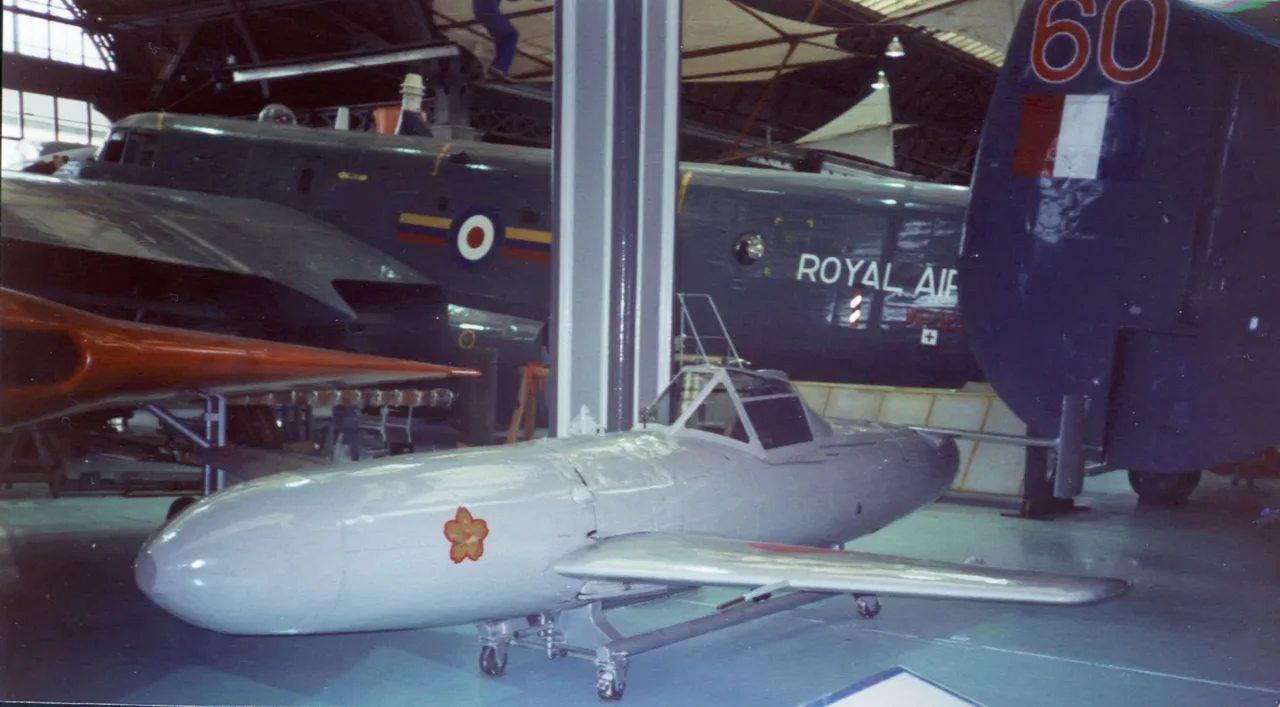
Not everything has stayed. The Air and Space Hall, which housed aircraft including an Avro Shackleton and a Japanese Ohka piloted bomb, closed permanently in 2021 - objects returned to their original lenders, museum-owned pieces redistributed. The museum's working railway, which once ran demonstration steam trains hauled by a replica of Robert Stephenson's Planet, was cut short by the Ordsall Chord rail link built in 2017 over a legal battle to save it. In June 2024 the museum confirmed the railway operations would not resume, citing the shortened line and load-bearing concerns. The trains are quiet now. The cotton machines still run.
From the Air
The Science and Industry Museum sits at 53.4769 degrees north, 2.2556 degrees west, on Liverpool Road in Manchester's Castlefield district, just west of the city centre. Manchester Airport (EGCC) lies about 12 km south-southeast. Manchester Barton (EGCB) is about 7 km west. From altitude look for the cluster of Victorian warehouses and viaducts in Castlefield, immediately south of Deansgate.
Nearby Stories
- National Science and Media Museum 0.2 km away
- Jodrell Bank Observatory 3.2 km away
- Siege of Lathom House 5.6 km away
- Chester Zoo 6.2 km away
- Whalley Abbey 8.9 km away
- Haddon Hall 10 km away
- Wentworth Castle 16 km away
- Blackpool 16 km away