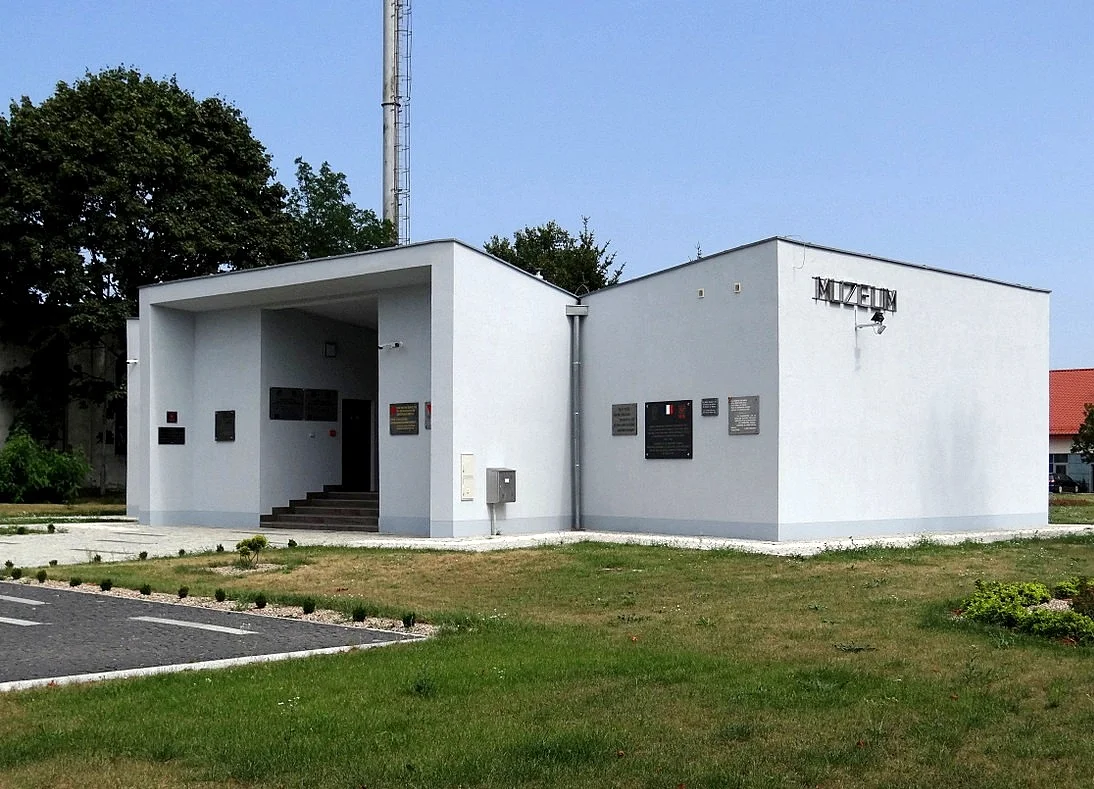

Sonnenburg concentration camp
The prison at Sonnenburg had been closed in 1930. Its cells were judged unfit and the building sat empty for three years. In the spring of 1933 officials of the Prussian justice ministry inspected it, recorded that the hygienic conditions were appalling, and recommended it anyway. They worked out that it could hold 941 men in what the new government called protective custody — some in single cells, others packed twenty, thirty and sixty to a room. On 3 April 1933, nine weeks after Hitler became chancellor, the first two hundred prisoners arrived from the Berlin Police Presidium with sixty SA auxiliary police as their guards. The building's unfitness was not an obstacle to the plan. It was the plan.
The Men Berlin Wanted Quiet
Sonnenburg — the town is Słońsk in Poland now — took the people the new regime most wanted removed from public life: Communist and Social Democratic officials, trade unionists, and the writers and lawyers who had been most effective at embarrassing it. Three of them had been seized on the night of the Reichstag fire, 28 February 1933. Erich Mühsam was an anarchist poet and playwright whom Goebbels had personally denounced. Hans Litten was the lawyer who in May 1931 had summoned Hitler to the witness stand and cross-examined him for three hours, exposing contradiction after contradiction about the Nazi party's supposed commitment to legality; Hitler would not afterwards permit his name to be spoken in his presence. Carl von Ossietzky was a pacifist editor. Transfers from the penal institution at Gollnow, now Goleniów, brought the population to about a thousand, and in August the SS took over the guarding with 150 men. A history of the site published in 2004 by the town of Słońsk and the Rotary Club of Frankfurt (Oder) takes its title from what the place had been called: the Folterhölle Sonnenburg. The torture hell.
What Happened to Them Afterwards
None of the three lived to see the end of it. Mühsam went from Sonnenburg to Brandenburg and then to Oranienburg, where guards beat, branded and tortured him over seventeen months before murdering him on the night of 9 July 1934; his body was found hanging in a latrine and the official verdict was suicide, though his widow described a shattered skull and the marks of strangulation. Litten passed through seven camps in five years — Spandau, Sonnenburg, Brandenburg-Görden, Esterwegen, Lichtenburg, Buchenwald — and died at Dachau on 5 February 1938. Ossietzky was awarded the Nobel Peace Prize for 1935 while in custody; the announcement came in 1936, the German government forbade him to travel to Oslo, and he died on 4 May 1938 in a Berlin hospital, still under police guard, of tuberculosis and the accumulated effects of what had been done to him. Three men whose only weapons had ever been arguments, and the state needed all three of them dead.
Officially Closed
On 23 April 1934 the concentration camp was formally shut down. In practice it never stopped operating. From 1939 it ran as a Straflager, a punishment camp, for people brought from the occupied countries and labelled anti-German: Poles, French, Luxembourgers, Dutch, Danes, Norwegians, Belgians, Czechs, Yugoslavs, Slovaks, Bulgarians, Austrians, Swiss, Estonians, Russians, Spaniards. Among them was Jean-Baptiste Lebas, mayor of Roubaix across most of three decades and the labour minister who in 1936 had given French workers their first two weeks of paid holiday and the forty-hour week. He had already been arrested once for refusing to hand German forces a list of able-bodied men for forced labour. The Gestapo took him again in May 1941, along with his son and his niece, and he died here on 10 March 1944 at the age of sixty-five. René Lefebvre died the same year of what imprisonment had done to him. The Norwegian resistance officer Bjørn Egge was among those held here.
The Night of 30 January 1945
Twelve years to the day after Hitler became chancellor, with the Red Army closing on the Oder a few kilometres to the west, the order came down from State Secretary Herbert Klemm. Gestapo men from Frankfurt (Oder), commanded by SS-Hauptsturmführer Wilhelm Nickel, worked from a list the prison's director Theodor Knops had helped draw up. Through the night of 30 to 31 January they brought prisoners out in groups, stood them against a wall and shot them. Eight hundred and nineteen men were killed. Four survived. Ninety-one of the dead were Luxembourgers, most of them young men swept up under Germany's forced conscription of their annexed country — the largest single loss of Luxembourgish lives in the entire war. Soldiers of the Soviet 8th Guards Army reached Sonnenburg on 2 February and found the bodies still lying in the courtyard where they had fallen three days earlier.
Słońsk on the Thirtieth of January
The village is Słońsk today, a quiet place on the Postomia at the eastern edge of Warta Mouth National Park, ten kilometres from the ruined fortress at Kostrzyn and surrounded by wetlands full of geese. The Martyrdom Museum stands on the site of the camp, with a memorial to the people killed there. Every 30 January, more than a thousand kilometres west, Luxembourg holds a ceremony at the Kanounenhiwwel monument in Luxembourg City for men whose families could not have found this village on a map. Four men walked out of that courtyard alive. The museum exists for the 819 who did not, and the reason their number is exact is that Soviet soldiers counted them.
From the Air
The site is at 52.564°N, 14.811°E, in the village of Słońsk in Lubusz Voivodeship — about 10 km east of Kostrzyn nad Odrą on the eastern margin of Warta Mouth National Park. This is a memorial site with an active museum; if you overfly it, do so at 2,000 ft AGL or above, both out of respect and because the surrounding wetlands hold very large bird concentrations. Navigate by the Warta-Oder confluence at Kostrzyn to the west-southwest, then follow the Postomia and the northern edge of the floodplain east; Słońsk sits where the wet ground gives way to farmland, and its church tower is the local landmark. Nearest airports: Zielona Góra-Babimost (EPZG) about 80 km southeast, Berlin Brandenburg (EDDB) about 90 km west, Szczecin-Goleniów (EPSC) about 115 km north. Flat terrain throughout; dense valley fog is common over the adjoining wetlands on still mornings through autumn and winter.
Nearby Stories
- Heros von Borcke 5.3 km away
- Battle of the Seelow Heights 13 km away
- Battle of Kunersdorf 22 km away
- Kingdom of Prussia 30 km away
- Storkow Castle 36 km away
- Lubiaz Abbey 142 km away
- Battle of Leuthen 188 km away
- Stutthof Concentration Camp 290 km away