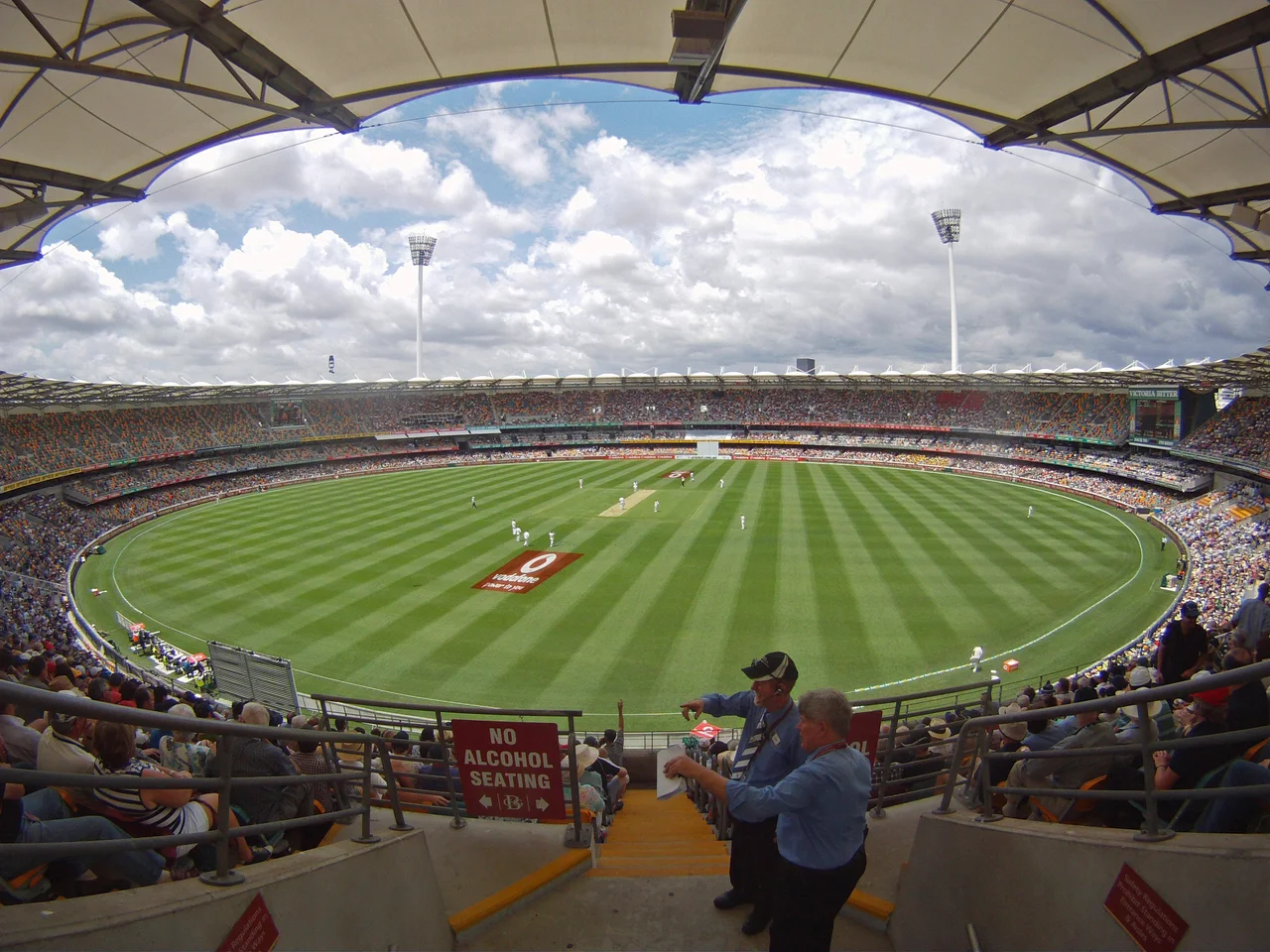

The Gabba
Cricketers gave it a nickname that says everything: the Gabbatoir. For 32 years, no visiting Test team left the Brisbane Cricket Ground with a win, and the run turned the place into Australian cricket's fortress - a cauldron of fast, bouncy turf and brutal afternoon heat where touring batters came to be tested and, usually, broken. The ground takes its name from Woolloongabba, the inner-Brisbane suburb that surrounds it, a word from the local Aboriginal language whose meaning experts still debate, rendered variously as 'whirling waters' or 'fight talk place.' Either way, the modern Gabba has lived up to the second translation.
The Day the Fortress Fell
In January 2021, the fortress fell. India - depleted by injuries, fielding a patchwork side many had written off - were set 328 to win on a fifth-day pitch against one of the most fearsome attacks Australia had assembled. They got there with three wickets and three overs to spare, the shadows lengthening across the outfield. It was the first time Australia had lost a Test at the Gabba since 1988, a streak spanning 29 matches and 32 years, and India became the first Asian team ever to win there. The Gabbatoir had finally been breached, and the cricketing world recognised at once that it had witnessed one of the great Test victories.
From Green Hills to Greyhounds
The land was set aside as a cricket ground in 1895, and the first match was played on the site on 19 December 1896 - Parliament against The Press. Test cricket arrived in November 1931, when Australia faced South Africa. In December 1960 the Gabba hosted something cricket had never seen before: the first tied Test in history, Richie Benaud's Australians finishing level with Frank Worrell's West Indians in a finish that still defines the drama of the long game. But cricket was only ever part of the story. Over the decades the ground hosted athletics, baseball, rugby league, rugby union, soccer matches against touring English and Scottish clubs, concerts, and - for 21 years from 1972 - weekly night greyhound races, the dogs circling a track laid around the famous square.
Rebuilt for Football
The greyhounds ran their last race in February 1993, and the Gabba began a transformation. Across six stages between 1993 and 2005, costing 128 million dollars, it became a modern all-seater stadium, its playing field widened to take Australian rules football at the elite level. The Brisbane Bears moved in from the Gold Coast, and after the Bears merged with Fitzroy in 1996 the ground became home to the Brisbane Lions from the 1997 season. The grandstands rose so tightly against the surrounding streets that the structure now overhangs Vulture and Stanley Streets and looms over the East Brisbane State School beyond the boundary. In October 2020, with the MCG shut out by the pandemic, the Gabba became the first ground outside Victoria to host an AFL Grand Final, Richmond defeating Geelong before a crowd just shy of 30,000.
The Last Innings
For a time, the Gabba was to be the heart of the 2032 Brisbane Olympics - first a billion-dollar rebuild, then a 2.7-billion-dollar one, plans that grew so contentious they were scrapped in March 2024. In March 2025 the Queensland government settled the question for good: a new stadium would be built at Victoria Park to host the Games, because bringing the Gabba up to Olympic standard in time was judged impossible. The verdict carries a sting for the old ground. After the Olympics the Gabba is slated for demolition, its tenants - the Lions, the Queensland Bulls, the Brisbane Heat - moving to the new arena, which is set to host the first Test of the 2033-34 Ashes. After more than a century of cricket, the cauldron has a closing date.
From the Air
The Gabba stands at 27.486 degrees south, 153.038 degrees east in Woolloongabba, just south of the Brisbane River and roughly 2 km southeast of the CBD. From the air it is unmistakable: a tightly enclosed oval ringed by tall grandstands and crowned by light towers, hemmed in by the dense street grid of inner Brisbane with no open space to soften its footprint. The Story Bridge lies a short distance to the north-northwest across the river. Best viewed from a few thousand feet on a clear day; the floodlit bowl is striking after dark during night matches. Brisbane Airport (YBBN / BNE) is about 13 km to the north-northeast, with Archerfield (YBAF) roughly 11 km to the southwest.
Nearby Stories
- Redcliffe Peninsula 2.7 km away
- Tamborine National Park 12 km away
- Cressbrook Homestead 27 km away
- Main Range National Park 31 km away
- 2010-2011 Queensland Floods 38 km away
- Cape Byron 96 km away
- Cape Byron Light 126 km away
- HMS Porpoise (1799) 588 km away