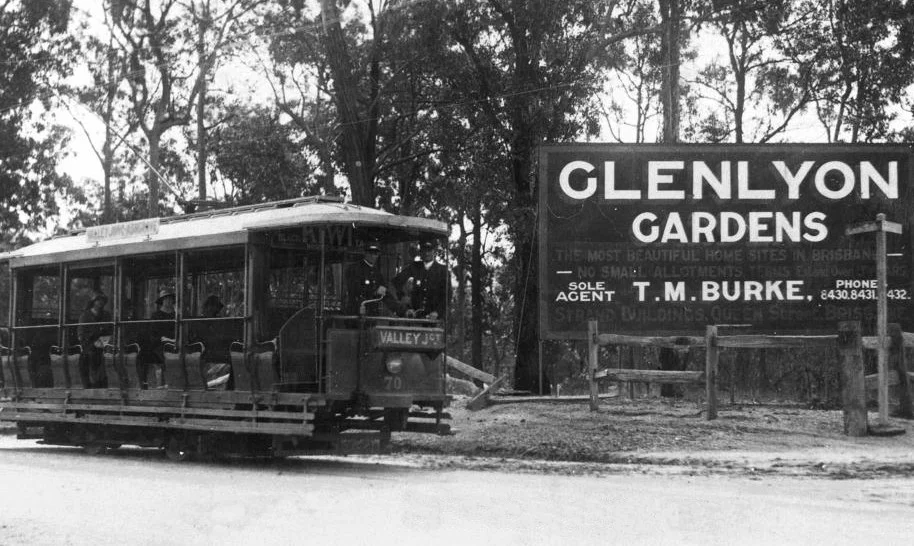

Trams in Brisbane
On hot summer nights, Brisbane's trams were the place to be. The open-sided cars - timber benches, no glass, the warm air rushing through - were so popular that social clubs chartered them for joyrides right up until the very last service. For 84 years, from horse-drawn cars in 1885 to the final electric run in 1969, the city moved on rails, building one of the largest tramway networks in Australia. Then it was gone, dismantled in a decision one commentator would call 'one of the most appalling urban planning mistakes in the city's history.' The trams have never quite been forgiven their absence.
From Horses to Sparks
It began in 1885 with horse trams hauling middle-class passengers - fares were steep, and some riders simply used the service to get home for lunch. Electricity arrived on 16 June 1897, when the first electric tramway ran along Stanley Street in South Brisbane. The changeover was so rushed that the company bodged early cars together from old horse trams: some were built by joining two saloon bodies onto a single chassis, their long enclosed shapes earning the grim nickname 'coffin cars.' Brisbane never bothered with the tidy alphabetical classes other cities used, preferring plain descriptions like 'standard centre-aisle car.' But the names the public gave them stuck better anyway - 'matchboxes,' 'toastracks,' 'jumping jacks,' and the big 'Dreadnoughts' that could carry ninety souls.
The Network at Its Height
By the mid-twentieth century the system was vast and proud. Patronage peaked in 1944-45, when the trams carried almost 160 million passengers in a single year. The route network reached its greatest extent in 1952 - 109 kilometres of routes laid over 199 kilometres of track, much of it set in concrete in a construction method pioneered in Brisbane. The most numerous cars were the 191 'dropcentres,' their open centre sections protected only by canvas blinds against cold or rain. The newest, the Four Motor 'silver bullets' built by the council itself, brought fluorescent lighting and air brakes. Through the 1940s and 1950s the council championed its trams, expanding the lines and running some of the most advanced cars in the country.
The Night the Depot Burned
On the night of 28 September 1962, fire took hold of the Paddington tram depot. The 47-year-old timber-and-steel building, with oil and grease stored beneath it, went up from end to end and smouldered for days. Sixty-seven trams - around a fifth of the city's fleet - were destroyed in a single blow. The cause was never established. The council had planned a new depot at Toowong, but the disaster changed everything: those plans were shelved, and a bus depot rose on the Paddington site instead. The last eight trams Brisbane ever built were assembled from components salvaged from the wreckage, painted pale blue and marked with a phoenix emblem - a defiant symbol of cars risen from the ashes. The phoenix, it turned out, was a false promise.
The Long Goodbye
The fire became the beginning of the end. Route by route, the network was converted to diesel buses, and on a day in 1969 the last tram ran. Of all the Australian capital cities that scrapped their networks between the 1950s and 1970s, Brisbane held on longest - but unlike Melbourne and Adelaide, it did not hold on. The trams left deep traces. Track still lies buried under bitumen across the city, occasionally surfacing where the road breaks, because removing concrete-set rails proved too slow and costly to bother. Heritage-listed substations, timber waiting sheds, and conical span poles survive along the old lines; even Brisbane City Hall still wears the brackets that once carried the overhead wires. Proposals to bring trams back have surfaced again and again since the 1990s, each one a quiet admission that the city misses what it tore up.
From the Air
Brisbane's former tram network radiated from the central business district at roughly 27.452 degrees south, 153.040 degrees east, fanning out to suburbs on every side - trams famously ran across the city rather than terminating in it. There is no single structure to spot from the air; instead, the system's ghost is written into Brisbane's road layout, with major arterials like Logan Road, Old Cleveland Road and Enoggera Terrace tracing former tram corridors. A 500-metre stretch of original track survives heritage-listed in the median of Old Cleveland Road between Camp Hill and Carina, southeast of the centre. Best appreciated as an overview of the inner-city grid and its river bends. Brisbane Airport (YBBN / BNE) lies about 11 km north-northeast of the CBD; Archerfield (YBAF) is roughly 12 km to the southwest.
Nearby Stories
- Redcliffe Peninsula 2.7 km away
- Tamborine National Park 12 km away
- Cressbrook Homestead 27 km away
- Main Range National Park 31 km away
- 2010-2011 Queensland Floods 38 km away
- Cape Byron 96 km away
- Cape Byron Light 126 km away
- HMS Porpoise (1799) 588 km away