
Trevalga
On 29 September 1934, a man named Gerald Curgenven bought the entire Manor of Trevalga - houses, fields, coastline, and all - for £14,000. Twenty-five years later he died and left it in a charitable trust. The instructions in his will were simple. The hamlet was to be managed exactly as he had managed it: local families given priority, children allowed to take over their parents' tenancies, the landscape protected from development. Profits, after maintenance, were to go to his old school. For sixty years it worked. Trevalga remained one of the few corners of Cornwall without holiday homes, with multi-generational tenants in their family cottages. Then in October 2023 the trustees sold it to a property company for £16 million.
A Hamlet Older Than England
Trevalga appears in the Domesday Book of 1086, held at the time by King William himself - it had previously been held by Queen Matilda and before her by Britric. Two ploughs were at work, with land for eight; there were fourteen households of serfs, villeins, and smallholders; the livestock was mainly sheep; the pasture was a league long and half a league wide; the annual value was four pounds. The hamlet lies five hundred metres from the cliffs, on the seaward side of the road between Boscastle and Tintagel, in the Cornwall Area of Outstanding Natural Beauty. The parish church is St Petroc's, twelfth and thirteenth century, restored in 1875. The churchyard holds an eighth-century Cornish wheel-headed wayside cross, moved here from the church path in the early nineteenth century. There are two medieval long houses in the hamlet. There was once a slate quarry and a silver-lead mine in the parish, both long closed. None of this is unusual for Cornwall. What was unusual was what happened next.
Curgenven's Plan
Gerald Curgenven, the man who bought Trevalga in 1934 for £14,000, was a graduate of Marlborough College, a public school in Wiltshire. Over his lifetime he expanded the estate with five further properties in the vicinity. When he died in 1959 he placed everything in a trust with instructions that were, by the standards of estate planning, eccentric. The Manor of Trevalga was to be preserved. The hamlet was to be managed as he had managed it - meaning, in practice, that local families came first. Children of tenants would be allowed to take over their parents' tenancies; no holiday homes; no major development. Profits from the estate, after maintenance, would benefit Marlborough College. The trust was formally established in 1961. For sixty years it did exactly what Curgenven had asked: it preserved Trevalga's character, kept it free of second homes, and allowed multi-generational tenants - some families three or four generations deep - to live in their cottages on what was, by the standards of the Cornish housing market, affordable rent.
The Battle Begins
In 2010, Marlborough College received legal advice that the will trust was technically invalid because it breached the rule against perpetuities - an obscure rule of English property law preventing landowners from binding land in trust forever. As the only remaining beneficiary, the College took ownership of the manor and put it on the market, arguing it would breach charity rules to hold it. The tenants - many of them elderly, many in houses their grandparents had occupied - mobilised. Petitions on Facebook attracted national attention. A barrister named Edward "Ted" Nugee, QC, examined the trust deed on an informal pro bono basis and concluded that it was a sound charitable trust capable of existing in perpetuity. The sale was suspended. The Manor was returned to the trustees. In 2012 the Gerald Curgenven Will Trust was formally registered with the Charity Commission. The villagers, briefly, had won.
The Battle Ends
In 2019 it emerged that the trust as registered did not include preservation of the Manor as one of its charitable objects - the very thing Curgenven had specifically asked for. Residents secured another legal opinion confirming that preservation was nonetheless part of the trust's purposes. Then in June 2022, in the middle of Cornwall's housing crisis, the trustees wrote to the tenants to say they were selling Trevalga anyway. The sales literature emphasised the short-hold nature of the tenancies and the development potential - leisure amenities, redevelopment, even setting up a shooting estate. The first viewing was on 11 August 2022. The villagers fought back through ITV, BBC Spotlight, the Daily Mirror, and the Daily Telegraph. Curgenven's original instructions, they pointed out, were being inverted: the estate was being sold to extract value rather than to preserve character; the tenants who had been guaranteed priority were now being marketed as a problem to be solved. In October 2023 the trustees completed the sale to Castle Lane Securities, a subsidiary of the British property company William Pears Group, for £16 million. The legal arguments may yet continue. The hamlet has changed hands.
What Trevalga Means Now
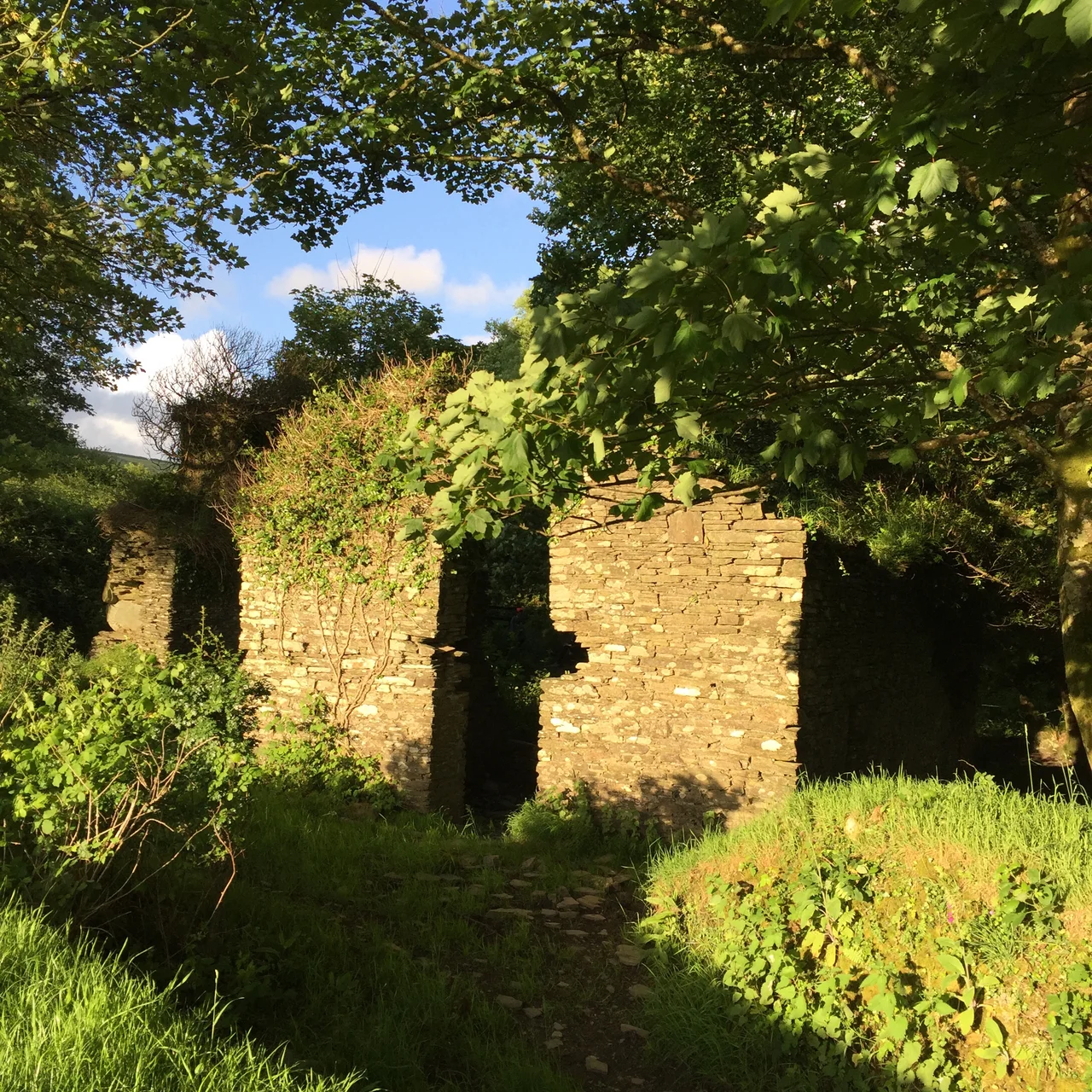
Trevalga is a small place. Its medieval long houses still stand. St Petroc's still holds Sunday services. The ruined eighteenth-century Trevalga Mill sits in fields by the Trevillet River, upstream of the waterfall now known as St Nectan's Kieve. The South West Coast Path still passes through. The Atlantic still grinds at the slate cliffs below. None of this is settled by an ownership change. What has changed is the moral claim. For sixty years Trevalga was a working example of how a hamlet could be preserved as a real community rather than as scenery - a community kept affordable for the people who actually lived in it, with the side benefit of preserving a recognisable Cornish landscape from the destructive pressure of holiday-home development that has hollowed out so much of the coast. That experiment ran from 1959 to 2023. It produced sixty-four years of evidence that the model worked. Whether anything like it will be tried again, in Cornwall or anywhere else, is now an open question.
From the Air
Trevalga lies at 50.678N, 4.717W on the north Cornish coast, between Boscastle (1.5 km north-east) and Tintagel (3 km south-west), and 500 metres inland from the sea cliffs. From altitude the hamlet appears as a small cluster of grey-roofed stone buildings in fields, with the road from Boscastle to Tintagel running just inland. St Petroc's Church is the chief landmark; the medieval long houses and the ruined Trevalga Mill are difficult to spot without close approach. The South West Coast Path follows the cliffs immediately seaward. Cornwall Airport Newquay (EGHQ) is the nearest commercial airport, about 30 km south-west. Best photographed at 2,000-3,000 ft along the coast to show Trevalga in its setting between Boscastle and Tintagel.
Nearby Stories
- Lanhydrock House 3.5 km away
- Tamar Bridge 4.7 km away
- Appledore Lifeboat Station 9 km away
- Okehampton Castle 15 km away
- Hartland Point Lighthouse 16 km away
- Tehidy Country Park 23 km away
- Godrevy Lighthouse 53 km away
- Action of 17 November 1917 62 km away