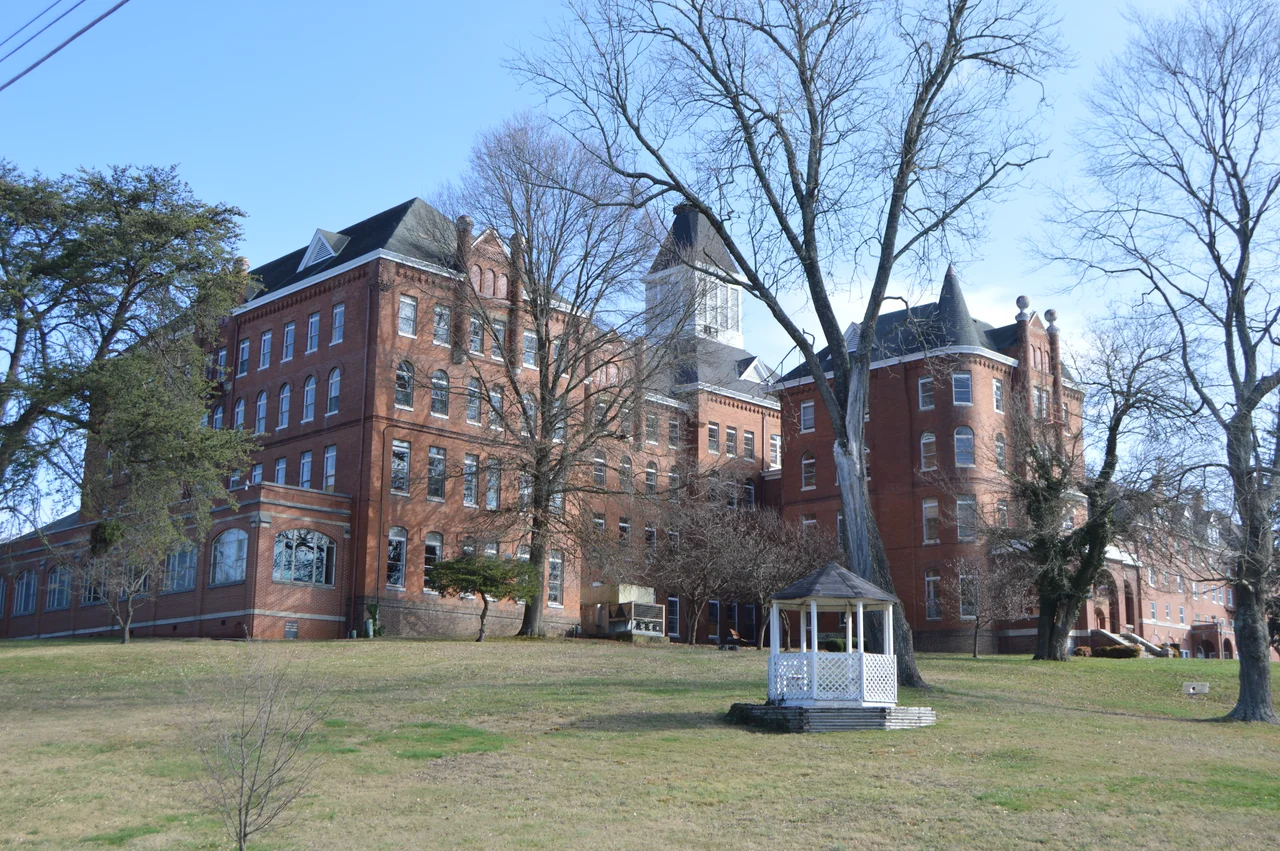

Virginia Intermont College
At about one in the morning on December 20, 2024, the buildings caught fire. Main Hall, West Hall, East Hall, the Administration Building - the core of the 1891 campus that gave Virginia Intermont its name, the Intermont between mountains, the place where generations of young women had learned to ride and to paint and to argue. By six a.m. all four were gone. Crews from more than a dozen fire departments fought to keep embers off Hodges Hall and the houses next door. Virginia Intermont had closed ten years earlier, in 2014, after 130 years of educating Appalachian women. The fire took the buildings that the closure had not.
Founded for the Daughters of Southwest Virginia
The Reverend J.R. Harrison, a Baptist minister, opened Southwest Virginia Institute on September 17, 1884, in Glade Spring, Virginia. His goal was concrete: bring higher education within reach of women whose families could not send them to Richmond or Charlottesville. Boarding students slept on the upper floors. The school grew faster than the building could hold it, and within a decade Harrison was moving the institution to Bristol. Classes resumed on the new campus on September 14, 1893. The name became Virginia Institute, then in 1908 Virginia Intermont College - Intermont because Holston Mountain, part of the Blue Ridge, rises beyond the campus, and the school sat between the heights. In 1910 it became the first two-year college accredited by the Southern Association of Colleges and Schools.
Horses and Cobras
Through the 20th century Virginia Intermont built a reputation that lived in two unlikely places. The equestrian program collected more than 15 national championships across three different intercollegiate organizations. The Riding Center, six miles from main campus off Interstate 81, attracted students from across the country. The cross-country team, the Cobras, won the NAIA Men's National Championship three years running, from 2004 through 2006. The men were admitted in 1972 - VI became coeducational then, ending nearly nine decades as a women's college. Photography and equine studies became the signature majors. Alumni went on to win Pulitzers (Preston Gannaway, 2008) and seats in the Virginia House of Delegates.
The Slow Closure
The financial trouble started years before the end. The Southern Association warned VI in late 2011 about its finances. In December 2012 the warning became probation. In 2013 the accreditor recommended removing the college from membership entirely; VI won a court injunction and kept teaching, but the warning was clear. In January 2014 the board announced a merger with Webber International University in Florida. The merger collapsed in April. On May 4, 2014, at the graduation ceremony itself, the faculty president told the assembled graduates and families that the school would close. The next day President Clorisa Phillips resigned. Over $5 million in unpaid salaries to faculty and staff remained owed when the doors locked.
The Empty Hill
Bluefield College considered buying the campus and walked away after inspections revealed $20 million in deferred maintenance. In December 2016 the property sold at auction for $3.3 million to a Chinese-owned education company that announced plans to reopen as a college someday. The plans never materialized. The Main Hall - added to the National Register in 1984 - stood empty for eight years. When the fire started in the early morning of December 20, 2024, there was no working sprinkler system. The timber joists and floors burned fast. By dawn the buildings that had survived two world wars and the closure of their college were gone. King University, eight blocks away, still holds the academic transcripts. The hill where Intermont's daughters once walked to convocation is mostly bare ground now.
From the Air
Virginia Intermont College's former campus sits at 36.60 N, 82.18 W in Bristol, Virginia, about eight blocks from downtown and just north of the Tennessee state line. From the air the site is now mostly cleared ground where the original Main Hall stood, with surviving outbuildings like Hodges Hall and the gymnasium to one side. Tri-Cities Regional (KTRI) is 19 nm southwest. Recommended viewing altitude 3,500 to 4,500 feet MSL; Bristol sits at about 1,700 feet. Holston Mountain rises to the southeast - the mountain that gave Intermont its name.
Nearby Stories
- Wise County, Virginia 6.2 km away
- Sycamore Shoals 16 km away
- David Crockett Birthplace State Park 21 km away
- Tazewell County, Virginia 24 km away
- Big Stone Gap, Virginia 28 km away
- Buchanan County, Virginia 40 km away
- Moravian Falls, North Carolina 47 km away
- Wytheville Raid 54 km away