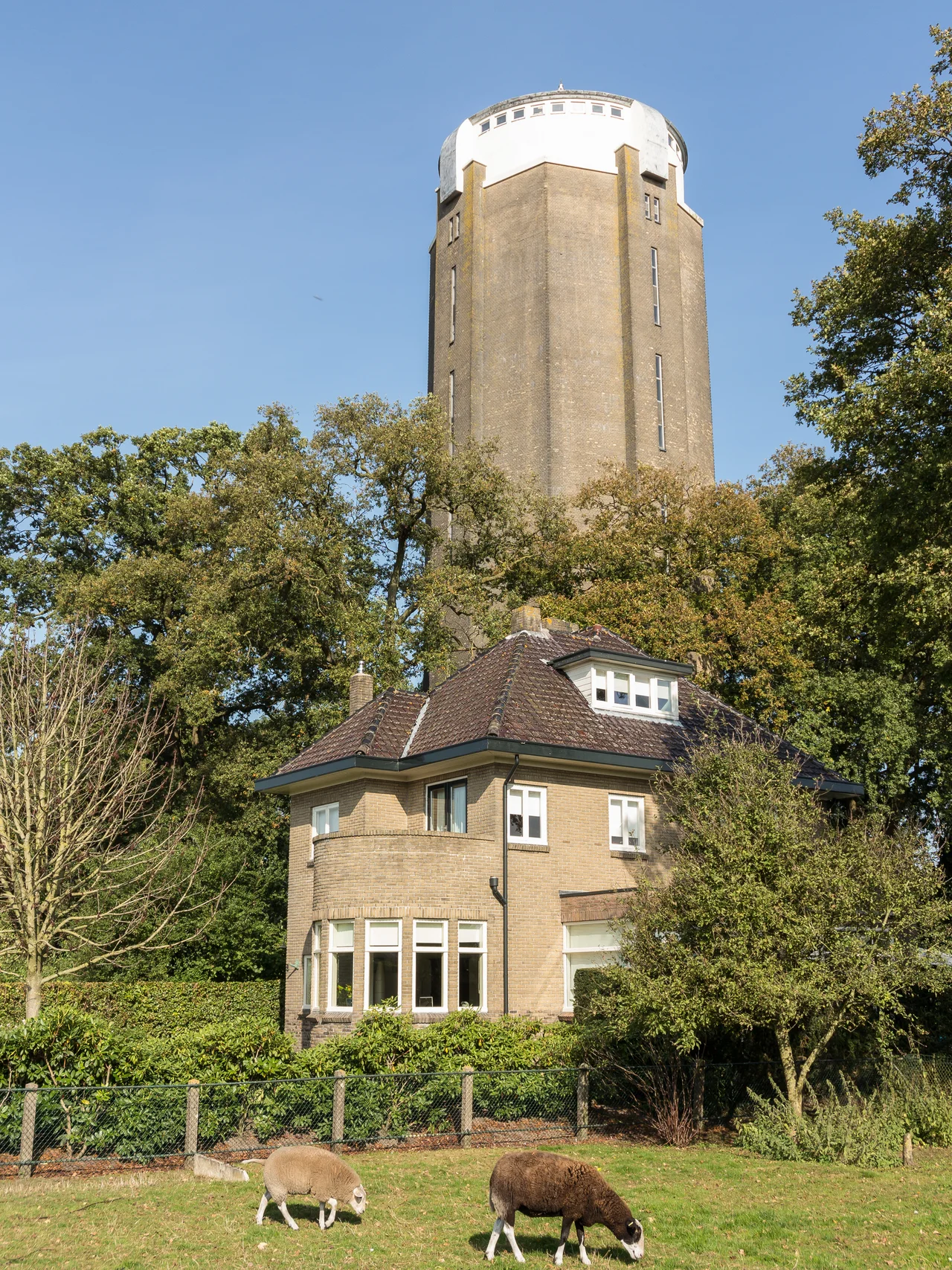

Vriezenveen
In 1720, a handful of men from a remote Dutch peat village climbed into wagons and set off for Saint Petersburg, then less than two decades old. They went to trade, and they were good at it. By the 19th century, businesses founded by Vriezenveeners ran shops on the Nevsky Prospekt and inside the Gostiny Dvor arcade, in the heart of the Russian capital. They had a name there: Rusluie, the Russia people. For 197 years a tight-knit Twente community lived and worked in the city at the mouth of the Neva, speaking among themselves in their own dialect, before the Revolution of 1917 closed the chapter.
A Charter for the Frisians
The earliest record of Vriezenveen dates from 1364, when Evert van Hekeren, lord of Almelo, wrote a charter for the free Frisians colonising the moor above his lands. Their rent was paid in butter: one bucket a year per family, measured by the standard of Zwolle, delivered to Huis Almelo on St Martin's Day. The settlement, then called Almelervene, was laid out as forty long farms, each sixteen fields wide. The bog and swamp on every side made the village hard to reach, which proved a defence for centuries. That defence finally failed in the winter of 1666. Bernhard von Galen, prince-bishop of Münster, had been raiding Twente; locals called him Bommen Berend, Bombing Bernard. Vriezenveen had been spared because of its surrounding marshes and a single guarded road, but a hard freeze turned the bogs solid. In January 1666 a force of 1,500 of the bishop's riders rode straight in, looted the village, burned the houses and the church, killed many, and took the rest prisoner.
Rebuilt on a Sandy Road
When Vriezenveen was rebuilt after the destruction of 1666, the survivors did not return to the old Buterweg. Instead they laid out a new village along a sandy road to the north, the current Hammerweg-Westeinde-Oosteinde axis. They built it long. The continuous village street now stretches 6.2 kilometres east to west, lined with characteristic facades; it is the kind of langestraat layout that gives Twente villages their particular signature when seen from above. Only the cemetery of the old Vriezenveen survives from before the fire. To the east, the Engbertsdijksvenen, a partly living raised bog complex with rare flora and fauna, is a reminder of what the country around the village looked like before drainage and colonisation transformed it.
The Rusluie
From 1720 until 1917, Vriezenveeners ran a trading colony in Saint Petersburg that punched dramatically above the village's weight. They were called Rusluie, the Russia people, and their houses stood on some of the most prestigious streets in the Russian capital. Hendrik Kruys owned the trading house called Java at Grosse Morskaya 38. Other Vriezenveen firms had premises on the Nevsky Prospekt and inside the Great Gostiny Dvor, the famous covered arcade that ran along it. They mostly kept to themselves, married within the community, and spoke their own dialect of Vriezenveens, locally called Vjeans, even thousands of kilometres from home. Many eventually returned to Twente, bringing wealth and a Russian inflection back to the village. The brick Rusluie houses they built, set apart from the wooden cottages around them, proved sturdier when disaster came again.
The Great Fire of 1905
On 16 May 1905, fire broke out in Vriezenveen and almost destroyed the entire town. Dry weather, thatched roofs, and a strong east wind drove the flames; 228 houses burned. The Jansen and Tilanus textile factory, then the largest employer in the village, was spared when the fire stopped just before the Westeinde. The richer brick farms and the Rusluie houses, set further apart and built of stone, survived the flames and still stand. The most famous of these, the Peddemors farm, anchors the historical memory of the day. Queen Wilhelmina and her husband Prince Henry, formally Duke Henry of Mecklenburg-Schwerin, visited Vriezenveen in person after the fire and made a personal donation of 2,000 guilders for reconstruction. The fire was commemorated a century later, in 2005, with a parade of historic fire-fighting vehicles.
Vjeans, War Children, and What Remains
The local language, Vriezenveens or Vjeans, sounds different from the Twents spoken in surrounding villages. Some linguists hear Frisian roots in it, plausibly, given the village's founding. Others have argued the Saint Petersburg colony shaped it, though that seems less likely. The clearer story is Westphalian: like the rest of Twente, Vriezenveen long looked east to Münster for language and fashion, and a feature called vowel breaking, where ee, oo, and eu twist into ieje, oewe, and uje, runs through both dialects. Vjeans seems to have taken the rotation a step further. In 2014 four stories from the beloved Dutch children's series Jip en Janneke were translated into Vjeans for a Twents edition called Jipke en Jannöaken. During the Second World War, Vriezenveen took in many children from bombed-out Rotterdam, called bleekneusjes, pale noses, by the locals because they arrived underfed and undersun-soaked. In 2004, around a hundred of those former oorlogskinderen returned to Vriezenveen for a reunion, and in 2006 their collected stories were published. Today the village has about 13,800 residents, the town hall of the larger Twenterand municipality, the 1879 Mikdash Me'at synagogue still standing (though now in industrial use), and a Vriezenveens Harmony orchestra that has won the national championship more than once.
From the Air
Vriezenveen sits at roughly 52.41 degrees north, 6.63 degrees east, in northwestern Twente. From altitude the village's signature is unmistakable: a long thin linear settlement strung along a single 6.2-kilometre street, with parallel field strips fanning out perpendicular to it. The nearest airport is Twente (EHTW) about 25 km south near Enschede, with Groningen Eelde (EHGG) farther north and Schiphol (EHAM) about 140 km west. The N36 road and the Almelo-Mariënberg rail line, the latter served by Arriva's LINT trains, are the visible transport corridors.
Nearby Stories
- Nordhorn 4.8 km away
- Weerribben-Wieden National Park 5.1 km away
- Veluwe 9.5 km away
- Kampen, Overijssel 10 km away
- Berkelland 10 km away
- Westerbork 15 km away
- Haren, Germany 15 km away
- Steinfurt 22 km away