
Warsaw Ghetto Museum
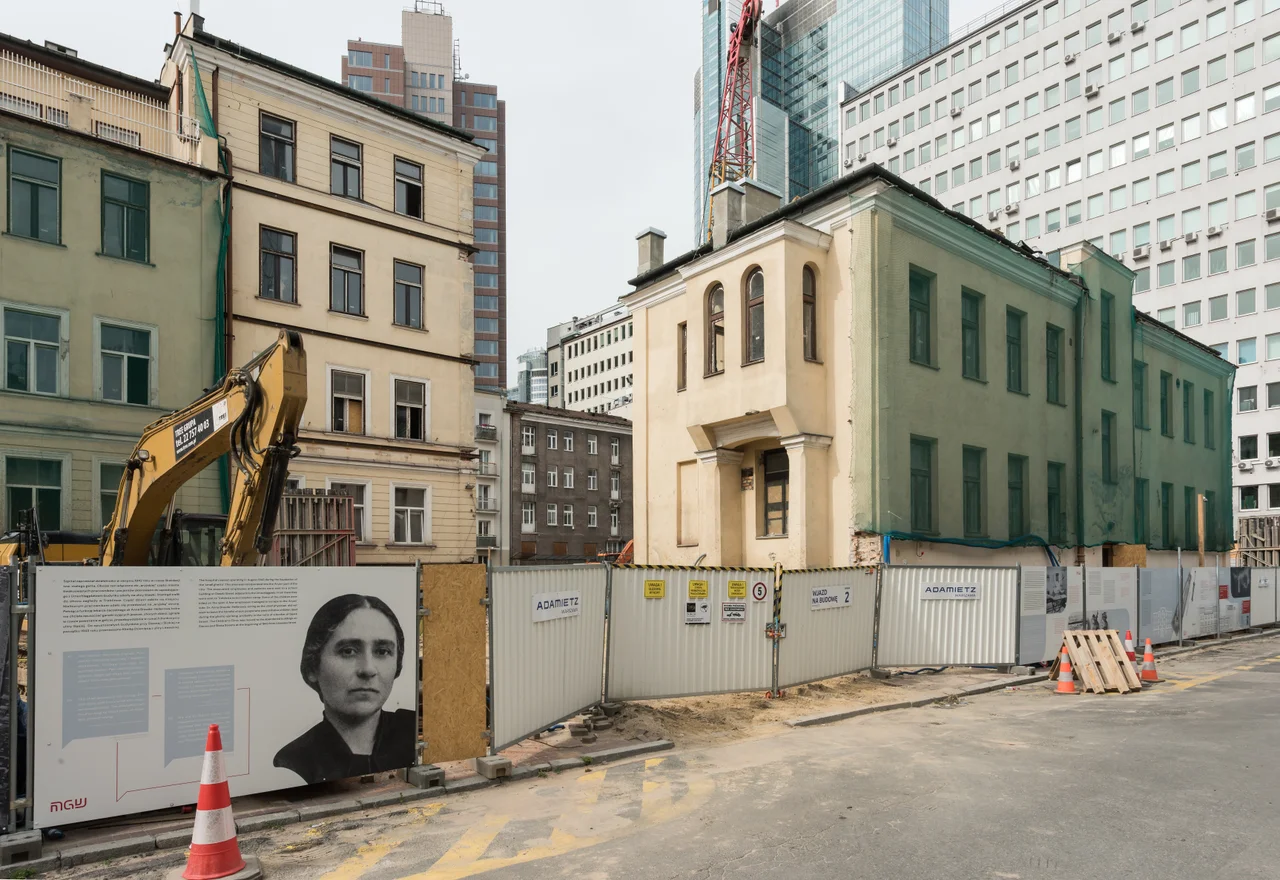
The building at the corner of Śliska 51 and Sienna 60 streets is one of the very few that survived. Almost everything else inside the bounds of what had been the Warsaw Ghetto was systematically demolished by the Germans after the 1943 uprising — turned to brick rubble that Jewish prisoners from KL Warschau were forced to clear. The Bersohn and Bauman Children's Hospital somehow remained. Children of the ghetto were treated there, and many died there, in wards crowded beyond capacity by typhus, tuberculosis, and starvation. In November 2017 the Polish Ministry of Culture announced it would become the Warsaw Ghetto Museum. The decision was a recognition: this place, where ghetto children's lives ended, would become the place where ghetto life itself is remembered.
The Hospital and Its Doctors
Bersohn and Bauman opened in 1878, founded by two Jewish philanthropist families to serve the children of Warsaw regardless of religion. By the 1940s it stood inside the walls of the largest ghetto in Nazi-occupied Europe — at its peak holding more than 400,000 Jews crammed into 1.3 square miles. The hospital's doctors continued working under impossible conditions. Anna Braude-Hellerowa ran the pediatric service. Franciszek Raszeja, a Polish surgeon who entered the ghetto to operate on Jewish patients, was murdered by the SS in 1942 along with his patient and several colleagues; he was posthumously awarded the Righteous Among the Nations medal. The museum, in its 2022 exhibition Ordinary/Unusual: Doctors in the Warsaw Ghetto, made a point of telling these stories — not as a footnote to the deaths but as the substance of the ghetto's daily life.
The Mission
Under the supervision of Hebrew University historian Daniel Blatman, the museum's permanent exhibition is being designed around a clear principle: present the broad perspective of Jewish life in Poland during the German occupation, not just its end. The Warsaw Ghetto contained more than four hundred thousand people who married, raised children, ran underground schools, kept diaries, smuggled food, made art, prayed, fought, and tried to survive. They organized concerts. The Ringelblum Oneg Shabbat archive was buried in milk cans under the rubble so that the world would know what had happened and who they had been. The museum's collection — over 5,000 artefacts as of 2022 — includes a 19th-century synagogue Hannukiah purchased at Sotheby's, a kiddush cup belonging to one of Rabbi Kalman Kalonymus Shapiro's followers, and a pre-war silver megillah case made in the Warsaw factory of Israel Szekman before it closed in 1939.
Excavations in Muranów
In summer 2022, the museum partnered with Christopher Newport University in Virginia and the Pułtusk Academy of Humanities to begin archaeological excavations in the Muranów neighborhood — the postwar housing district built directly on top of the rubble of the ghetto. The dig area covered Miła, Dubois, Niska, and Karmelicka streets, including the location of Mordechai Anielewicz's bunker, the headquarters of the 1943 ghetto uprising. Roughly 3,000 artefacts were recovered. Most were ordinary objects of daily life — pots, buttons, bottles. Some were religious: fragments of prayer books, pieces of tefillin. Each one had been there for nearly eighty years, buried beneath the apartment blocks, waiting. The Stroop Report — the album the SS commander Jürgen Stroop produced after the ghetto's liquidation, photographing Jews driven from their hiding places at gunpoint — has been deposited at the museum by the Institute of National Remembrance for the permanent exhibition.
What the Museum Will Be
Albert Stankowski directed the museum from its founding in 2018 until 2025. His successor, the historian Katarzyna Person, was elected for the 2025-2030 term. The Council is chaired by Colette Avital. The Council's first chairman, Chief Rabbi Michael Schudrich, set the tone in 2019: this would be a museum for everyone, not only for Jews. Russian aggression in Ukraine added a new dimension. Since 2022 the museum has organized walking tours in Warsaw for Ukrainian refugees, and museum staff have hosted researchers from Kyiv's National Museum of the History of Ukraine in the Second World War to discuss how museums function during war. The permanent exhibition is still under construction. Visitors today can see outdoor exhibitions on Grzybowski Square and at the hospital site itself. When the museum opens fully, it will sit at the corner of two small streets in central Warsaw, in the building where so many ghetto children took their last breath, telling the story of the lives those children would have led.
From the Air
The Warsaw Ghetto Museum site sits at 52.23°N, 21.00°E in the Śródmieście district of central Warsaw, on Śliska/Sienna streets just south of the area that contained the Warsaw Ghetto. The Muranów district to the north is built atop the ghetto's rubble; the POLIN Museum of the History of Polish Jews stands at its center. The Vistula River runs east-west through the city. Nearest airport is Warsaw Chopin (EPWA), 8 km south. Recommended viewing altitude 2,000-4,000 ft to take in the layered geography of central Warsaw — the Old Town to the northeast, the Palace of Culture to the south, the cemetery and the Jewish memorials to the northwest.
Nearby Stories
- Treblinka Uprising 42 km away
- Treblinka Extermination Camp 56 km away
- Lodz Ghetto 70 km away
- Soldau Concentration Camp 79 km away
- Lubartów Ghetto 101 km away
- Poniatowa Concentration Camp 123 km away
- Osowiec Fortress 154 km away
- Stutthof Concentration Camp 241 km away