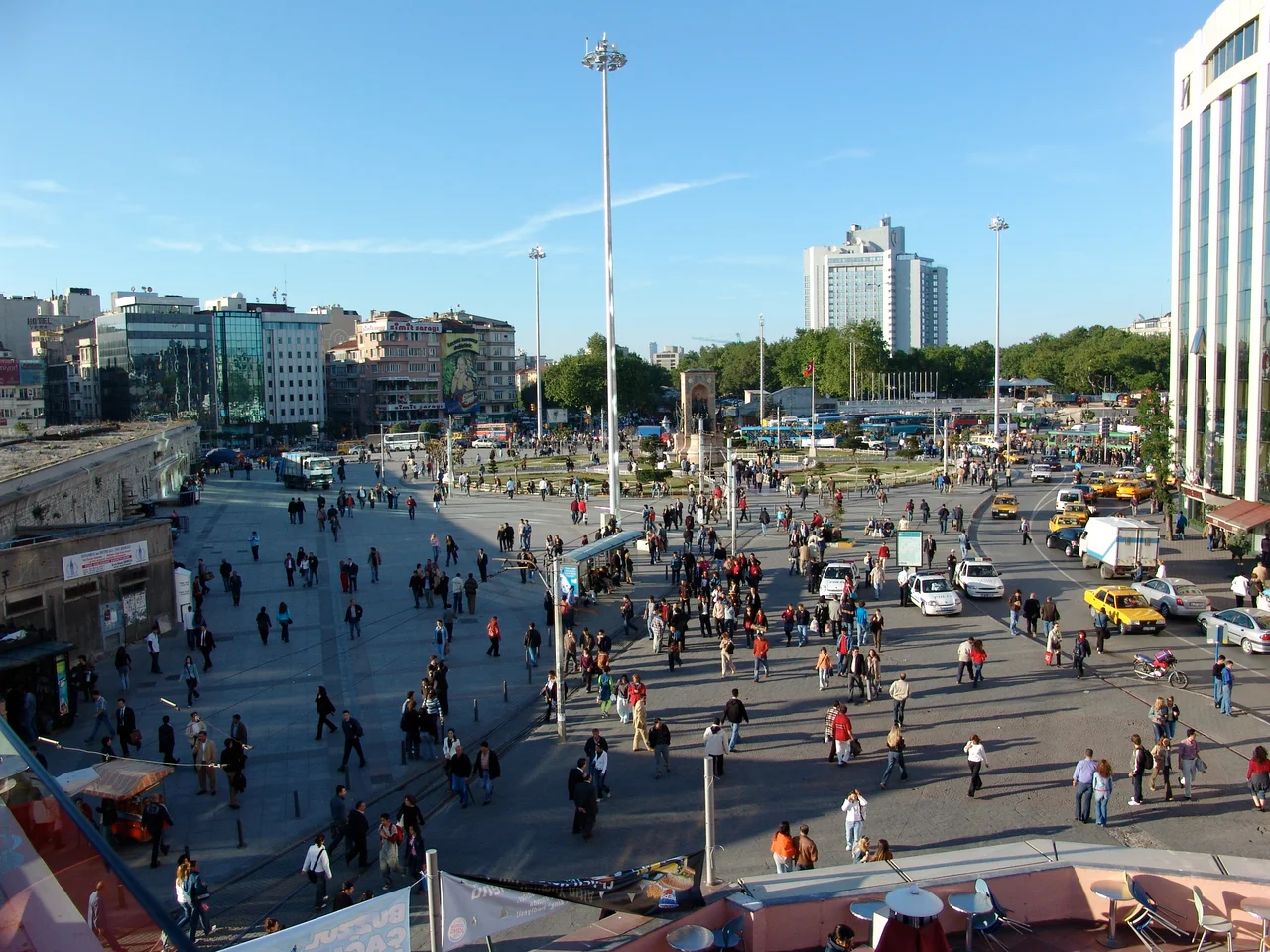

2010 Istanbul Bombing
October 31, 2010 was Republic Day in Turkey — the holiday marking the declaration of the Turkish Republic in 1923. In Istanbul, the final celebrations of the day were drawing to a close when a suicide bomber detonated explosives at Taksim Square, one of the city's most central and heavily trafficked public spaces. Thirty-two people were injured: fifteen of them police officers, the rest civilians. The attacker also died. No one else was killed. The Kurdistan Freedom Hawks, known by the Turkish acronym TAK, claimed responsibility within days.
Taksim Square and Its People
Taksim Square stands at the heart of modern Istanbul, a wide open plaza that functions as both transit hub and gathering place — the point at which demonstrations assemble, celebrations overflow, and the city's European quarter converges. On Republic Day, it draws crowds: families, visitors, police maintaining security for the holiday events. The thirty-two people injured on October 31, 2010 were there because it was a public holiday, or because they were on duty, or because Taksim is simply where Istanbul moves. Fifteen of the injured were police officers who had been stationed at the square for the Republic Day security operation. The remaining seventeen were civilians. All thirty-two survived.
The Bombing
The device was detonated at a moment when Turkish President Abdullah Gül was due to arrive at a nearby location for Republic Day events — the timing almost certainly deliberate. Police were present in significant numbers for the presidential visit and the holiday celebrations. The TAK, in a statement published on their website, said they had targeted 'the police force of Turkish fascism at Istanbul's Taksim Square.' Bomb squads discovered multiple additional explosive devices at the scene after the initial detonation, which they subsequently rendered safe. The attacker died in the explosion. No fatalities occurred among the thirty-two injured.
TAK and the PKK's Disavowal
The Kurdistan Freedom Hawks (TAK) is a splinter organization connected to, but separate from, the larger Kurdistan Workers Party (PKK). The PKK had declared a unilateral ceasefire approximately two months before the Taksim bombing; that ceasefire was due to expire on October 31 — the very day of the attack. The PKK's spokesman stated he had 'no idea' about the bombing, and the PKK formally denied involvement. Following the attack, the PKK announced it was extending its unilateral ceasefire until the 2011 Turkish general election. The TAK's claim was explicit and unambiguous. The distinction between the two organizations — one having declared a ceasefire, the other carrying out an attack on the same day — became part of the legal and political complexity that followed.
Republic Day and the Choice of Timing
Republic Day — October 29, celebrated over several days — commemorates the founding of the Turkish Republic and is one of the country's most significant national occasions. The choice to strike on the final day of Republic Day celebrations, at the most prominent public square in Istanbul's European quarter, while the President was due nearby, was not coincidental. It was an attempt to insert political violence into a moment of national celebration, to turn commemoration into crisis. That attempt failed in its largest ambition — the President was not harmed, no one was killed, and the city went on — but it succeeded in injuring thirty-two people and briefly transforming a public holiday into a scene of emergency response.
International Condemnation and Continuity
Governments from Turkey, the Kurdistan Regional Government, Kuwait, Russia, and the United States condemned the attack. U.S. Secretary of State Hillary Clinton called it 'a shocking crime' and pledged continued cooperation with Turkey against violent extremism. The Kurdistan Regional Government — whose condemnation carried particular weight given the attack's claimed origins in the Kurdish separatist movement — expressed sympathy to the victims and their families. Prime Minister Recep Tayyip Erdoğan said those who threatened Turkey's peace would not be tolerated. The thirty-two injured recovered. Taksim Square, which cannot remain closed for long without the city ceasing to function, returned to ordinary use. The Republic Day that followed the next year was marked without incident.
From the Air
Taksim Square is located in the Beyoğlu district of European Istanbul at approximately 41.04°N, 28.98°E. From the air, it is identifiable as the open plaza at the top of İstiklal Avenue, connected via funicular to the Karaköy waterfront below. The Golden Horn inlet is visible to the south, and the Bosphorus beyond. Istanbul Airport (LTFM) lies approximately 35 km to the northwest. Taksim is one of the clearest landmarks for navigating central Istanbul from altitude — an open space in an otherwise dense urban grid.
Nearby Stories
- Kocaeli Peninsula 7.6 km away
- Second Battle of Çatalca 11 km away
- Istanbul's Rural Outskirts 14 km away
- MV Struma 20 km away
- HMAS AE2 36 km away
- Bursa 66 km away
- Sangarius Bridge 71 km away
- Januarius MacGahan 101 km away