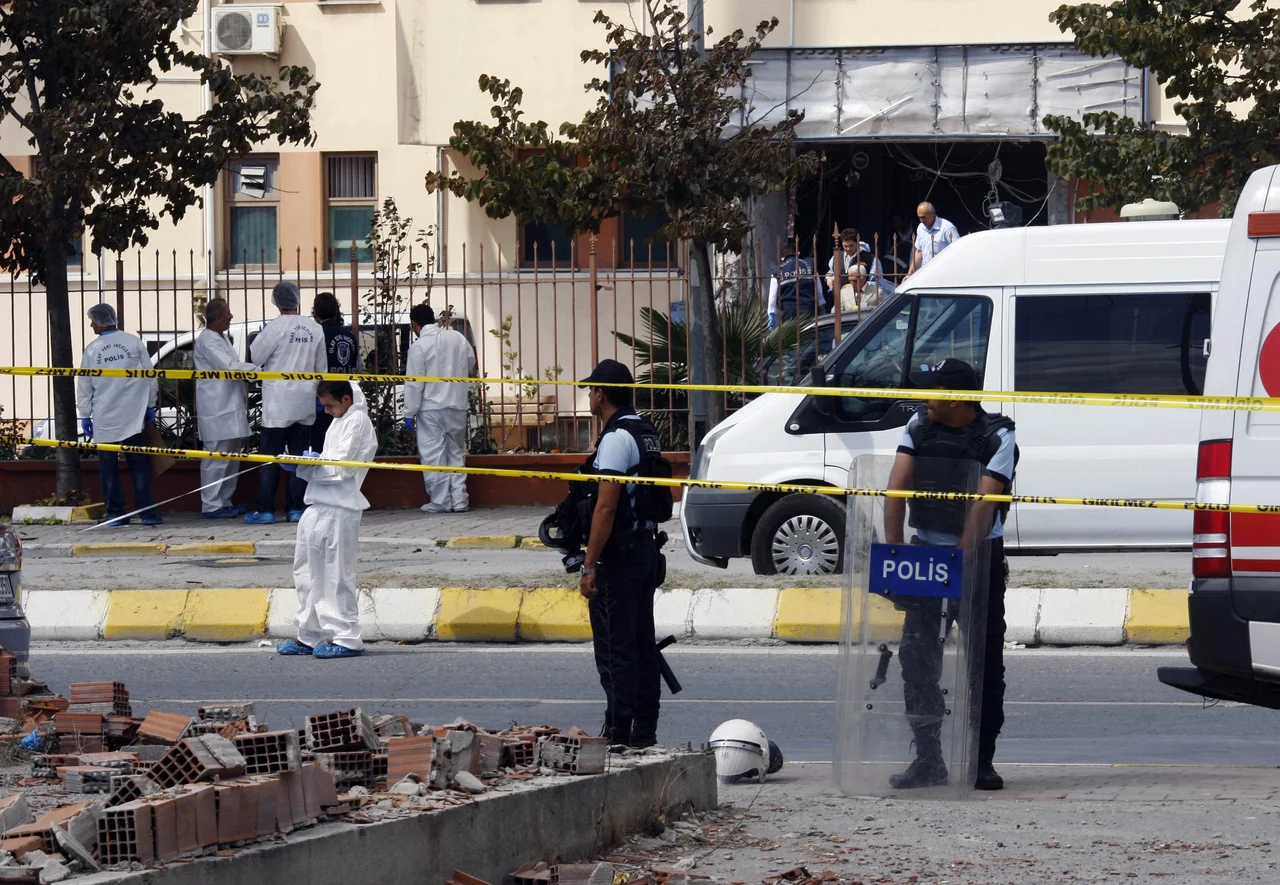

2012 Istanbul Suicide Bombing
Police officer Bülent Özkan was on duty at the entrance of the 75th Anniversary Police Station in Istanbul's Sultangazi district on the morning of September 11, 2012, when a man approached and attempted to enter. Özkan tried to stop him — physically, pushing the attacker back toward the door. The attacker, İbrahim Çuhadar, a member of the Revolutionary People's Liberation Party/Front (DHKP-C), detonated the explosives he had strapped to his body. Bülent Özkan died on the way to the hospital. Seven others were injured. This is a story about the last act of a police officer doing his job.
Bülent Özkan
The record of September 11, 2012 gives us one name among the dead on the side of those who were protecting: Bülent Özkan, a police officer stationed at the entrance door of the 75th Anniversary Police Station. When the attacker arrived and was refused entry, Özkan moved to physically remove him from the building. He placed himself between the threat and the people inside. The explosion that the attacker set off while Özkan was attempting to stop him delivered fatal injuries. Özkan was transported to hospital and did not survive. His death — in the act of trying to prevent the attack from reaching further — is the center of this event. He left behind colleagues who mourned him at a ceremony; the Doğan News Agency reported that tears were shed at his funeral.
The Attack
Çuhadar arrived at the 75th Anniversary Police Station at 11:00 a.m. local time. He crossed the guard cabin at the gate and walked the fifty-meter path between the garden entrance and the station building, reaching the x-ray device at the entrance door. He first threw a grenade inside the station — it did not detonate. Then Özkan moved to stop him. In the confrontation at the entrance, Çuhadar detonated the explosive device he was carrying. The DHKP-C — the Revolutionary People's Liberation Party/Front, a far-left organization that had conducted attacks against Turkish security forces and foreign diplomatic targets since the 1990s — claimed responsibility. Photographs published on the group's website had shown Çuhadar preparing the device in the days before the attack.
Background: The July 2012 Incident
The September bombing did not occur without warning signals. On July 20, 2012, a separate incident had taken place near the Gazi neighborhood in Sultangazi: gunfire was directed at police from a taxi, and those in the vehicle threatened the driver at gunpoint. The passengers were identified as DHKP-C members: Hasan Selim Gönen and Sultan Işıklı. Gönen died on July 21 from wounds sustained in the police response. Following his death, Turkish press reported that authorities had been warned the DHKP-C was planning attacks on police stations. That intelligence reached the public record. The warning was not enough to prevent what happened in September.
Sultangazi and the People There
Sultangazi is a large residential district in the northwest of Istanbul's European side — a neighborhood of apartment buildings, markets, schools, and the ordinary texture of urban life. The 75th Anniversary Police Station served that community. The seven people injured alongside Özkan in the September 11 attack were at a police station on an ordinary Tuesday morning. Some were officers; the public record does not fully document who each of the injured was or how they were affected in the longer term. What is documented is that the station was operating normally, and that the attack was intended to kill as many of them as possible. The grenade that failed to detonate, and the physical confrontation that Bülent Özkan chose to initiate, limited the toll.
After
The body of İbrahim Çuhadar was buried at the Gazi Cemetery in Istanbul, according to Turkish press reports. The DHKP-C continued to operate for years after the 2012 attack, conducting further actions against Turkish security forces and diplomatic targets. Sultangazi's police station, and the officers who served in it, continued their work. Officer Bülent Özkan's name is preserved in the Turkish press accounts of his funeral and in the record of those who died in the performance of their duty. That September morning asked something of him that most days do not ask of anyone — and he met it without hesitation, at the cost of his life.
From the Air
Sultangazi is located in the northwestern quadrant of European Istanbul at approximately 41.11°N, 28.89°E. From cruising altitude, it is part of the dense residential fabric north of the historic center, well inland from the Bosphorus shore. The Bosphorus itself is visible to the southeast; the Golden Horn connects to the Marmara below. Istanbul Airport (LTFM) lies approximately 25 km to the northwest, making Sultangazi one of the districts nearest to the airport's flight path. The scale of Istanbul's residential expansion northward and westward is clearly visible from the air.
Nearby Stories
- Kocaeli Peninsula 7.6 km away
- Second Battle of Çatalca 11 km away
- Istanbul's Rural Outskirts 14 km away
- MV Struma 20 km away
- HMAS AE2 36 km away
- Bursa 66 km away
- Sangarius Bridge 71 km away
- Januarius MacGahan 101 km away