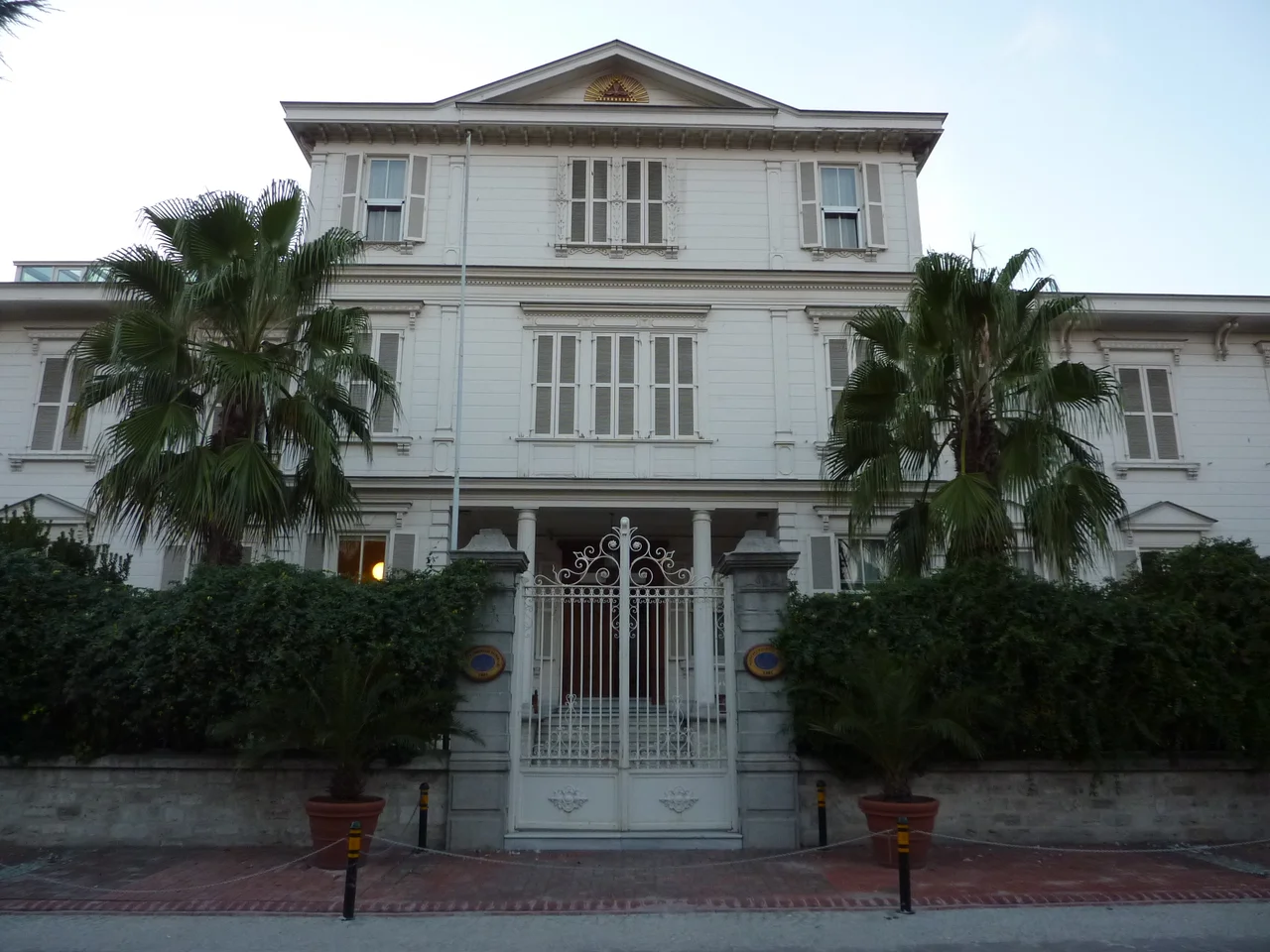

Armenian Patriarchate of Constantinople
It began not with a petition, but with a summons. In 1461, Sultan Mehmed II — eight years after his armies had taken Constantinople — sent for Hovakim I, the Armenian metropolitan of Bursa, and brought him to the new Ottoman capital. The sultan needed a structured Armenian community under a recognized leader who could function within the Ottoman millet system; the Armenians needed institutional protection in a city where they had previously had none. From this pragmatic exchange, the Armenian Patriarchate of Constantinople was born. More than five hundred years later, it still stands — in the Surp Asdvadzadzin Patriarchal Church in the Kumkapı neighborhood of Istanbul — as the seat of a community that outlasted an empire, survived genocide, and remains the largest Christian community presently living in Turkey.
The Invitation That Founded a Patriarchate
Before the Ottoman conquest, the Armenian Apostolic Church had no official presence in Constantinople. The Byzantine Church and the Armenian Church had regarded each other as heretical since the fifth century — the schism rooted in Armenia's rejection of the Council of Chalcedon in 451, a theological disagreement about the nature of Christ that divided Eastern Christianity for centuries. Under Byzantine rule, this mutual rejection meant exclusion. Mehmed II reversed it not out of theological reconciliation but out of imperial administration. He established the millet system — a framework in which non-Muslim communities governed their own religious and personal affairs through recognized leaders — and he needed Armenian leadership to be organized and identifiable. Hovakim I arrived in Constantinople in 1461 as the first Armenian Patriarch, recognized by the Ottoman state as the religious and secular leader, the milletbaşı or ethnarch, of all Armenians in the empire. For a time, the Syriac Orthodox Church was even placed under the patriarchate's jurisdiction, a measure of how much authority the Ottoman state invested in this new institution.
Centuries of Service and State Interference
The centuries between 1461 and 1908 were not tranquil. There have been 115 pontificates since the patriarchate's founding, but only 84 individual patriarchs — a discrepancy that reflects repeated forced removals, depositions, and political interventions. In 1863, Sultan Abdülaziz granted the Armenians a national constitution, the Sahmanadrootiun, which gave the community significant self-governance. But the gains proved fragile. In 1896, when Patriarch Madteos III (Izmirlian) publicly denounced the massacres of Armenians that Sultan Abdülhamid II's government had orchestrated — killings that claimed tens of thousands of Armenian lives — the patriarch was deposed and sent into exile in Jerusalem. The constitution governing the Armenian community was suspended. The patriarchate had tried to speak for its people; the state had moved swiftly to silence it.
1915: The Void at the Center
When the Young Turk government launched mass deportations and killings of Armenians beginning in 1915, the community that the patriarchate represented was decimated. Before 1915, roughly 1.5 million Armenians lived in Turkey — the Ottoman government's own official census placed the figure at approximately 1.1 million, but most historians regard that count as a significant underestimate. What followed — the deportations, the death marches into the Syrian desert, the organized massacres — constituted the Armenian genocide, one of the first genocides of the twentieth century, in which a large fraction of the Armenian people were killed. The patriarchate itself was nearly destroyed as an institution: the post of patriarch remained vacant from 1915 to 1919, and the Ottoman government formally abolished the office on 28 July 1916. The patriarchate founded relief committees — a Committee for Orphan Relief, a Central Committee for Deportees — to aid the survivors it could reach. Patriarch Zaven I Der Yeghiayan returned to the office from 1919 to 1922, but the community he returned to was catastrophically reduced. The world the patriarchate had been built to serve no longer existed in the same form.
Survival in the Republic
Despite this devastation, the Armenian Patriarchate of Constantinople continued. The Republic of Turkey, established in 1923, recognized the patriarch as the head of the Armenian Apostolic Church in Turkey, and today the patriarch is invited to state ceremonies. Five patriarchs have served in the republican period. The path has not been without difficulty: the lengthy illness of Patriarch Mesrob II Mutafyan, who held office from 1998 and suffered from dementia, led to years of institutional uncertainty. The synod appointed Aram Ateşyan as acting patriarch in 2010. After Mesrob II's death, Archbishop Sahak II Mashalian was elected Patriarch of Istanbul in 2019. Today, an estimated 20,000 members of the Armenian community in Turkey are eligible to participate in patriarchal elections — a small number compared to the millions who once filled Armenian villages across Anatolia, but a community that chooses, generation after generation, to remain.
The Church in Kumkapı
The Surp Asdvadzadzin Patriarchal Church — Holy Mother of God — sits in the Kumkapı neighborhood of Istanbul's historic peninsula, not far from the Marmara shore. It is a modest building compared to the great Ottoman mosques that define the city's skyline, but its significance is not architectural. It is where the Armenian Apostolic community of Istanbul has gathered for prayer across centuries of Ottoman and republican rule, and where the patriarchate still functions today. Services are conducted in Classical Armenian. The liturgy, the chant, and the calendar follow traditions that reach back to the fourth century, when Christianity became the state religion of Armenia — making the Armenian Apostolic Church one of the oldest Christian institutions in the world. That this church survives, still active, in Istanbul is not a small thing. It is the continuation of a community that was nearly erased, and chose to persist.
From the Air
The Surp Asdvadzadzin Patriarchal Church is located at 41.0045°N, 28.9612°E in the Kumkapı neighborhood of Istanbul's historic peninsula, near the Sea of Marmara. From the air approaching LTFM (Istanbul Airport, ~37 km west-northwest), the narrow peninsula between the Golden Horn and the Marmara is clearly defined; Kumkapı lies near the Marmara shoreline, south of the Covered Bazaar district. A recommended altitude of 2,500 feet allows the historical density of the peninsula — its mosques, Byzantine walls, and layered neighborhoods — to be read from above. The Galata Bridge and the Golden Horn mouth are visible to the northwest.
Nearby Stories
- Kocaeli Peninsula 7.6 km away
- Second Battle of Çatalca 11 km away
- Istanbul's Rural Outskirts 14 km away
- MV Struma 20 km away
- HMAS AE2 36 km away
- Bursa 66 km away
- Sangarius Bridge 71 km away
- Januarius MacGahan 101 km away