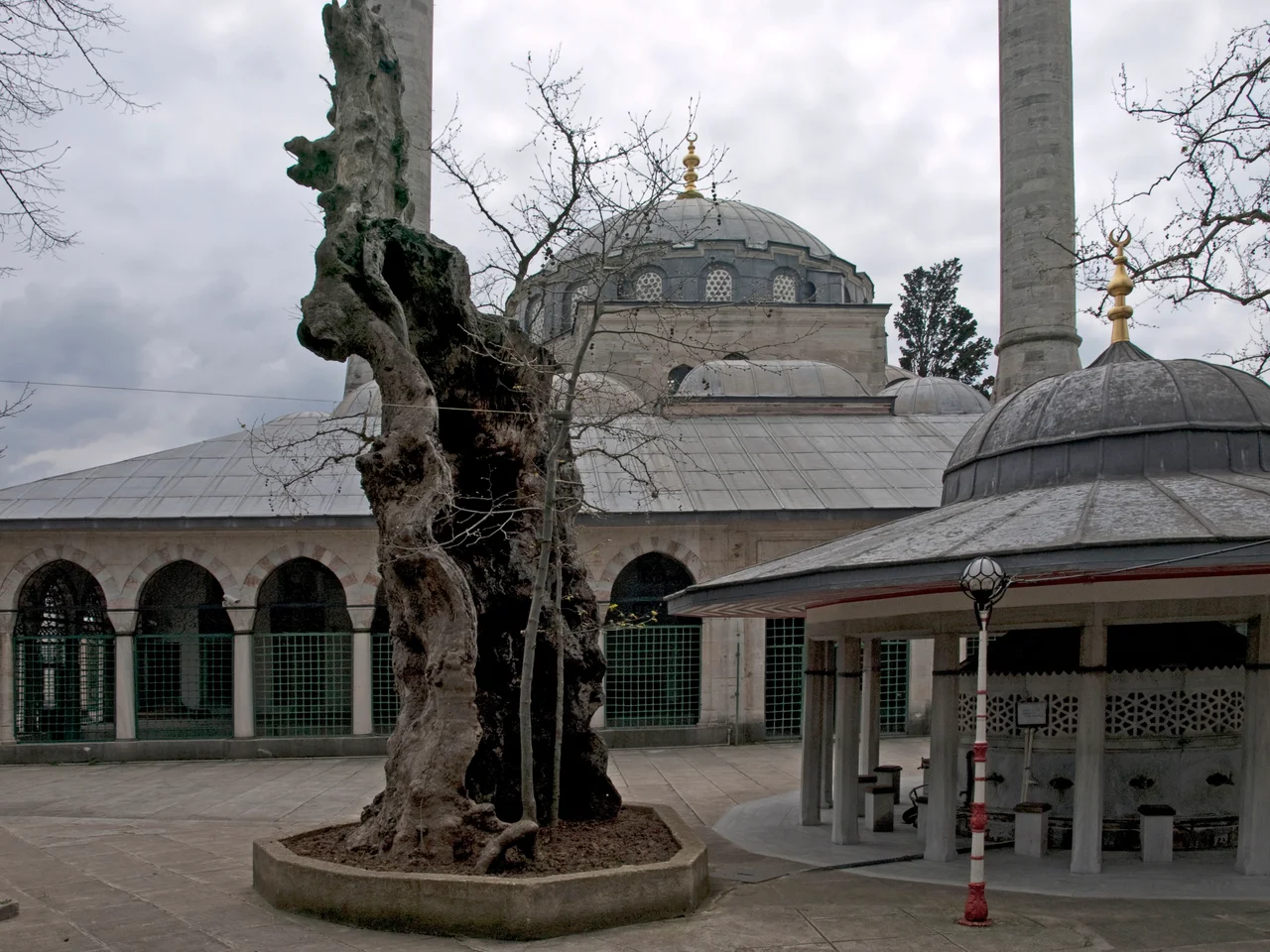

Atik Valide Mosque
Nurbanu Sultan was born in Venice, captured by Ottoman corsairs as a child, educated in the imperial harem, and eventually became the de facto ruler of the most powerful empire in the world — all without a title that formally acknowledged any of it. When she commissioned Istanbul's greatest architect to build her a mosque above Üsküdar, she was expressing something that the Ottoman court had no polite language for: that she held power, intended to keep it, and meant to leave a monument equal to the emperors she had outlasted. The Atik Valide Mosque, completed in 1586 on a commanding hill on the Asian shore of the Bosphorus, is that monument.
The Woman Who Ordered the Building
Nurbanu Sultan was the wife of Sultan Selim II and the mother of Murad III. After Selim's death in 1574, she became the first valide sultan — queen mother — to exercise effective rule over the Ottoman Empire from the harem, during the period historians call the Sultanate of Women. She corresponded directly with the Doge of Venice and the Queen of France, conducting diplomacy in her own name. The mosque she commissioned reflects her ambition: it was not a modest pious gesture but one of the most extensive külliye — mosque complexes — in the entire Istanbul region. She did not live to see it finished; Nurbanu died in 1583, three years before the building was completed. The complex was built in her name regardless.
Sinan's Design on the Hill
Mimar Sinan, the imperial architect who had already built the Süleymaniye Mosque in Istanbul and the Selimiye in Edirne — works that rank among the greatest buildings of any era — designed the Atik Valide Mosque beginning in 1571. The initial plan called for a small mosque with a single minaret; as the project grew in ambition, it expanded into something far larger. The finished complex included the mosque itself, a madrasa for theological education, guest rooms for travelers, and a double caravanseray. A külliye on this scale required a foundation document setting out its endowments; one was established in 1583, drawing income from taxes including those of the Kurds from Kilis and the Reşwan tribe. Inside the mosque, six central panels bear a quotation from the Quran, surah 39:53, a verse of mercy and forgiveness.
Position and View
The site chosen for the mosque is itself a statement. Üsküdar sits on the Asian shore of the Bosphorus, directly across the water from the historic peninsula with its imperial mosques and palaces. The hill above the district commands views across the strait to the domes and minarets of the old city — Hagia Sophia, the Sultanahmet Mosque, the Topkapı silhouette. From that elevation, the Atik Valide Mosque does not merely participate in Istanbul's skyline; it watches it. Pilgrims and visitors who climbed to it from the Üsküdar waterfront would have felt the ascent as something intentional — a journey toward a place that held authority, not just prayer.
What the Complex Became
The mosque and its surrounding buildings have served different purposes across the centuries. The hospice structures — built to shelter travelers and the poor — were adapted in the nineteenth century: upper floors were added and the buildings were converted into a military hospital and then a prison. The transformation was neither unusual nor gentle; the Ottoman empire and then the Turkish republic found uses for existing structures as needs arose, and the social welfare buildings of a sixteenth-century külliye were not exempt. The mosque itself has remained a working place of worship continuously. Its Iznik tilework, its proportioned courtyard, and the quality of Sinan's spatial thinking — the way the interior unfolds from threshold to prayer hall — are still intact. The exterior medrese, visible from the south, is among the better-preserved examples of Ottoman theological college architecture in the city.
The Name and What It Means
Atik Valide translates as Old Queen Mother Mosque — a name that came about when a later queen mother built her own mosque elsewhere in Istanbul, requiring a distinction between the two. The word atik, meaning old or senior, is both honorific and practical. There is something quietly apt in it. Nurbanu Sultan built a mosque that outlasted the political moment she inhabited, outlasted the dynasty she helped rule, outlasted the empire itself. The building on the hill in Üsküdar is still standing, still in use, still carrying her patronage forward into an era she could not have imagined. She is the Old Queen Mother now, in the best sense: the one who came first, and built something worth remembering.
From the Air
The Atik Valide Mosque stands at 41.0189°N, 29.0236°E, on a hill in the Üsküdar district of Istanbul's Asian shore. From the air at 3,000 feet, the Bosphorus Strait is unmistakable below — the mosque lies roughly 2 kilometers inland from the waterfront, elevated above the surrounding urban fabric of Üsküdar. The nearest major airport is Sabiha Gökçen International Airport (LTFJ), approximately 30 kilometers to the southeast on the Asian side. The approach from the northwest over the Bosphorus offers clear views of both the European historic peninsula and the Asian shore together; the mosque's hilltop position and the surrounding roofscape of Üsküdar are visible in good visibility from that altitude.
Nearby Stories
- Kocaeli Peninsula 7.6 km away
- Second Battle of Çatalca 11 km away
- Istanbul's Rural Outskirts 14 km away
- MV Struma 20 km away
- HMAS AE2 36 km away
- Bursa 66 km away
- Sangarius Bridge 71 km away
- Januarius MacGahan 101 km away