
Bad Nenndorf Interrogation Centre
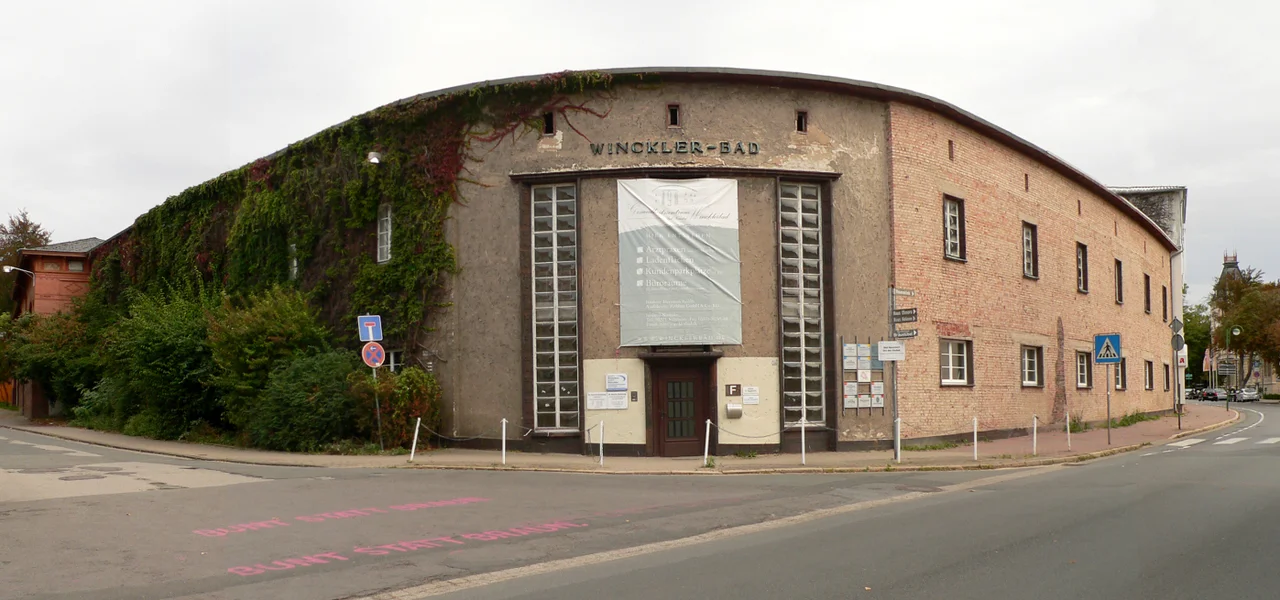
The chambers were built to hold warm peat. Bad Nenndorf had lived off its sulphur springs since 1787, and the Wincklerbad - named for Axel Winckler, a local doctor and a serious figure in the medicine of bathing - was where you went to sink a stiff shoulder into hot mud. In June 1945 the British emptied the bathing chambers, fitted them with doors and locks, and began putting people in them. No. 74 Combined Services Detailed Interrogation Centre ran for two years in a spa town twenty-six kilometres west of Hannover. In that time 372 men and 44 women passed through it. Two of them died of what was done there, and the only reason that is a documented fact rather than a rumour is that British Army doctors at a hospital near Bremen looked at the patients they were sent and refused to sign off on it.
What No. 74 Was For
The centre succeeded an interrogation unit at Diest in Belgium, ran under War Office authority with a mix of military and intelligence officers, and was commanded by Lieutenant Colonel Robin Stephens, who had spent the war running MI5's interrogation centre at Camp 020 outside London. Its original brief was to hold and question former SS, SA and Gestapo men in British custody. Within a year that had shifted. The Cold War was arriving faster than de-Nazification was finishing, and the cells began filling with people suspected of spying for the Soviet Union - Germans, but also Russians, Czechs and Hungarians. One detainee left an account of it. Werner Dankwort had headed the political department of the German legation in Stockholm from 1939 to 1945; he was held here across most of the centre's existence and wrote down what the days were like, and his memoirs sit in the archive of the German foreign ministry in Berlin.
The Winter of 1946-47
That winter was the coldest Europe had seen in living memory, and it arrived on a continent with no coal to spare. In January and February 1947 prisoners were transferred from No. 74 to the civilian hospital at Rotenburg, near Bremen, arriving with frostbite, malnutrition and injuries. Two of them died. The British medical and military staff who received them were shocked enough to complain up the chain, and senior Army officers responded by bringing in an outsider: Inspector Thomas Hayward of the Metropolitan Police, sent to Germany to investigate British soldiers. What Hayward assembled became a list of specific allegations - prisoners doused with cold water, deprived of boots, set to scrub cell floors without pause in unheated rooms. A former interrogator would later testify that some of the Army warders at the camp were themselves ex-convicts. The centre closed in July 1947.
Three Courts Martial, One Conviction
Four officers were charged; three came to trial between March and July 1948, and all pleaded not guilty. Lieutenant Richard Langham, a German by birth serving in the Royal Armoured Corps, faced two counts of disgraceful conduct of a cruel kind over two former SS men suspected of organising acts of terrorism. The prisoners described beatings, lit cigarettes used on them, cold water and threats. A sergeant told the court he had been ordered to drive one of them around his cell for about two hours; a lance corporal said the reason given was that the men belonged to an organisation planning a rising on Hitler's birthday. Langham's counsel argued that nobody had tied him personally to the 'curious things' that had admittedly happened, and on 31 March 1948 he was acquitted. Captain John Smith, the camp's doctor, went before a court in Hamburg on 7 April facing two counts of manslaughter and eleven of professional neglect. Smith described Bad Nenndorf as a 'bestial hole' full of people who, he said, were being brutally treated without his knowledge; he was cleared of manslaughter, convicted on five neglect charges, and dismissed from the service. Stephens went last, in June. The cruelty charges against him were withdrawn on the opening day, most of the evidence was heard in closed session, and on 20 July 1948 he was acquitted on everything.
The Photographs, and Who Wanted Them
Three months after Bad Nenndorf shut, a purpose-built interrogation centre opened at Guetersloh, staffed largely by the same interrogators - which caused visible unease in London. The Foreign Office minister Frank Pakenham demanded that 'drastic methods' not be used. The Army's position was that the standards applied in British prisons did not apply to Army interrogation centres in Germany. There the matter rested for nearly sixty years, until the Guardian obtained the file and published in December 2005 and again on 3 April 2006, printing photographs of prisoners reduced to skeletons. A short, sharp row followed in both countries, with the obvious line drawn to the detention scandals then in the news. Then came the part nobody wanted. From 2006, far-right groups began holding annual 'mourning marches' at the Wincklerbad, using the men starved in those cells - some of whom had served the SS and the Gestapo - as a prop for the argument that everyone's crimes cancel out. Thousands of police were needed each year. The town answered with a movement of its own, Bad Nenndorf ist bunt, which turned out against the marchers every time; the marches ran until 2015 and after 2016 could not be staged at all. Both things stay true. What was done in those cells was wrong on its own terms, whoever was in them.
From the Air
The site sits at 52.3358N, 9.3737E, in Bad Nenndorf, a spa town of some 11,500 people in the Schaumburg district of Lower Saxony, about 26 km west of Hannover on the northern edge of the Deister ridge. From the air the town reads as a compact settlement wrapped around a formal spa park - clipped avenues, lawns and bath buildings on the south-eastern side, quite distinct from the surrounding farmland. The Deister rises to around 400 m immediately south-east and is the main terrain consideration; north and west the North German Plain runs flat to the horizon. Hannover-Langenhagen (EDDV) is roughly 30 km east-north-east and its controlled airspace dominates the area, so coordinate before any low transit; the A2 autobahn passes a few kilometres north and makes a reliable line feature. A viewing altitude of 1,500 to 2,500 feet AGL takes in the spa quarter and the Deister escarpment together. Low stratus and morning fog are common in the plain here through autumn and winter.
Nearby Stories
- Irminsul 8.6 km away
- M'era Luna Festival 15 km away
- Celle State Stud 17 km away
- Bielefeld conspiracy 18 km away
- Holzminden prisoner-of-war camp 24 km away
- Ahlden House 28 km away
- Schöma 28 km away
- Meller Möbelfabrik 32 km away