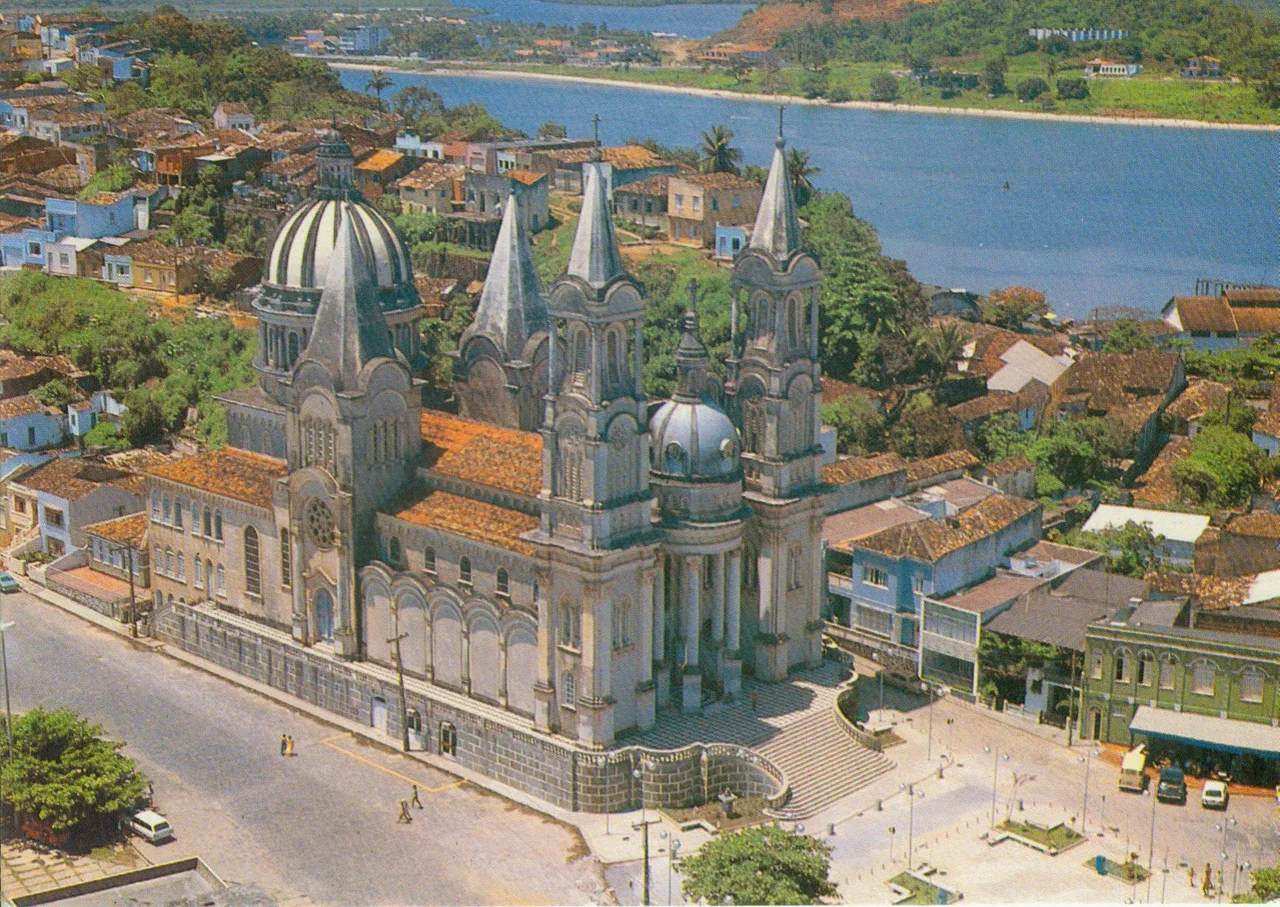

Bahia
The Portuguese fleet that made landfall on April 22, 1500 did not stumble onto some nameless shore. They stepped onto what would become Bahia - and with that step, the whole trajectory of Brazil began. Two hundred and fourteen years later, Salvador was still the capital, the oldest city in the country, before the honor passed to Rio and eventually to Brasília. Today Bahia is a state of roughly 564,733 square kilometers on Brazil's northeastern coast, framed by the Atlantic on one side and the semi-arid sertão on the other. It is a place where the word 'bay' - baia in Portuguese - gave the province its name, later spelled Bahia to mark it as unique. And it is the cultural engine room of Brazil, where African religion, Indigenous tradition, and European colonial memory have fused into something that exists nowhere else.
The Portuguese Landing
Pedro Álvares Cabral's fleet, bound for India, was blown across the Atlantic and sighted Brazilian land on April 22, 1500. They made first landfall on the Bahian coast, near what is now Porto Seguro - which literally means 'Safe Harbor.' Nine years later, Portuguese explorers returned to plant a permanent presence. Salvador, Bahia's capital, was founded in 1549 by Tomé de Sousa on a peninsula between All Saints Bay and the Atlantic. The site was brilliant - protected waters on one side, open ocean on the other, a high bluff defensible against attack. 'The province with the bay in it' is how Brazilians described it, and that description stuck. When Tomé de Sousa arrived with his ships and a thousand sailors, soldiers, Jesuits, and exiled convicts, he was carrying orders from King John III to build a great and strong fortress and settlement. The settlement he built became the country.
The Cultural Braid
Bahia is where the three major threads of Brazilian culture were first woven together. The Portuguese brought the language, the religion, and the colonial administration. Millions of enslaved Africans, brought against their will across the middle passage, brought their own religions - Candomblé and Umbanda still practiced in terreiros across Salvador - as well as capoeira, music, dance, and the food that still defines the region. Indigenous peoples contributed food crops, place names, and survival knowledge. Walk through Salvador's Pelourinho, the old historic center, and the cobblestones remember all of it. The name Pelourinho itself means whipping post - a painful reminder that this beauty was built atop cruelty. Bahia's Carnival is famous, possibly the largest street carnival on the planet, driven by blocos afros like Olodum and Ilê Aiyê that explicitly celebrate Afro-Brazilian heritage.
Where to Wander
Beyond Salvador, Bahia opens into remarkable places. Porto Seguro, where Cabral landed, anchors the south coast. Ilhéus is the cocoa capital, famous through the novels of Jorge Amado. The island of Itaparica, 40 kilometers of beaches at the mouth of All Saints Bay, is a one-hour ferry from Salvador. Inland, the Chapada Diamantina - a UNESCO-listed landscape of canyons and waterfalls - rewards hikers who spend days walking with local guides. The Fumaça waterfall is so tall that the stream sometimes dissipates into mist before hitting the ground. On the Whale Coast, humpbacks arrive every October to breed. The Discovery Coast Atlantic Forest Reserves - six sites in Bahia near Porto Seguro, two more in neighboring Espírito Santo - preserve fragments of the original tropical forest that once covered everything.
The Food of Dendê
Bahian cuisine is its own region within Brazilian cooking, distinguished by dendê - the red-orange oil pressed from African palm fruit - and by coconut milk, peppers, and seafood. Acarajé is the signature street food, a ball of bean dough deep-fried in dendê and split open to receive a spicy filling of shrimp, vatapá, and salsa. Moqueca is the stew that most outsiders encounter first - fish or shrimp simmered with coconut milk, tomatoes, peppers, onions, and dendê, served bubbling hot. Vatapá, caruru, xinxim de galinha, bobó de camarão - the repertoire runs deep. Every dish is rooted in the fusion of African technique, Indigenous ingredients, and Portuguese presentation. Baianas in white dresses still sell acarajé on street corners in Salvador, a tradition stretching back through generations.
How You Get Around
Salvador's airport connects to Lisbon, Frankfurt, Miami, Buenos Aires, and Madrid internationally, plus a network of Brazilian destinations. Porto Seguro has international service to Lisbon and Buenos Aires. Domestic airports scatter through the state - Ilhéus, Vitória da Conquista, Barreiras, Bom Jesus da Lapa, Lençóis, Guanambi - offering shorter hops when the bus system is too slow. Buses themselves are comfortable and cheap. Several lines connect the major cities, though travelers are wisely cautioned not to ride at night on rural stretches where highway robberies are common. Roads outside the capital can be rough. Travelers used to the coastal fast lanes can expect to slow down in Bahia's interior. That slowing down is, in its way, part of arriving.
From the Air
State center approximately at 12.52°S, 41.69°W, covering northeastern Brazil. Recommended viewing altitude varies by feature: 3,000-5,000 feet for Salvador urban views, 6,000-10,000 feet for the Chapada Diamantina plateau. Key airports include Salvador-Dep. Luís Eduardo Magalhães (SBSV), Porto Seguro (SBPS), Ilhéus (SBIL), and Barreiras (SBRR). Visual landmarks include All Saints Bay (Baía de Todos os Santos) - one of the largest bays in Brazil - the Chapada Diamantina's canyon country, and the long curve of the Bahian coastline. Tropical conditions year-round with rainy season November through March.
Nearby Stories
- Chapada Diamantina National Park 32 km away
- Manuscript 512 96 km away
- Morro do Chapéu State Park 110 km away
- Pé de Serra 173 km away
- Vitória da Conquista 228 km away
- Atlantic dry forests 235 km away
- São João de Deus Hospital 236 km away
- Caminho dos Gerais State Park 289 km away