
Battle of Chalcedon (74 BC)
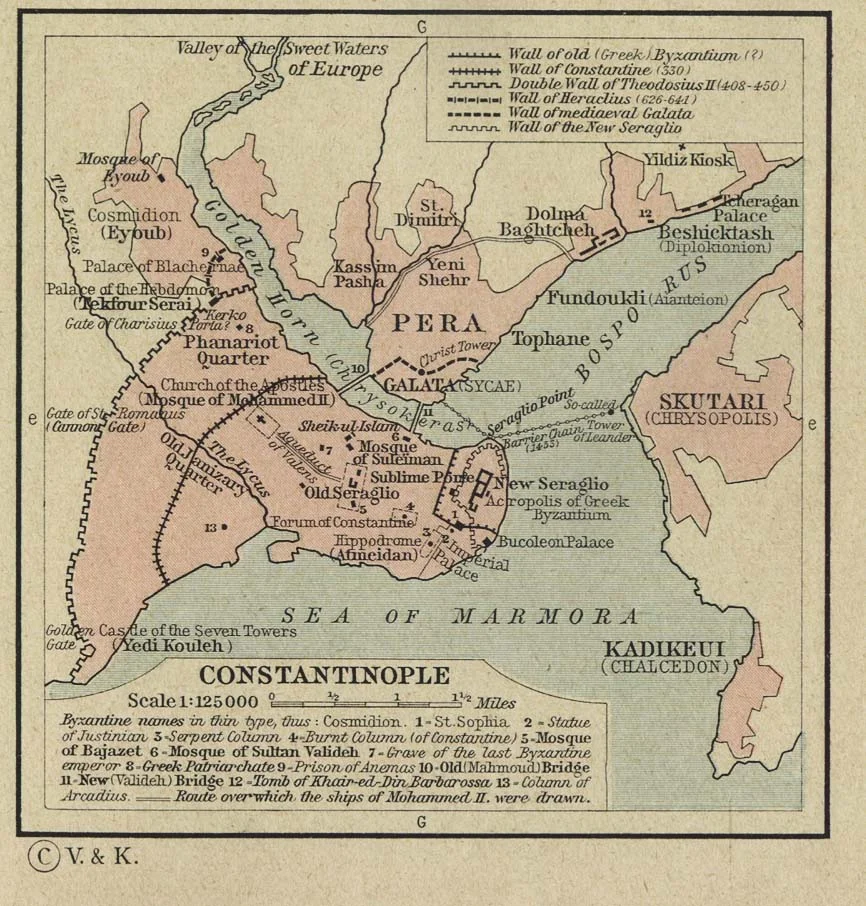
The gates closed while the soldiers were still outside. That detail — a city sealing its own walls against the men who were supposed to be defending it — captures the chaos of the Battle of Chalcedon in 74 BC. It was the opening clash of the Third Mithridatic War, fought along the Asian shore of the Bosphorus near the ancient port city of Chalcedon, on land that is now the Kadıköy district of Istanbul. What was meant to be a Roman stand became a rout, and the rout became a slaughter.
A Kingdom Bequeathed, a War Ignited
The conflict had been building for years. Mithridates VI, king of Pontus, had already fought two wars against Rome. The First Mithridatic War (89–85 BC) ended in his defeat by Lucius Cornelius Sulla; the Second (83–81 BC) finished without a clear winner. Both sides had reasons to expect a third. The spark came in 74 BC with the death of Nicomedes IV, king of Bithynia. The Romans claimed Nicomedes had bequeathed his kingdom to Rome — a convenient legal cover for annexation. Bithynia sat directly between Rome's province of Asia and Mithridates' domain, functioning as a buffer state that neither side wanted the other to control. When Rome moved to absorb it, Mithridates invaded. He entered a territory that, according to ancient sources, resented Roman exploitation enough to welcome him: Nicaea, Nicomedia, Lampsacus, and other major Bithynian cities opened their gates rather than resist.
Cotta's Fatal Gamble
The Roman consul for 74 BC, Marcus Aurelius Cotta, took his fleet into the Bosphorus and established headquarters at Chalcedon, a major port city on Bithynia's coast. His fellow consul Lucius Licinius Lucullus was preparing his army farther south in the province of Asia. Cotta sent urgent word that the Pontic invasion was underway. Meanwhile, his naval prefect Nudus persuaded Cotta to allow him to lead Roman forces out to meet Mithridates in the field rather than wait behind Chalcedon's walls. Nudus took up a fortified position outside the city and waited for the Pontic army's move. It was an aggressive posture that underestimated both the speed and the numbers of the force Mithridates had assembled.
Outside the Gates
Mithridates sent his forces forward, led by Bastarnae mercenaries — a people from the lower Danube region known for their ferocity and battlefield skill. Nudus and his men were overwhelmed. The Romans and their allies fell back toward the city in disorder, crowding toward the gates. What happened next was desperate: Pontic archers and slingers fired into the compressed mass of soldiers fighting to get through the entrances, then the Pontic infantry charged. The defenders inside Chalcedon, facing the prospect of the enemy flooding in through the open gates, had no choice but to drop the portcullis. Nudus and a handful of officers escaped by being hauled over the ramparts on ropes. The men left outside died. Ancient sources record that thousands of Roman and allied soldiers were killed before Chalcedon's walls — modern estimates based on those sources range from 4,000 to over 5,000 for the land phase alone — soldiers who had come to defend Bithynia, and who lost their lives against those same walls.
The Collapse That Followed
With Cotta stripped of his army and fleet, Roman authority in Bithynia dissolved. The cities that had opened to Mithridates already were beyond recovery. Only Cyzicus, further along the Marmara coast, held out — possibly because many of its citizens had been serving as auxiliaries in Cotta's army and had died at Chalcedon, giving the survivors personal reasons to resist. Mithridates marched on Cyzicus and began a siege, racing to take the city before Lucullus could arrive with his forces. The siege failed. Lucullus established a counter-siege around the Pontic army, and disease and famine destroyed much of what Mithridates had assembled. The king escaped back to Pontus, but the Third Mithridatic War continued for another decade before it finally ended.
The Long Aftermath
The Battle of Chalcedon did not decide the war — the siege of Cyzicus and the campaigns that followed mattered far more to the war's ultimate outcome. But what happened at Chalcedon in 74 BC set the shape of everything that came after: Roman humiliation demanding Roman response, a Bithynian population that had learned the cost of choosing sides, and a king who had proved he could take the field and win. The Chalcedon where those soldiers died is now buried deep beneath the neighborhoods of Kadıköy on Istanbul's Asian shore. The Bosphorus still runs alongside it, unchanged.
From the Air
The Battle of Chalcedon took place at approximately 40.9833°N, 29.0333°E, on the Asian shore of the Bosphorus at the site of the ancient city of Chalcedon — now the Kadıköy district of Istanbul. From the air at 3,000–5,000 feet, this is the broad built-up coastal area on the eastern bank of the Bosphorus strait, directly across from the historic peninsula of old Constantinople. The strait narrows here and the ancient harbor locations are partially legible in the coastline's shape. The nearest major airport for general aviation is LTFJ (Sabiha Gökçen International Airport), approximately 20 km to the east on the Asian side. LTFM (Istanbul Airport) is about 50 km to the northwest, across the strait and beyond the city. Bosphorus airspace is closely managed; overflights should coordinate with Turkish ATC.
Nearby Stories
- Kocaeli Peninsula 7.6 km away
- Second Battle of Çatalca 11 km away
- Istanbul's Rural Outskirts 14 km away
- MV Struma 20 km away
- HMAS AE2 36 km away
- Bursa 66 km away
- Sangarius Bridge 71 km away
- Januarius MacGahan 101 km away