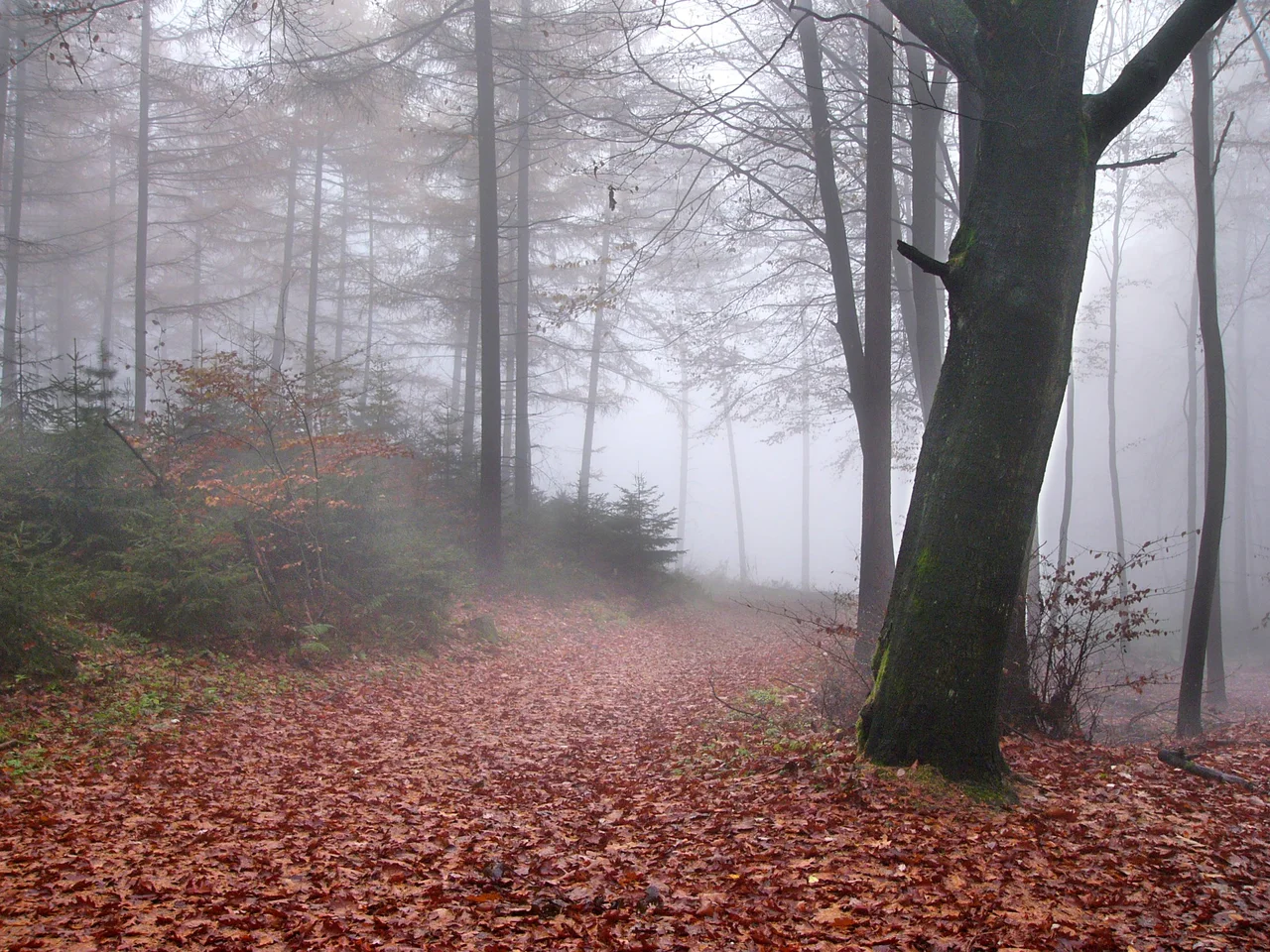

Battle of the Teutoburg Forest
Quintilius Varus, give me back my legions. The aging emperor Augustus, according to Suetonius, took to wandering the corridors of his palace in Rome, butting his grey head against the walls and shouting that single line. Three legions - the Seventeenth, the Eighteenth, and the Nineteenth - had marched into a German forest in September of the year 9 and not come out. Their commander Publius Quinctilius Varus was dead by his own sword. Twenty thousand legionaries, auxiliaries, and camp followers were dead in a strip of woodland near what is now the village of Kalkriese, just north of Osnabrück. The numbers XVII, XVIII, and XIX would never again appear on a Roman standard. The Empire would never again seriously try to cross the Rhine.
The Friend Who Was Not
Arminius was the son of a Cheruscan chieftain. As a boy he had been sent or taken to Rome - the records are unclear which - and grew up steeped in Roman ways. He learned Latin, took Roman citizenship, was made an equestrian, and rose to command auxiliary cavalry alongside the legions. By his late twenties he was a trusted officer in the entourage of Varus, who governed the new province Rome was carving out east of the Rhine. He knew how Romans marched, how they camped, how they responded to attack. He also knew, in a way that Varus did not, that the apparent calm of the Germanic tribes was an illusion - or that he could make it one. Quietly, over months, he stitched together an alliance of the Cherusci, the Bructeri, the Marsi, and others, peoples who had never before fought side by side. Then he waited for Varus to walk into the right piece of ground.
Four Days in the Forest
It came in early September. A report of unrest among distant tribes drew Varus off his planned route back to winter quarters and into a long column on narrow tracks through wooded hill country. Arminius, marching beside him, slipped away to take command of the ambush. The Germanic warriors struck the strung-out Roman column from forested high ground, hitting the baggage train, killing scouts, fading back into the trees. A torrential rain set in. The Romans built a hasty camp, then tried a night march to escape - and at the foot of Kalkriese Hill they met a second trap. A sandy strip of road perhaps a hundred metres wide ran between woodland and the edge of the Great Bog. Along the wooded side, the Germanic alliance had quietly built a long, zigzagging wall of peat turves and packed sand. From behind it they hurled javelins and stones at the legionaries trying to push past. The wall held. The cavalry commander Numonius Vala broke and rode for the Rhine, was caught and killed. Varus fell on his sword. The legions disintegrated.
The Cost
It is hard, two thousand years later, to recover the human reality of what happened on that strip of ground. Around twenty thousand men died in three or four days. Some were senior officers who had known each other for years, men with wives and children in Italy and Gaul, who had risen through the careful Roman career ladder. Some were ordinary legionaries from Spain or northern Italy serving out their twenty-five years. Some were auxiliaries from tribes that had thrown in with Rome, fighting beside the very people they once raided. A handful were ransomed. Some - the sources suggest - were enslaved. Officers fell on their own swords in the approved manner. Six years later, when Germanicus led an army back to the site, his soldiers found heaps of whitened bones and severed skulls nailed to trees in groves where, Tacitus says, the Germanic priests had performed sacrifices. The Romans buried what they could, treating the dead as kin. There were also losses on the Germanic side, though they are harder to count - the victors carried their fallen away and buried them with their weapons, leaving little for the archaeologists. The legend that the Germanic alliance won bloodlessly is almost certainly wrong.
A Wall, a Coin, a Field
For nearly two thousand years, no one knew exactly where Varus had fallen. Then in 1987 a British amateur archaeologist, an army major named Tony Clunn, walked the fields around Kalkriese with a metal detector. He was hoping, he said, for the odd Roman coin. He found Augustan coins - and only Augustan coins, none later - and small leaden Roman sling bolts. Systematic excavation began under Wolfgang Schlüter of the Kulturhistorisches Museum Osnabrück. Over the following decades, archaeologists led by Susanne Wilbers-Rost traced a corridor of battle debris twenty-four kilometres long. They found the zigzag wall. They found the silver-plated ceremonial face mask of a Roman officer, looking up out of the dirt as if he were still wearing it. They found human bones in pits, consistent with the Roman re-burial that Tacitus describes. Kalkriese is now accepted as the most likely site of the battle, and a museum stands on the field. From its observation tower you can see the strip of ground - quiet, agricultural, ordinary - where Augustus's empire stopped expanding.
What Was Decided There
Rome did not forget the defeat. Germanicus campaigned across the Rhine for the next several years and won significant battles, recovered two of the three lost eagles, and chastened the Germanic alliance. But Tiberius eventually called him back. The cost of subduing and garrisoning the deep German forests, with their soft logistics and stubborn tribal politics, was not worth the tax base it would produce. The Rhine became, and for centuries remained, the frontier. Arminius himself fared no better than Varus in the end - he was killed in 21 AD, murdered by members of his own family who feared his growing ambitions. The Romans called the defeat the Clades Variana, the Varian Disaster. Nineteen centuries later, in a different age that built its own mythology around the encounter, the Germanic chieftain would be Germanised into Hermann and rebuilt as a national symbol, the foundational figure of a country he could not have imagined existing. The forest he ambushed in is now farmland and pine plantation. The bones beneath it are still being read.
From the Air
The battlefield at Kalkriese lies at 52.41 degrees N, 8.13 degrees E, north of Osnabrück on the northern flank of the Wiehengebirge ridge in Lower Saxony. From altitude the site reads as a narrow strip of cultivated land between the wooded hill to the south and the lower, wetter ground of the Great Bog to the north. The Kalkriese Museum and observation tower sit at the centre of the excavated area. Nearest airport is Münster Osnabrück International (EDDG), about 30 km southwest. Best viewing altitude 3,000-5,000 feet; in clear weather the Wiehengebirge makes a strong east-west ridge that helps orient the famous corridor.
Nearby Stories
- Else (Werre) 0.6 km away
- Münster Osnabrück Airport 8.7 km away
- Visbek 12 km away
- Battle of Idistaviso 16 km away
- Minden 21 km away
- Ibbenbüren 22 km away
- Börger 24 km away
- Schnoor 38 km away