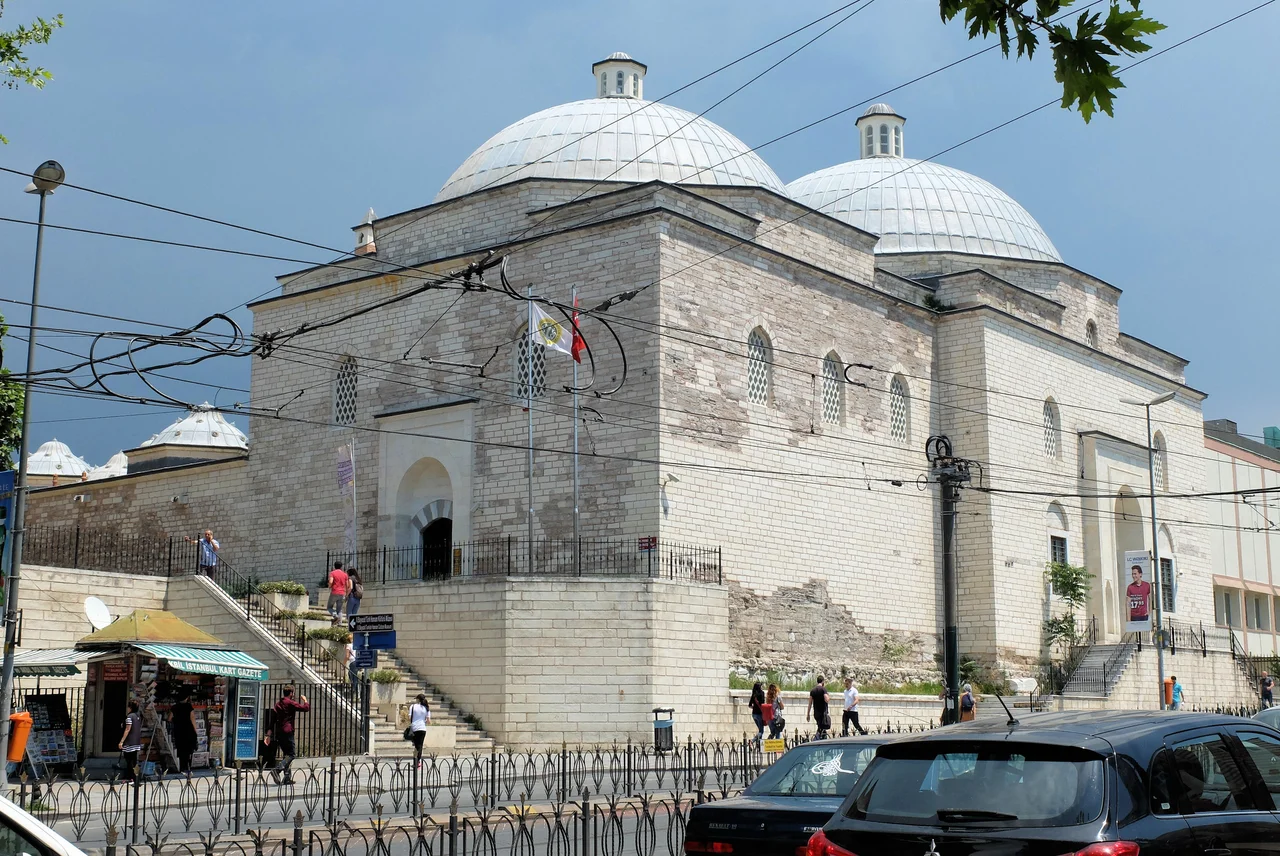

Bayezid II Hamam
Walk through the Bayezid II Hamam today and you are standing on more than one history. Beneath the Ottoman domes, excavators found the remains of Byzantine churches during a restoration that ran from 2003 to 2010—layers of sacred and civic life compressed into the earth of a street that has been one of Constantinople's main arteries since Roman times. The hamam itself was built between 1500 and 1505 as part of the great külliye, the charitable complex, of Sultan Bayezid II, and it was one of the largest bathhouses the Ottomans ever built in the city. After decades of disrepair, it now operates as Istanbul University's Turkish Bath Culture Museum, which means visitors can walk through rooms that have been waiting, under various forms of neglect and restoration, for five centuries.
The Complex That Defined a Sultan
The Bayezid II complex was a statement of imperial legitimacy. Bayezid II came to power in 1481 after a succession struggle with his brother Cem, and his reign was marked by consolidation rather than conquest. He commissioned the külliye—the mosque, its associated bathhouse, a theological college (medrese), a soup kitchen (imaret), a caravanserai, and several mausoleums—as an act of piety and patronage that would outlast political turbulence. The complex is the oldest surviving imperial mosque complex in Istanbul in something close to its original form; the earlier Fatih Mosque was later destroyed by earthquakes and rebuilt in a different style. The architect of the complex has not been definitively established, though Ottoman documents point to Yakubşah ibn Islamşah as the most likely chief architect. The hamam is mentioned in historical records dated 1507, meaning it was complete by that year.
Steam, Stone, and Light
The architecture of the hamam follows the classical Ottoman double-bath layout, with separate sections for men and women—the women's reception hall, called the camekân, slightly smaller than the men's. The men's camekân dome spans 15 meters across. Beyond the reception halls lie the warm rooms and the hot rooms, each designed with expanding geometries of domes. The warm room has three wings radiating from a central dome, with additional domed spaces tucked into the corners. The hot room goes further, with four wings arranged in a cross, each topped by a dome, each corner filled with another domed room. The transition from the vaulting systems tells you where you are in the sequence of heat: the reception hall domes sit on grooved squinches; the warm room's use muqarnas, those honeycomb stalactite forms of Islamic architecture; the hot room's pendentives carry arabesque carvings. Natural light filters through small glass-sealed star-shaped openings in the domes, dotting the steam with shifting points of brightness.
The Attendant Who Changed an Empire
Among the many thousands of people who passed through the Bayezid Hamam over its centuries of operation, one name attached itself to the building in popular memory: Patrona Halil. An Albanian man said to have worked here as a tellak—a bath attendant who helped clients wash and massaged them on the warm marble slabs—Patrona Halil led a major uprising in 1730 that overthrew Sultan Ahmed III and ended the period historians call the Tulip Era, a time of Ottoman cultural opening toward European fashions and arts. Whether Halil actually worked at the Bayezid Hamam is a matter of tradition rather than documented fact, but the story stuck. A bathhouse attendant, working in the steam and heat of an Ottoman institution, as the man who unmade a sultan: Istanbul has always had room for that kind of story.
Restoration and Rediscovery
By the end of the twentieth century the hamam had fallen into serious disrepair. In 2000, it was expropriated and transferred to Istanbul University, which began a restoration process in 2003 that continued until 2010. The work was meticulous and revealing. Beneath the Ottoman foundations, archaeologists discovered the remains of two Byzantine churches—silent evidence that this ground had been sacred long before Bayezid II's builders arrived. Those remains are now visible within the museum. The restored hamam opened as Istanbul University's Turkish Bath Culture Museum, displaying artifacts and architectural features that trace the history of bath culture in the city. The domes still stand above Divanyolu Street, which was the ancient Mese—the central avenue of Constantinople, the road emperors and armies and pilgrims walked for a thousand years before the Ottoman conquest made it something new.
From the Air
The Bayezid II Hamam sits on Divanyolu Street in the Fatih district of Istanbul's historic peninsula. Coordinates: 41.01°N, 28.96°E. The site is steps from Beyazıt Square and the entrance to the Grand Bazaar, with the Blue Mosque and Hagia Sophia visible to the east from any elevated vantage point. Istanbul Airport (LTFM) is approximately 40 km to the northwest. Flying in from the west over the Sea of Marmara, the distinctive minarets of the Bayezid II Mosque—standing just beside the hamam—are identifiable in the skyline of the old city peninsula, clustered among the larger profiles of the Süleymaniye and the Blue Mosque.
Nearby Stories
- Kocaeli Peninsula 7.6 km away
- Second Battle of Çatalca 11 km away
- Istanbul's Rural Outskirts 14 km away
- MV Struma 20 km away
- HMAS AE2 36 km away
- Bursa 66 km away
- Sangarius Bridge 71 km away
- Januarius MacGahan 101 km away