
Benenden School
On 3 August 1944, Jean Maridor of the Free French air force was chasing a V-1 flying bomb across Kent. The V-1, the Vergeltungswaffe-1 with which the Nazis hoped to terrorise London into surrender, was one of thousands launched from the Pas-de-Calais that summer. Maridor caught it over Benenden. He fired. The bomb exploded. The blast destroyed his Spitfire as well, and Maridor died in the wreckage near the school buildings, which were then serving as a military hospital. He was twenty-three. The school he died defending is the same one that, two decades later, would educate Princess Anne and Rachel Weisz, the same one Enid Blyton's daughter attended, the same one that inspired Malory Towers.
Hemsted Park
The land has been called Hemsted Park since at least the eleventh century, when it belonged to Odo, Earl of Kent - the man believed to have commissioned the Bayeux Tapestry, and the half-brother of William the Conqueror who gave him the estate as part of the post-conquest distribution. The first house was built by Robert of Hemsted in 1216. Richard II granted it to William of Guldeford in the late fourteenth century. Elizabeth I visited Sir Thomas Guldeford here and knighted him at Rye a few days later. The Victorian country house that now anchors the school was built in the nineteenth century, set in 250 acres of gardens and woodland in the Weald of Kent. The property had been a hunting estate, a royal favourite, a Tudor seat. In 1924 it became a school.
Three Teachers, a Vision
Christine Sheldon, Anne Hindle, and Kathleen Bird had been teachers at Wycombe Abbey in Buckinghamshire. In 1923 they decided to start their own school. Their stated aim was to create a happy school with personal integrity and service to others always in mind, where everyone would be given the chance to follow her own bent. They began with twenty-four girls in a temporary home in Bickley while they searched for a site requiring seventy bedrooms and large grounds. They found Hemsted Park, leased it in January 1924, and named the school Benenden to distinguish it from Hemel Hempstead. By September that year they had 126 pupils. In October they bought Hemsted House outright for £20,000. Three women, no institutional backing, no inherited fortune - and within eighteen months they had founded one of the most influential girls' boarding schools in England.
Malory Towers and the Three Princesses
Enid Blyton's Malory Towers series - the cliff-top boarding school with its midnight feasts and stable rivalries - was inspired by Benenden. Gillian Baverstock, Blyton's daughter, attended the school in the 1940s, and the family connection brought the writer into contact with its world. The fictional school is more Cornish than Kentish, and Blyton freely invented much of its detail, but the rhythm of life at Malory Towers - the houses, the prefects, the lacrosse - is Benenden's rhythm. In 1963, the school admitted two new pupils whose names appeared in newspapers worldwide: Princess Anne of the United Kingdom, daughter of the reigning monarch, and Princess Basma of Jordan, sister of King Hussein. Princess Benedikte of Denmark also studied here. Three princesses, three royal houses, one Kentish school. The connection to the Crown holds: Princess Anne returned in 2012 to open the new science centre.
Evacuation to Newquay
When war came in 1939, Benenden found itself in the wrong part of England. Kent was the front line for any potential invasion, and the school's position made it vulnerable to bombing and ground attack. In 1940 the school was evacuated to the Hotel Bristol in Newquay, Cornwall - Christine Sheldon and Kathleen Bird leading the move. Anne Hindle, the third founder, stayed behind at Benenden to look after the estate. She approached the Ministry of Health and arranged for the school buildings to serve as a military hospital for the duration. It was patients from that hospital, recovering soldiers and bombed civilians, who watched Jean Maridor's Spitfire fall in August 1944. The school returned after the war. Anne Hindle was waiting.
Centenary and Continuity
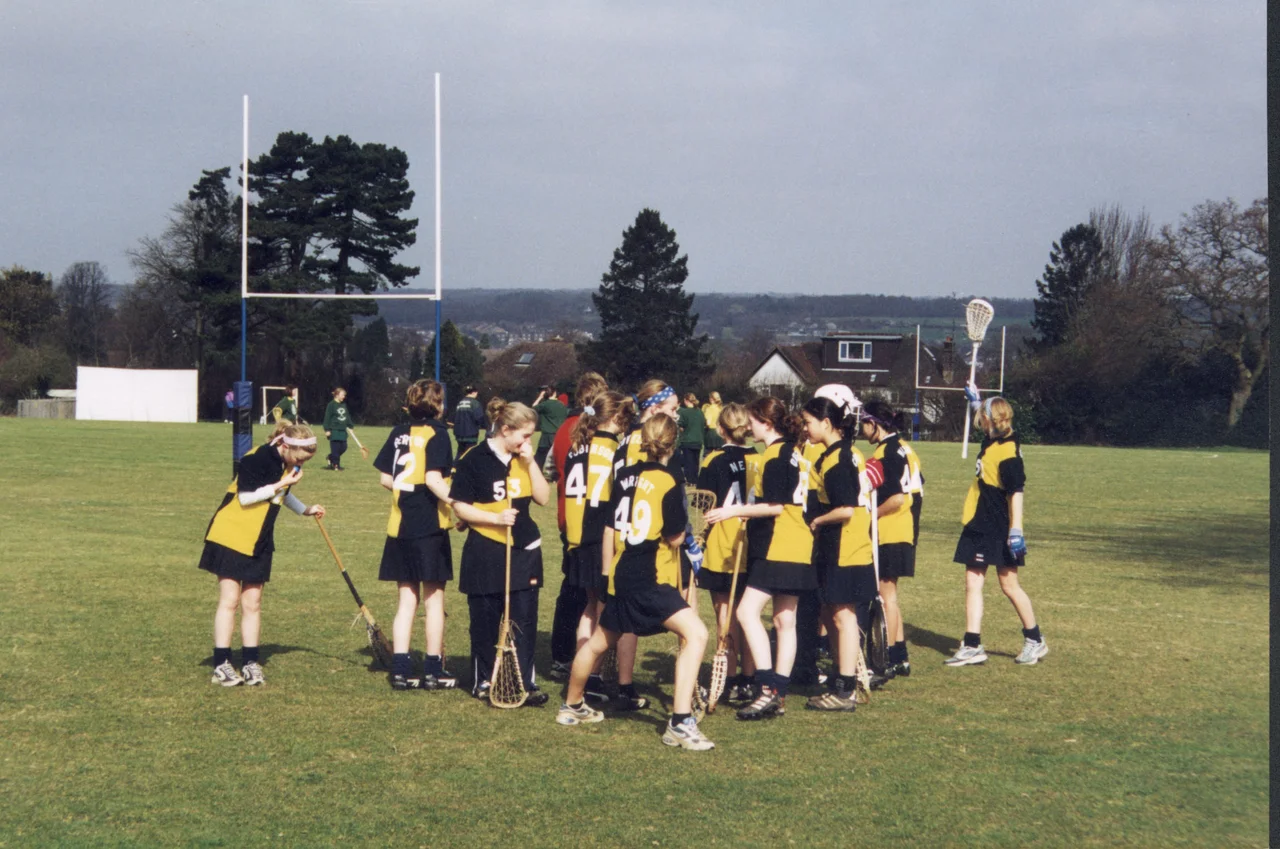
Benenden celebrated its centenary in 2023, marking the achievement of three founders' ambition over a hundred years. The school now educates over 550 girls, full boarders from ages eleven to eighteen, with a limited number of day places added since 2021. The boarding houses carry medieval names - Guldeford, Echyngham, Hemsted - linking present students to the families who held the estate before the Reformation. Rachel Weisz attended. So did Eliza Manningham-Buller, who became Director General of MI5. Lettice Curtis, the pioneering Air Transport Auxiliary pilot who ferried Spitfires and Lancasters during the war. Sue Ryder, who founded the foundation that bears her name. The 1987 hurricane took down over 250 trees in the parkland, a single night of loss that took decades to replant. The Princess Royal still visits. The lacrosse teams still play.
From the Air
Located at 51.08 degrees N, 0.57 degrees E, in Hemsted Park between Cranbrook and Tenterden in the Weald of Kent. The Victorian country house sits in 250 acres of gardens and woodland, with the formal grounds appearing as ordered green features from the air. Nearest airports: London Gatwick (EGKK) twenty-eight miles west, Lydd (EGMD) eighteen miles southeast. Best viewed at 2,000-4,000 feet on clear days, with the Weald's wooded ridges providing context.
Nearby Stories
- Saltwood Castle 2.8 km away
- Jezreel's Tower 5.4 km away
- Bethlem Royal Hospital 6.2 km away
- Herne Bay Pier 6.7 km away
- Royal Sovereign Lighthouse 11 km away
- Plymouth Brethren 15 km away
- Battle of Boulogne 40 km away
- Fratton Park 75 km away