
Byzantine Empire
Doge Enrico Dandolo, the Venetian who led the Fourth Crusade and helped sack Constantinople in 1204, is buried inside Hagia Sophia. His tombstone is still there. That small, quietly astonishing fact captures something essential about traveling through Byzantine history: the empire is not a ruin you visit — it is woven into the living fabric of cities that have never stopped being inhabited, never stopped accumulating new layers over the old.
The Empire You Didn't Know You Were Standing In
The word 'Byzantine' was coined in 1557 by German scholar Hieronymus Wolf — a century after the empire's fall — to distinguish the Greek-speaking, Eastern Orthodox civilization from its Latin, Catholic counterpart in the West. The people themselves never used the term. They called their state the Roman Empire and themselves Romans, a self-understanding that persisted right up to 29 May 1453, when the last emperor Constantine XI died in battle, reportedly having removed his imperial insignia to die as an ordinary soldier. Understanding this identity shifts how you experience the sites: Hagia Sophia was not built by 'Byzantines' — it was built by Romans, in a city they called New Rome, to rival anything the old Rome had produced. That framing changes the weight of standing inside it.
Constantinople: The Layered City
Istanbul holds more Byzantine fabric than any other city. The Theodosian Walls, completed around 413 under Emperor Theodosius II, enclosed the city for over a thousand years and still run for miles along the western edge of the old peninsula. The Basilica Cistern, underground and cool, fed the city's water supply from the sixth century. The Hippodrome — once the chariot-racing stadium at the heart of public life — survives in outline as Sultanahmet Square, its Egyptian obelisk and the Serpentine Column still standing where they stood during the races. Hagia Sophia, completed by Justinian I in 537, represents the high-water mark of Byzantine engineering: its dome, floating on light from a ring of windows, influenced mosque design for centuries after the Ottomans converted it. The Istanbul Archaeology Museum holds Byzantine pieces including, in a corner of its courtyard, the missing foot of a porphyry sculpture whose other three tetrachs stand embedded in the facade of St Mark's Basilica in Venice — looted in 1204.
Turkey Beyond the Capital
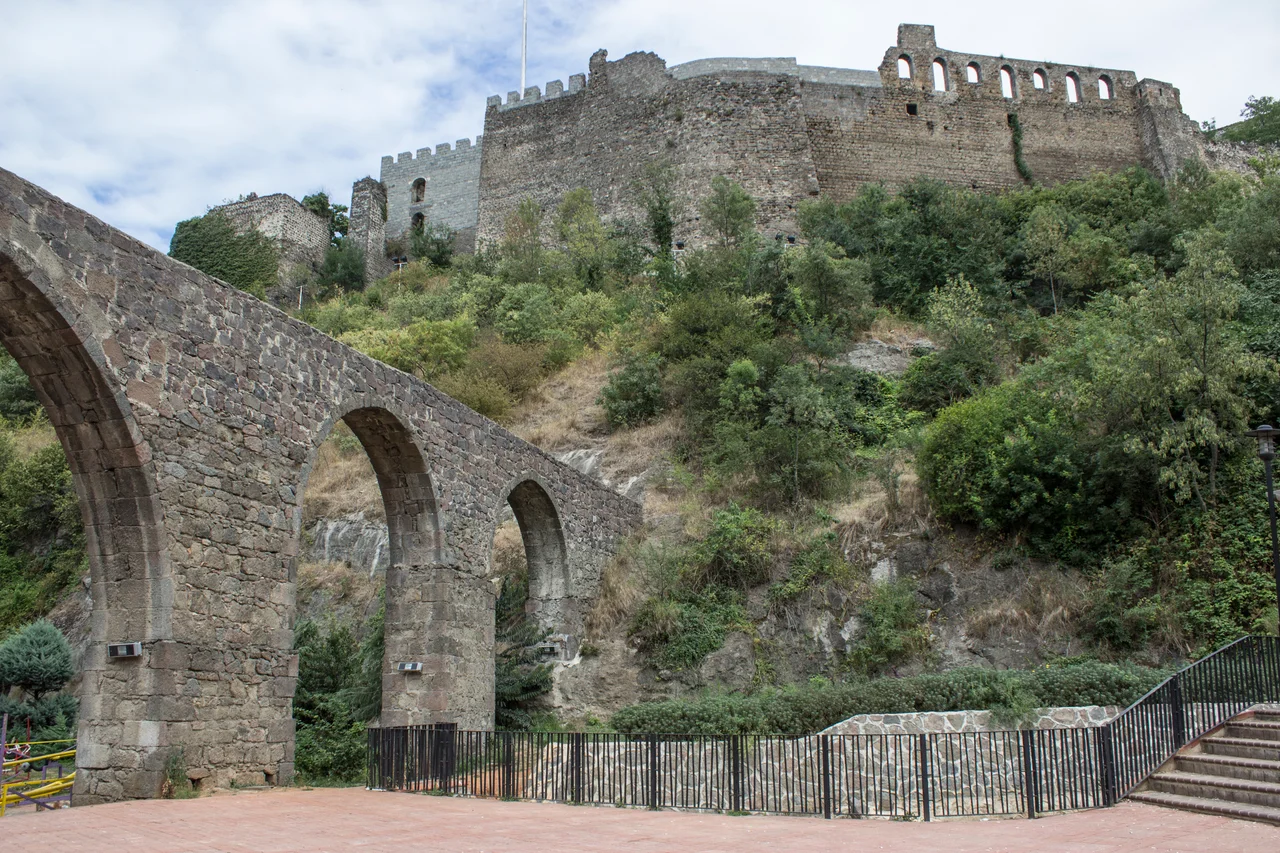
The empire's footprint extends across Anatolia and into the Black Sea coast. Nicaea — modern Iznik — was where Constantine convened the First Council of Nicaea in 325, establishing the Nicene Creed, and its surviving Byzantine walls and the Hagia Sophia mosque (originally a church) are among the most complete provincial Byzantine remains anywhere. Trabzon on the Black Sea coast retains portions of its city walls and aqueduct. Antakya, ancient Antioch, holds the Church of St Peter — one of the oldest Christian places of worship in existence, carved into a hillside where, according to tradition, followers first openly called themselves Christians. At Side, a theatre and colonnaded streets survive from the Roman-Byzantine period.
Beyond Turkey: Mosaics and Memory
Ravenna in Italy preserves the most extraordinary Byzantine mosaics outside Istanbul — the Basilica of San Vitale, completed in 547, contains gold-ground portraits of Justinian and his empress Theodora in procession, their faces intact after fifteen centuries. Venice, for all its role in the empire's undoing, became the greatest repository of Byzantine art outside the imperial capital: the mosaics of St Mark's Basilica were largely created by Byzantine craftsmen, and the Treasury holds pieces taken in 1204. In Greece, Thessaloniki's Rotunda and several Byzantine churches survive in the city center. The ruins of the Nesebar churches on Bulgaria's Black Sea coast, and the remnants of Mystras in the Peloponnese — a Byzantine town that produced philosophers even as the empire collapsed — round out a circuit that spans the full geographic reach of a civilization that lasted more than a thousand years.
How to Think About What You're Seeing
Byzantine history runs hot and cold in popular imagination. The adjective 'byzantine' has come to mean needlessly complex or treacherous — an unfair inheritance from centuries of Western European prejudice. The empire's real achievement was survival: navigating a millennium of Muslim expansion, Crusader aggression, internal revolt, and catastrophic plagues without the military dominance the western Romans had relied on. When Vladimir of Kievan Rus converted to Orthodox Christianity in 988, married into the imperial family, and baptized his people in the Dnieper River, it was Byzantine diplomacy that made it happen — and that conversion seeded a religious and cultural tradition that shaped Russia for centuries. The sites you visit carry this weight. A mosaic floor, a fragment of wall, a tombstone in a mosque — each is evidence of a civilization that refused, for a very long time, to admit it was ending.
From the Air
The Byzantine Empire's heartland centers on Istanbul at approximately 41.013°N, 28.98°E, where the Bosphorus Strait divides Europe and Asia. Approaching Istanbul from the west at altitude, the historic peninsula juts into the Sea of Marmara to the south and the Golden Horn inlet to the north — the same geography that made Constantinople militarily formidable for over a millennium. The Theodosian Walls are visible from low altitude running north-south across the western edge of the old city. Nearest major airport is Istanbul Airport (LTFM), approximately 35 km northwest on the European shore. Byzantine sites extend northwest into the Balkans and south into Anatolia — from Trabzon (LTFE) on the Black Sea to Antakya (HTY) near the Syrian border, and west into Greece and Italy.
Nearby Stories
- Kocaeli Peninsula 7.6 km away
- Second Battle of Çatalca 11 km away
- Istanbul's Rural Outskirts 14 km away
- MV Struma 20 km away
- HMAS AE2 36 km away
- Bursa 66 km away
- Sangarius Bridge 71 km away
- Januarius MacGahan 101 km away