
Chalke Gate
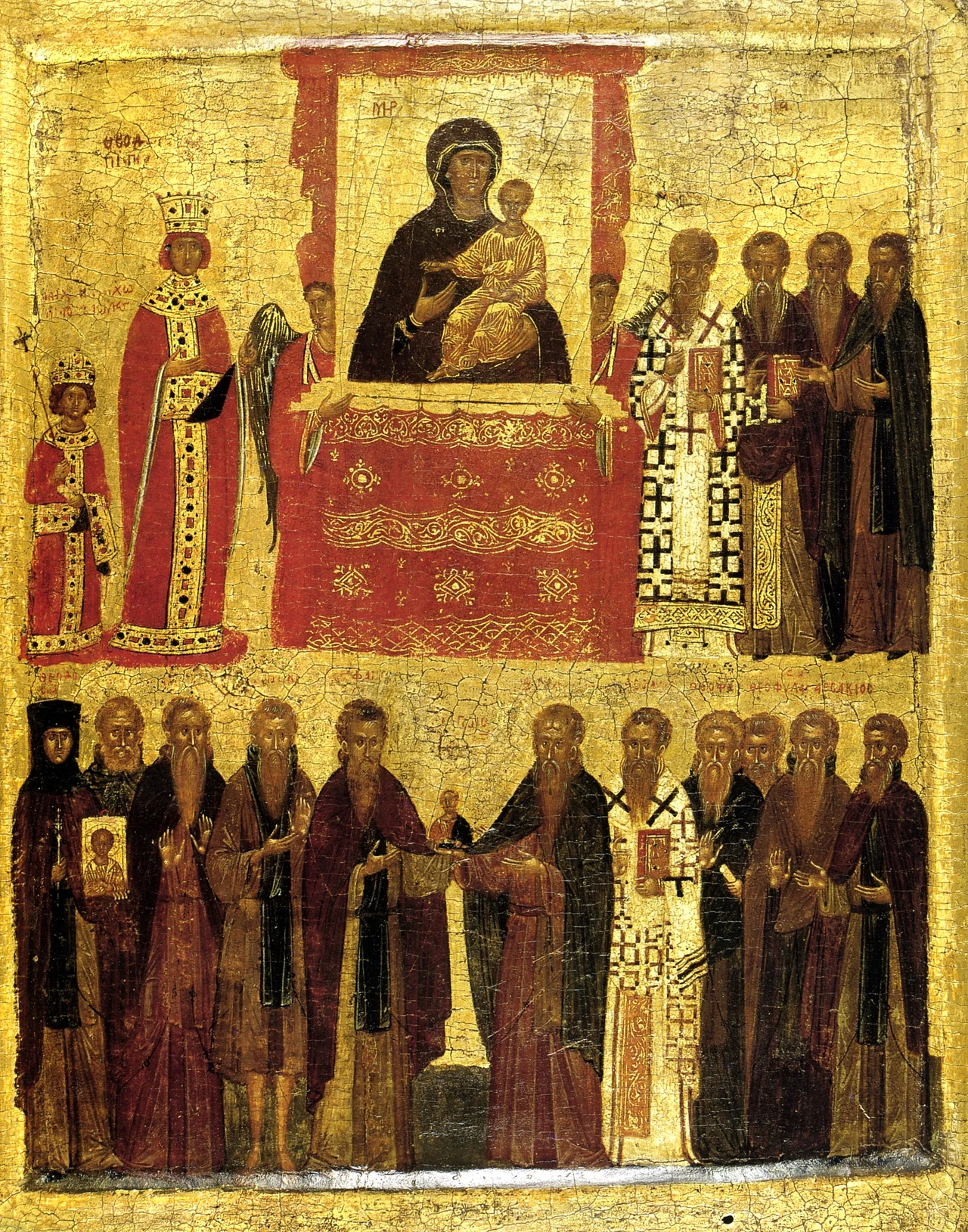
It was just a gate. Or so it might seem: a ceremonial vestibule between the public square and the imperial palace, decorated with bronze doors and gilded bronze roof tiles that gave it its name — the Chalke, the Bronze Gate. But nothing in Constantinople was just anything. The Chalke stood at the hinge between the sacred and the imperial, between the crowd and the court, and above its main entrance hung an icon of Christ that became the flashpoint of one of the most destructive controversies in Byzantine history. When Emperor Leo III ordered it removed in 726 or 730 AD, the city erupted. A nun named Theodosia, who threw herself onto the scaffolding the soldiers had erected to pull it down, was dragged away and martyred. For more than a century afterward, the question of whether images of Christ could be venerated — or whether such veneration was idolatry — tore the empire apart, deposed emperors, separated Constantinople from Rome, and cost uncounted monks and nuns their eyes, their hands, or their lives. The Chalke was the gate where all of it began.
Bronze Doors, Gilded Roof
The first structure at this location was built during the reign of Emperor Anastasius I, sometime around 491–518 AD, to celebrate victory in the Isaurian War. It occupied the southeastern corner of the Augustaion — the great ceremonial plaza at the heart of Constantinople — with Hagia Sophia on one side and the Hippodrome on the other. In 532, the Nika riots, one of the most destructive urban uprisings in Byzantine history, burned it down along with much of the city center. Justinian I rebuilt it, and the historian Procopius described the new building in his work De Aedificiis: a rectangular structure with four engaged piers supporting a central dome on pendentives, flanked by smaller chambers to the north and south. The exterior was crowded with statuary — emperors, empresses, philosophers brought from Athens, and four gorgon heads salvaged from the Temple of Artemis at Ephesus, arranged to frame the cross above the doorway. For a time in the seventh and eighth centuries the building or its outbuildings served as a prison. Emperor Basil I later converted it to a law court.
The Icon That Started a War
Above the main doorway of the Chalke, prominently displayed on the very threshold of imperial power, hung an image of Christ — the Christ Chalkites, Christ of the Bronze Gate. Its position was deliberate and charged with meaning: every visitor who passed into the palace complex passed beneath the face of Christ, a statement that the emperor ruled under divine authority. When Leo III ordered the icon removed, perhaps in 726, perhaps in 730 — the sources disagree — he was making an equally deliberate statement. The removal sparked riots. Saint Theodosia of Constantinople, who led a group of women in resisting the soldiers carrying out the order, was arrested and later killed; she is venerated as a martyr to this day. Leo's iconoclasm — the official prohibition of the veneration of images — became imperial policy and would persist, with interruptions, for over a century. Empress Eirene reversed it around 787. Leo V the Armenian removed the icon again around 815, replacing it with a plain cross. The definitive restoration came in 843 — the Triumph of Orthodoxy, still celebrated in Eastern Christianity on the first Sunday of Lent — when a mosaic icon by the monk and artist Lazaros was installed in its place.
Chapel, Menagerie, Rubble
Emperor Romanos I Lekapenos, reigning from 920 to 944, attached a small chapel to the Chalke complex, dedicated to Christ Chalkites. His successor, Emperor John I Tzimiskes, rebuilt it on a grander scale between 969 and 976, endowed it with relics, and chose it as his own burial place. The gate itself — already separated from the palace wall by a reorganization of the palace precinct under Nikephoros II Phokas — seems to have been demolished sometime in the thirteenth century, likely during the chaos of the Fourth Crusade (1204) or its aftermath. The chapel proved more durable. Russian pilgrims in the fourteenth century reported it still largely intact. Under the Ottomans, the ruined building was repurposed as a menagerie, known as the Arslanhane — the Lion House. Eighteenth-century drawings show what remained of its vaulted structure. In 1804, it was finally demolished.
What the Scholars Argue Over
The Chalke presents historians with puzzles that have never been fully resolved. The precise relationship between the gatehouse and the chapel of Christ Chalkites is unclear: scholar Cyril Mango proposed the chapel stood to the left of the gate; others have suggested it was actually built atop the gatehouse itself. The appearance of the original icon is unknown. Early sources suggest it was a bust of the Christ Pantocrator type; late Byzantine coins and the famous Deesis mosaic in the Chora Church use the term Christ Chalkites for a standing figure on a pedestal — suggesting the image changed, or that different images shared the name over the centuries. What's certain is the location: the 18th-century depictions place the chapel approximately 100 meters southeast of Hagia Sophia, in the area that is today a park between the great mosque and the old Hippodrome. Stand there now. What you're standing on was once the axis of an empire.
From the Air
The Chalke Gate stood at approximately 41.006°N, 28.977°E, in what is now the Sultanahmet district of Istanbul — the triangular zone between Hagia Sophia, the Hippodrome (now Sultan Ahmet Square), and the Sea of Marmara. From the air at 2,500 feet, the distinctive lead dome of Hagia Sophia and the six minarets of the Blue Mosque are unmistakable landmarks 200-300 meters apart; the Chalke site lay between Hagia Sophia and the Hippodrome park. The nearby Topkapı Palace complex fills the promontory to the east, roughly where the Great Palace once stood. Nearest airport is LTFM (Istanbul Airport) on the European shore, approximately 40 km to the northwest. Visibility of this historic zone is excellent in clear weather from low altitudes.
Nearby Stories
- Kocaeli Peninsula 7.6 km away
- Second Battle of Çatalca 11 km away
- Istanbul's Rural Outskirts 14 km away
- MV Struma 20 km away
- HMAS AE2 36 km away
- Bursa 66 km away
- Sangarius Bridge 71 km away
- Januarius MacGahan 101 km away