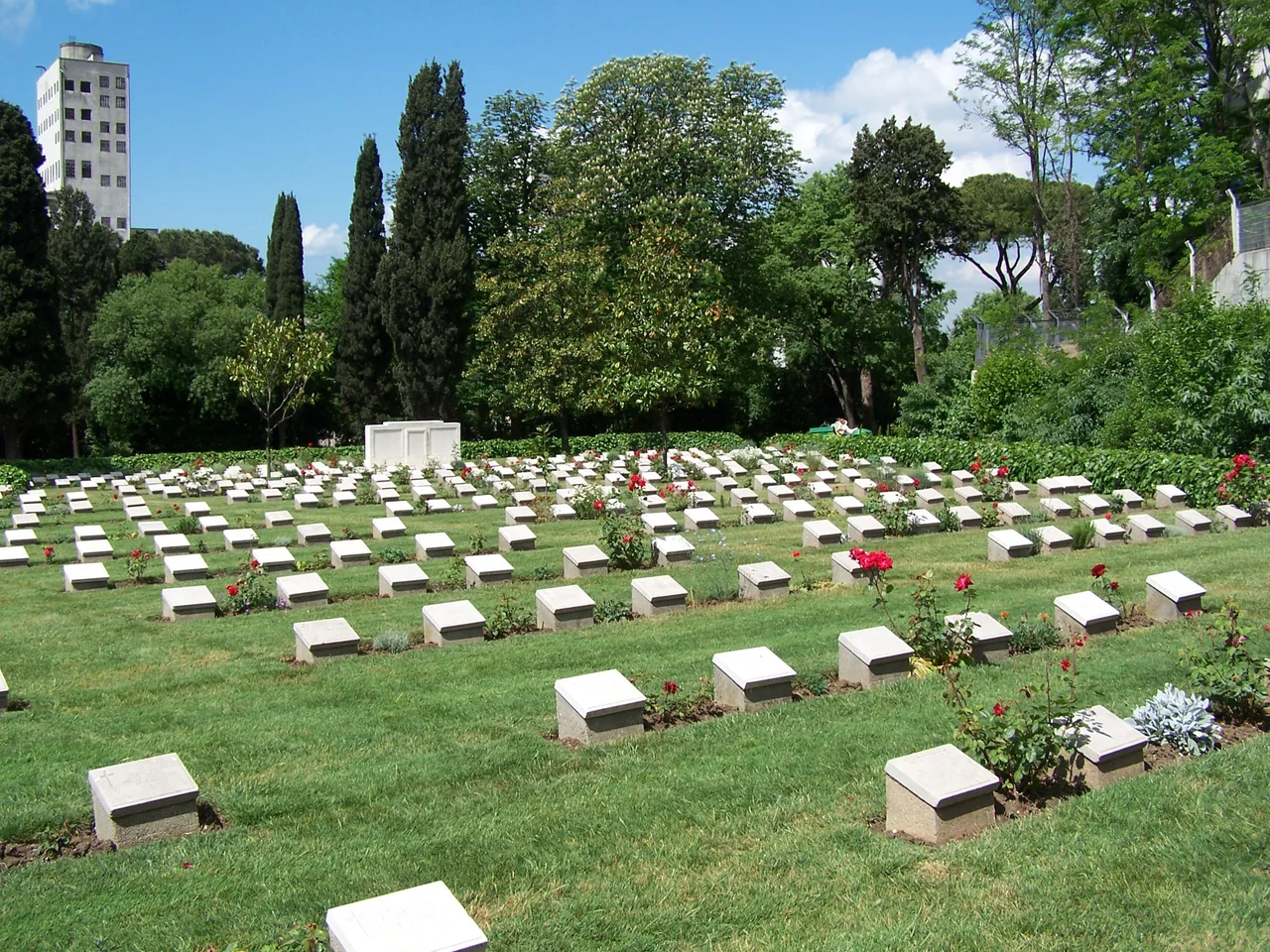

Haydarpaşa Cemetery
The cemetery occupies a hillside close to the Sea of Marmara, on the Asian shore of Istanbul, between a military hospital and a port. It is not large or grand. What it holds is: the remains of men and women who came to this part of the world in the mid-19th and early 20th centuries and did not go home. Most of the oldest graves belong to British soldiers who died of cholera during the Crimean War, in the military hospital at the Selimiye Barracks nearby — the same hospital where Florence Nightingale arrived in November 1854 and began the work that would change nursing forever. The cemetery at Haydarpaşa is the place where that history became permanent, marked in stone on land that Sultan Suleiman the Magnificent once owned and that his successors donated to the British Government in 1855.
The Cholera Hospital and Its Dead
Around six thousand British soldiers died during the Crimean War in the Selimiye Barracks, which had been converted into the military hospital the British called Scutari — Scutari being the older European name for the district now called Üsküdar. Most of them died not from wounds but from cholera and dysentery, illnesses that tore through overcrowded wards where sanitation was inadequate and supplies were scarce. Florence Nightingale arrived with a team of nurses in November 1854 and systematically improved conditions — reducing infection rates, reorganizing supply chains, insisting on basic hygiene in the face of military bureaucracy that resisted her at every turn. She could not save everyone. The graves on the hillside at Haydarpaşa represent thousands of men who died before she could change enough, and the hundreds more who died after her arrival despite everything she managed to do. The burial ground was consecrated on 16 May 1855 by the Bishop of Gibraltar, in the presence of Lord Stratford de Redcliffe, the British ambassador. The land was formally donated by the Ottoman government the same year. Of the graves of the dead, only a few are individually marked today — most of those who died at Scutari were buried in mass graves on the hillside.
Queen Victoria's Obelisk
In 1857, Queen Victoria ordered an obelisk erected within the cemetery to commemorate the British soldiers of the Crimean War. It still stands. Nearly a century later, in 1954, the British community in Turkey added a bronze plaque to the base of the Crimean Memorial. The inscription reads: "To Florence Nightingale, whose work near this Cemetery a century ago relieved much human suffering and laid the foundations for the nursing profession." The plaque was unveiled on Empire Day — a deliberate choice of date, marking the centenary of Nightingale's arrival in the region. Other monuments in the cemetery include a broken column commemorating German Jäger officers who died in the Crimea, and a British memorial transferred here from the Tarabya (formerly Therapia) Crimean Cemetery on Istanbul's European shore, together with the graves of eighteen Royal Navy and Royal Marines personnel who died in a mansion at Tarabya that had served as a hospital.
The Wars That Followed
The Crimean dead were not the last to be buried here. After 1867 a civilian section was added, and the two plots were linked by a second land grant. More than 700 civilians are now interred in that section, including Sir Edward Barton — Queen Elizabeth I's ambassador to the Ottoman Empire from 1588 to 1598, who died on 28 February 1598 on the island of Heybeliada in the Sea of Marmara. His remains were transferred to Haydarpaşa later. The First World War brought more than 400 military burials: British and Commonwealth soldiers who died in Turkey, mostly as prisoners of war or during the Allied occupation of Istanbul between 1918 and 1923, after the Armistice of Mudros. Two additional WWI memorials bear the names of more than 200 soldiers from the United Kingdom and India who died in Russia or on Turkey's borders, and whose graves could not be maintained. A third memorial honors Indian Army soldiers who died in prisoner-of-war camps near Adana between 1919 and 1920. When those camps' cemeteries became impossible to maintain, in 1961 the earth bearing the ashes of cremated remains was brought here and scattered near the monument; the remains of the Muslim soldiers among them were re-interred according to their own rites. Thirty-eight more graves belong to Royal Navy and Royal Air Force personnel, plus one pilot of the Australian Imperial Force, killed in the Mediterranean Theatre of the Second World War.
Kept
Until 1925, the British Government was directly responsible for maintaining the cemetery. Since then the Commonwealth War Graves Commission has carried that duty — the same organization that tends Commonwealth military cemeteries and memorials in 153 countries around the world, ensuring that the names of the dead are recorded, the graves identified where possible, and the grounds kept in a state of dignified order. The Commission's work at Haydarpaşa is a continuation of a promise made in the aftermath of the First World War: that those who died in service would not be forgotten or left to obscurity. The cemetery sits today between the military hospital and the Port of Haydarpaşa, reached from the Üsküdar–Kadıköy road by a turn down Tıbbiye Caddesi. It is not a tourist destination in the way that Gallipoli or the cemeteries of Flanders are. But it holds its history quietly, on the Asian shore of the city where East and West have met for millennia, beneath the same sky that Nightingale looked up at in the winter of 1854.
From the Air
Haydarpaşa Cemetery lies at 40.9999°N, 29.0196°E on the Asian (Anatolian) shore of Istanbul, in the Haydarpaşa neighborhood of Üsküdar. The nearest major airport is Sabiha Gökçen International (LTFJ), approximately 25 km to the southeast. Approaching from the Bosphorus at 1,500–2,000 feet, the hillside cemetery is visible just inland from the waterfront, between the Selimiye Barracks complex (a large, distinctive rectangular structure) to the northwest and the Haydarpaşa railway station's ornate roofline to the south. The cemetery's green hillside contrasts with the dense urban fabric of the surrounding neighborhood. Visibility is best from the south, over the Sea of Marmara, looking north toward the Asian shore.
Nearby Stories
- Kocaeli Peninsula 7.6 km away
- Second Battle of Çatalca 11 km away
- Istanbul's Rural Outskirts 14 km away
- MV Struma 20 km away
- HMAS AE2 36 km away
- Bursa 66 km away
- Sangarius Bridge 71 km away
- Januarius MacGahan 101 km away