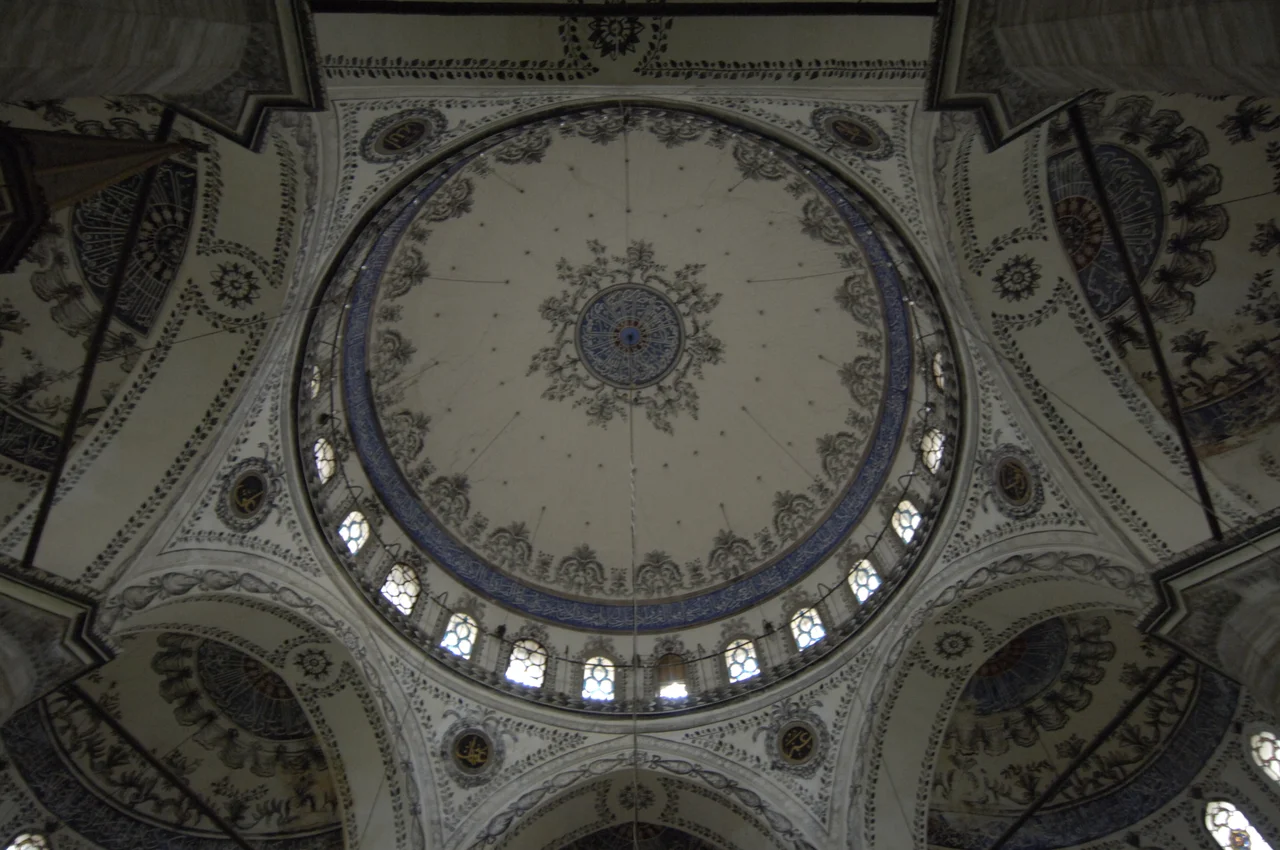

Hekimoğlu Ali Pasha Mosque
When Ottoman architecture turned a corner in the eighteenth century, it paused for one final bow. The Hekimoğlu Ali Pasha Mosque, completed in 1734–35 in Istanbul's Fatih district, is that bow — the last major monument built in the Classical Ottoman style before the empire's builders tilted toward Baroque exuberance. To stand in its courtyard is to feel a world on the cusp of change, still holding its shape.
The Man Behind the Mosque
Hekimoğlu Ali Pasha was not a man who held power quietly or briefly. He served as grand vizier — the empire's chief minister — multiple times between the 1730s and 1750s, navigating the treacherous currents of Ottoman court politics with enough skill to be dismissed, recalled, and trusted again. His surname, Hekimoğlu, means 'son of a doctor,' and it stuck as both a family marker and a reminder that even within the rigid hierarchy of Ottoman society, talent could surface from unexpected places. When he commissioned this mosque complex in the mid-1730s, he was near the height of his influence, and the building he left behind reflects that ambition clearly.
The Last of a Line
The mosque's architects, Çuhadar Ömer Ağa and Hacı Mustafa Ağa, were working in a tradition that stretched back two centuries to the great sixteenth-century builders who shaped Istanbul's skyline. Their design echoes the nearby Cerrah Pasha Mosque from the late 1500s — the same broad dome, the same measured classical proportions. What makes the Hekimoğlu Ali Pasha Mosque distinctive is that it is the last Ottoman mosque to use the hexagonal baldaquin design: the central dome carried not on four supports, as later mosques would prefer, but on six pillars arranged in a hexagon, with semi-domes filling the spaces between them. That geometry gives the interior a particular quality of light and balance that the later Baroque style, with its restless ornament, rarely achieves.
A World Within a Garden
The mosque does not stand alone. It anchors a full külliye — a charitable complex — that spreads around a garden enclosure and includes a khanqah (a Sufi lodge), the founder's türbe (tomb), a şadırvan (ablution fountain), a library, a sebil (public water dispensary), and a primary school. The arrangement is quietly revolutionary: where classical Ottoman külliye complexes typically organized their components along strict axes, this one places them more freely around the garden, a flexibility that reflects the changing tastes of the Tulip Period. The main gate of the complex, topped by a library chamber, is a feature that would have been unusual in an earlier era — an elegant signal that something new was stirring even within a conservative design.
Tiles, Mecca, and a City in Transition
Inside the mosque, the decoration tells its own story of transition. The tiles covering the interior walls come from the Tekfursaray kilns — the same palace precinct in Istanbul that had been repurposed for ceramic production — and they are considered of lesser technical quality than the celebrated Iznik tiles that graced mosques a century earlier. Among those tiles is something visually striking: a painted illustration of the Great Mosque of Mecca, a devotional image that was popular in this period and that carried pilgrims imaginatively to the holy city they might never physically reach. At the street corner of the complex, an ornate sebil curves outward, its decoration in the florid Tulip Period style — a small gesture toward the new world just around the corner.
End of an Era, Preserved in Stone
The Tulip Period of Ottoman culture — roughly 1718 to 1730 — is named for the passion for tulip cultivation that swept aristocratic Istanbul, and it represents a moment of relative openness, artistic experimentation, and contact with European ideas. The Hekimoğlu Ali Pasha Mosque was completed at the very end of that period's architectural influence, and it bears the traces: classical in its bones, but with decorative details and spatial arrangements that quietly test the old rules. The Ottoman Baroque style that followed would eventually abandon those bones entirely, importing European curves and flourishes into the mosque-building tradition. The Hekimoğlu Ali Pasha Mosque stands as the last word of a long conversation — composed, confident, and aware, perhaps, that it was ending.
From the Air
The Hekimoğlu Ali Pasha Mosque sits at approximately 41.006°N, 28.935°E in Istanbul's Fatih district on the European side of the city. At 1,500 to 2,000 feet AGL on a clear day, the domed silhouette is visible within the dense fabric of the historic peninsula, southwest of the Süleymaniye Mosque. The nearest major airport is Istanbul Airport (LTFM) to the northwest; Sabiha Gökçen (LTFJ) is across the Bosphorus on the Asian side. Look for the Sea of Marmara to the south and the Golden Horn inlet to the north to orient yourself over the Old City.
Nearby Stories
- Kocaeli Peninsula 7.6 km away
- Second Battle of Çatalca 11 km away
- Istanbul's Rural Outskirts 14 km away
- MV Struma 20 km away
- HMAS AE2 36 km away
- Bursa 66 km away
- Sangarius Bridge 71 km away
- Januarius MacGahan 101 km away