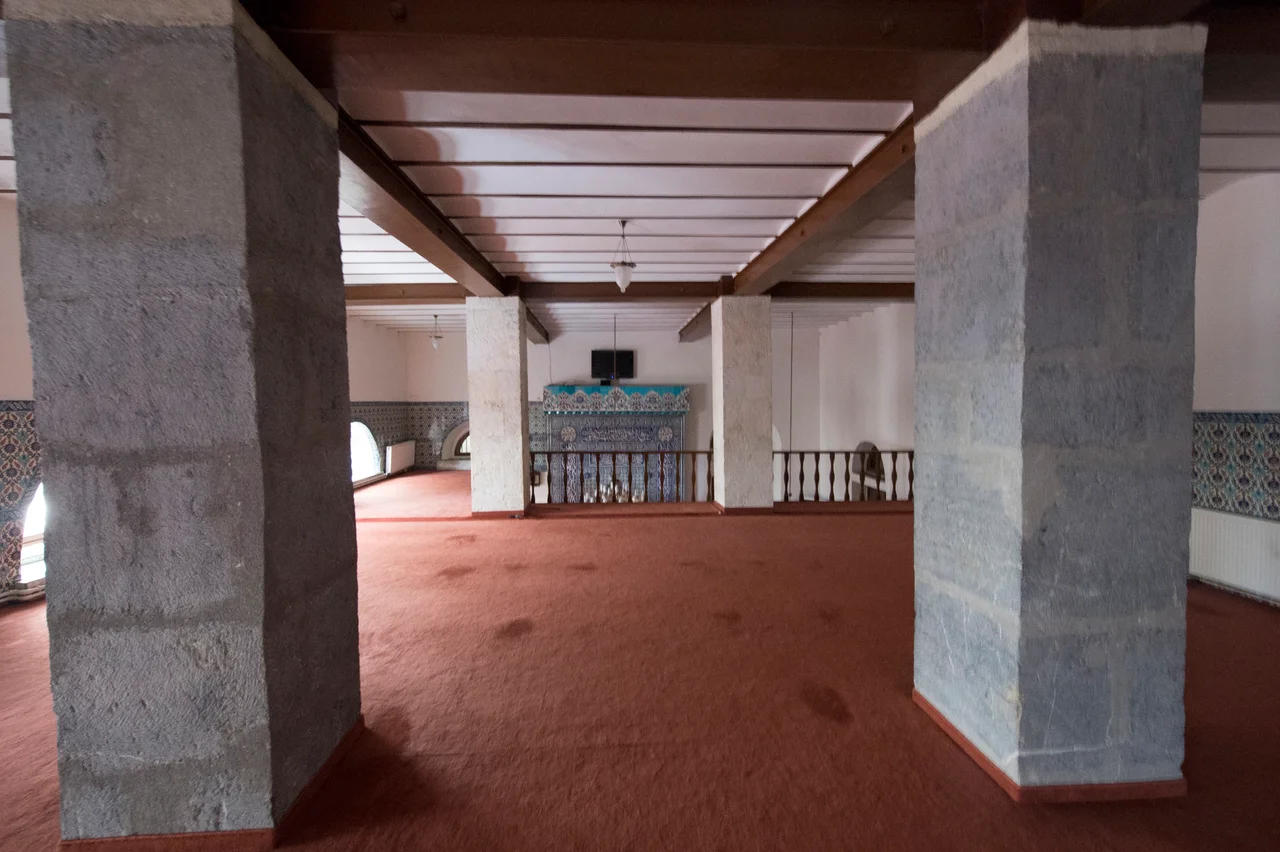

Hidayet Mosque
The locals called it Melek Girmez Sokağı — 'the street that angels abandoned.' Before the mosque existed, the small Eminönü district of Bahçekapı had a reputation grim enough to earn that name. Murder, poverty, disorder: the neighborhood between Sirkeci and the waterfront carried a darkness that worried the authorities. Then came the plague of 1812, which gave Sultan Mahmud II both a reason and an opportunity to clear it.
A Name Chosen to Forget
After the epidemic of 1812 swept through Istanbul, Mahmud II ordered the demolition of Bahçekapı and several other troubled districts. Where the cleared ground lay, he commissioned a mosque — and he named it Hidayet, an Arabic word meaning 'guidance' or 'seeking the right path.' The naming was deliberate. By planting a house of worship on the site of one of the city's roughest corners, the sultan was making a public statement about transformation and moral order. Whether the name erased the memory is another question, but the building that rose in 1813 gave the district something new to be known for.
Wood to Stone: A French Architect Reshapes the Mosque
The original 1813 mosque was built of wood — common practice in Ottoman Istanbul, where timber construction was fast and relatively inexpensive. Wood, however, does not last. By the late nineteenth century the building needed more than repair. Under Sultan Abdul Hamid II, the French architect Alexander Vallaury was commissioned to rebuild the mosque entirely, completing the new structure in 1887. Vallaury was one of the most prominent architects working in late Ottoman Istanbul, responsible for buildings ranging from the Archaeological Museum to the Ottoman Bank headquarters. His work on the Hidayet Mosque brought a European sensibility to bear on an Ottoman brief — and the result is a building that scholars describe as Orientalist in character, meaning it synthesizes Islamic architectural forms through a Western design eye.
Two Floors, Twenty-One Windows, One Dome
Vallaury's mosque is a compact two-story structure with a distinctive vertical presence. Two large pointed-arch windows punctuate the eastern and western facades, flooding the interior with light at different times of day. The dome overhead is pierced by 21 windows, creating a luminous canopy above the prayer space. A staircase leads from the ground floor to the upper level, where a domed sanctuary serves as the main prayer room. The combination of pointed arches, layered levels, and ornamental attention to the dome reflects the Orientalist style that was fashionable in European-influenced Ottoman architecture of the 1880s — neither purely classical Ottoman nor purely Western, but a considered hybrid of both.
Eminönü Then and Now
The Eminönü district where the Hidayet Mosque stands has always been one of Istanbul's most animated quarters — close to the water, close to the Galata Bridge, tangled with merchants, ferries, and the constant movement of people between the city's European and Asian shores. In Mahmud II's day, the neighborhood's proximity to the waterfront made it both commercially vital and socially volatile. Today Yalı Köşkü Street, where the mosque sits, is part of a busy, densely layered urban fabric. The building itself — rebuilt in stone, light-filled, compact — stands as evidence of how a single deliberate act of urban renovation can outlast the disorder it was designed to replace.
From the Air
The Hidayet Mosque is located at approximately 41.017°N, 28.974°E in Istanbul's Eminönü district, very close to the southern end of the Galata Bridge and the Golden Horn waterfront. From the air at 1,500 feet AGL, the Eminönü waterfront is one of the most recognizable sections of the city — look for the ferry terminal, the massing of the New Mosque (Yeni Cami) immediately to the south, and the curve of the Golden Horn opening northward. The nearest major airport is Istanbul Airport (LTFM) to the northwest on the European side.
Nearby Stories
- Kocaeli Peninsula 7.6 km away
- Second Battle of Çatalca 11 km away
- Istanbul's Rural Outskirts 14 km away
- MV Struma 20 km away
- HMAS AE2 36 km away
- Bursa 66 km away
- Sangarius Bridge 71 km away
- Januarius MacGahan 101 km away