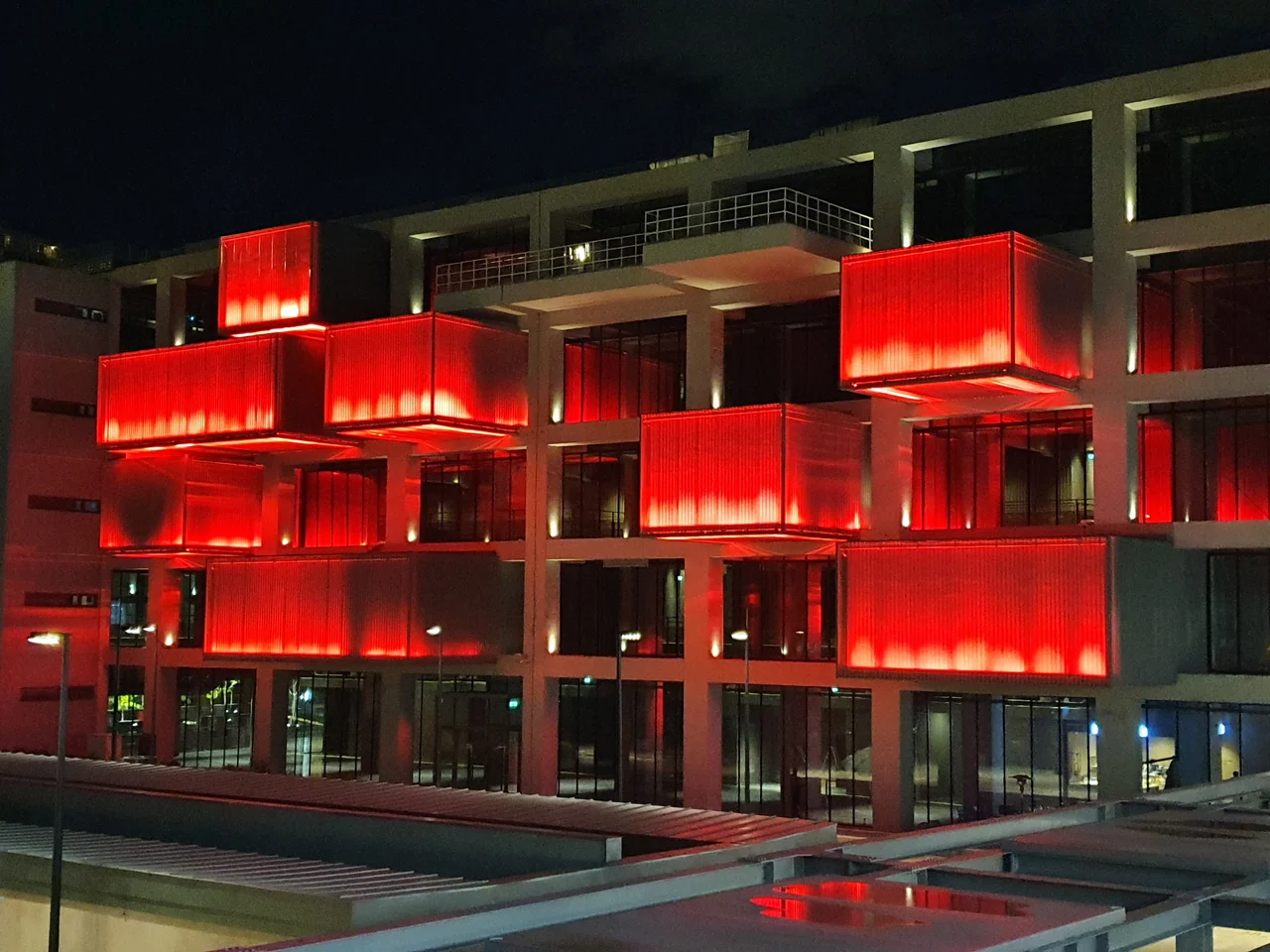

Istanbul Museum of Painting and Sculpture
On 20 September 1937, Mustafa Kemal Atatürk visited the crown prince's mansion attached to Dolmabahçe Palace and suggested it be converted into a museum. The imperial family had been sent into exile with the founding of the Turkish Republic, and the building — dating to 1856 — sat largely unused. Atatürk's suggestion became the Istanbul Museum of Painting and Sculpture: the oldest state fine arts museum in Turkey, dedicated to showing what Turkish artists had made in the generations between the late Ottoman era and the republic's confident present. That the founder of the modern Turkish state personally selected the site says something about how seriously the new republic took the question of what its art should be.
The Man Who Invented Turkish Art School
Central to the museum's founding logic was Osman Hamdi Bey, who had died in 1910 but whose influence shapes how Turkey understands its own artistic heritage. Hamdi Bey was a painter, an archaeologist, and an administrator — he founded Istanbul's first school of fine arts in 1882. He had studied painting in Paris; he brought that training back and institutionalized it. His best-known canvases combine a near-photographic realism with a fascination for Ottoman interior space and scholarly solitude: men reading, men contemplating, rooms full of tiles and carpets rendered with almost obsessive precision. The museum devotes an entire gallery to his work. Walking through it is to see the hinge moment when Ottoman visual culture began to look at itself through Western-trained eyes — not necessarily with discomfort, but with a new kind of deliberate attention.
The Republic Looks at Itself
The early Turkish Republic had a practical problem with art: most of the country's painters lived and worked in Istanbul, and Istanbul was one city. Atatürk's government wanted a national culture, not a metropolitan one. The solution was the Homeland Journeys program — Yurt Gezileri in Turkish — which sent artists out into Anatolia to paint what they found. The resulting works are their own gallery here: rural landscapes, village portraits, harvest scenes, all produced by city-trained painters encountering an interior Turkey they had never seen. It was a deliberate project of national self-documentation, and the paintings carry the combination of genuine curiosity and ideological purpose that defined so much early republican cultural policy. Alongside these, another gallery shows copies of paintings from European museums, made by Turkish artists in the early republic years at the suggestion of Hamdi Bey's brother, Halil Edhem Eldem — an attempt to build a figurative tradition by absorbing what the West had already done.
From Palace Mansion to Galataport
For decades the museum occupied the crown prince's mansion on the Dolmabahçe grounds, which gave the collection an appropriately grand address but limited its reach. The building's connection to Dolmabahçe Palace meant the museum was somewhat isolated from Istanbul's contemporary cultural scene. The move to Galataport changed that entirely. The new home — Antrepo No 5, a former port warehouse designed by the distinguished Turkish architect Sedad Hakkı Eldem — was demolished and rebuilt with Eldem's original design as its template, then fitted out by the Emre Arolat firm of architects as a contemporary gallery space. Opening in phases from December 2021, the museum now sits a short walk from Istanbul Modern on the Karaköy waterfront, concentrating two major art institutions within the same redeveloped port complex. The neighbourhood has become, for the first time, recognisably an arts district.
Abstraction and the Written Line
One of the museum's more unexpected galleries pairs modern calligraphy with Turkish abstract painting — a juxtaposition that makes immediate sense once you see it. Turkish abstract art developed from the 1940s onward, and some of its earliest practitioners were directly influenced by the visual logic of traditional calligraphy: the single expressive stroke, the weight and movement of ink, the relationship between positive and negative space. Artists like Şemsettin Arel and Abidin Elderoğlu worked in this territory, translating the forms of Ottoman script into a modernist idiom. Their canvases look nothing like calligraphy — but the underlying sensibility is legible, a thread connecting the old and the new that the museum has the intelligence to display in the same room.
From the Air
The Istanbul Museum of Painting and Sculpture sits at approximately 41.03°N, 28.98°E in the Tophane area of the Galataport waterfront on the European side of the Bosphorus, adjacent to Istanbul Modern and close to the Karaköy ferry terminal. From the air at 3,000–5,000 feet, the Galata Tower is the dominant nearby landmark, roughly 400 meters to the northeast; Dolmabahçe Palace, the museum's original home, is visible approximately 1.5 km to the north along the Bosphorus shore. Nearest airport is Istanbul Airport (LTFM), approximately 30 km northwest.
Nearby Stories
- Kocaeli Peninsula 7.6 km away
- Second Battle of Çatalca 11 km away
- Istanbul's Rural Outskirts 14 km away
- MV Struma 20 km away
- HMAS AE2 36 km away
- Bursa 66 km away
- Sangarius Bridge 71 km away
- Januarius MacGahan 101 km away