
Istanbul Museum of the History of Science and Technology in Islam
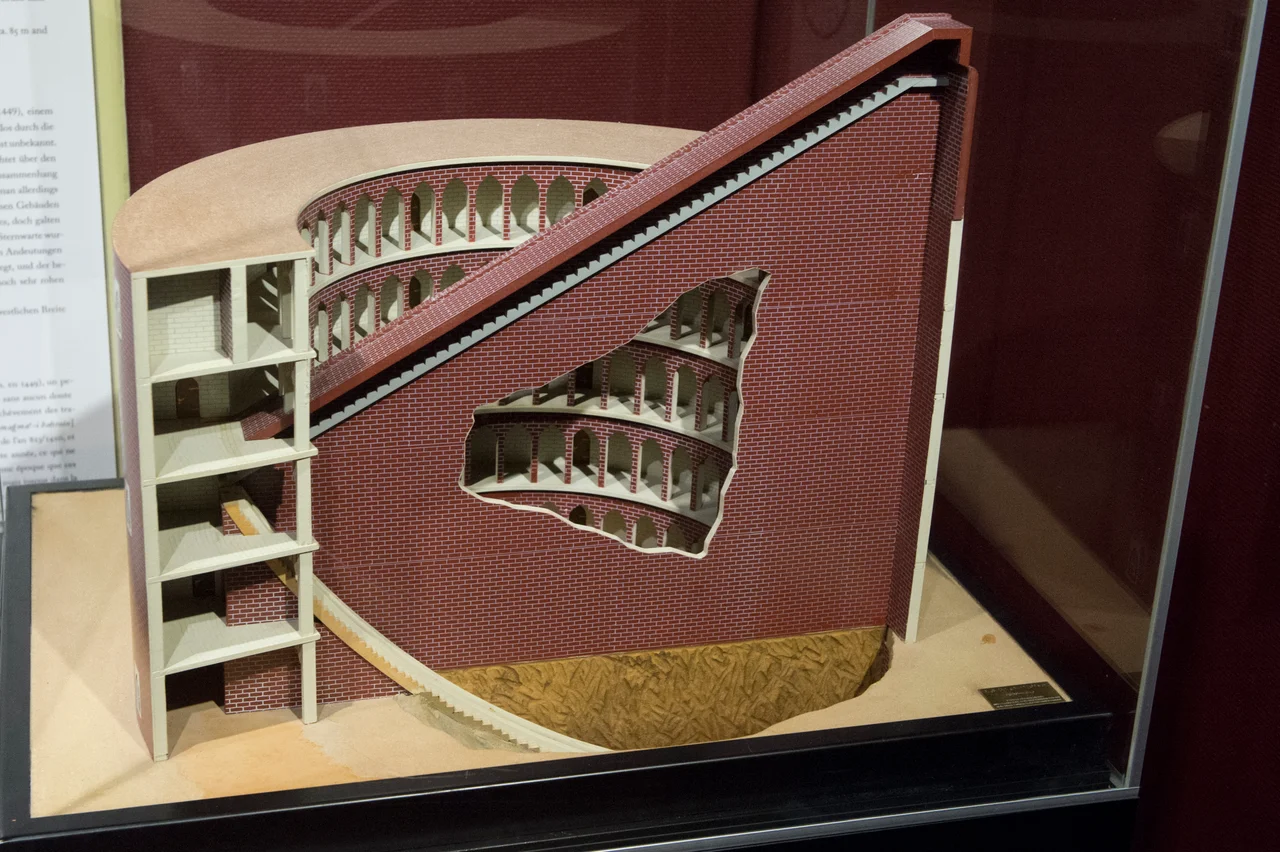
In the rose gardens of Gülhane Park, tucked against the outer walls of Topkapı Palace, the former Imperial Stables have been converted into a museum that makes an unusual argument. Inside are astrolabes, water clocks, observatories, mills, pumps, and siege engines — all built to represent scientific instruments described in manuscripts from the Islamic world's golden age of science, roughly the 9th through the 16th centuries. The models were made not from surviving originals, of which there are very few, but from drawings and written descriptions in historical texts. Some are reconstructions of things that were definitely built. Others are interpretations of devices that may only ever have existed on paper. The museum opened on 25 May 2008 and does not pretend otherwise.
A Park with Deep History
Gülhane Park itself is part of the story. These grounds were the outer royal gardens of Topkapı Palace — the palace that served as the seat of Ottoman imperial power from the mid-15th century onward. Made into a public park in 1912, Gülhane ("house of roses") fills each spring with seasonal flowers and is shaded in summer by mature plane trees. Parakeets of uncertain origin have established themselves here and seem settled. The Column of the Goths near the north entrance dates to the 3rd or 4th century AD and is thought to be the oldest intact Roman monument in the city. The Orphanage of St Paul, nearby, was founded in 573 AD. To enter the park is to walk through a palimpsest — Byzantine remains, Ottoman gardens, and now a museum built into what the sultans once used as stables for their horses.
The Golden Age These Instruments Come From
Between roughly the 8th and 16th centuries, scholars working in Arabic across the Islamic world made fundamental contributions to mathematics, astronomy, medicine, optics, and engineering. They translated and extended the Greek scientific inheritance, developed algebra, mapped the night sky with precision that European astronomers would rely on for centuries, and described machines that anticipated later European developments by hundreds of years. Al-Jazari's 12th-century Book of Knowledge of Ingenious Mechanical Devices contains descriptions of water clocks, automata, and pumps of remarkable sophistication. Al-Biruni calculated the circumference of the Earth in the 11th century. Ibn al-Haytham's work on optics prefigured modern understanding of how lenses work. The museum in Gülhane Park was built to make this history visible in three dimensions.
What Scholarship in Frankfurt Made
The instruments on display were not found in storage rooms or excavated from ruins. They were built specifically for this museum at the Institute for the History of Arab-Islamic Sciences at Johann Wolfgang Goethe University in Frankfurt, using contemporary manuscript descriptions and illustrations as their source material. The institute, led for decades by the historian of science Fuat Sezgin, had been doing this reconstruction work for years before the Istanbul museum opened. The result is a collection of physical objects that embody scholarly interpretation as much as historical fact. Some devices are reconstructions of things that surviving evidence suggests were actually made and used. Others are imaginations of what a described device might have looked like — which the museum is honest enough to acknowledge. Walking through the galleries, the visitor is looking at a combination of archaeology and educated conjecture, which is not so different from how much historical understanding works.
Room by Room
The galleries are organized by type of instrument and application. Astronomical instruments — astrolabes, celestial globes, armillary spheres — occupy one section, their brass fittings and engraved scales reflecting centuries of careful observation of how the sky moves. A clock gallery displays water clocks of the kind that Al-Jazari described in enough detail that reproductions are possible; the mechanisms are visible through glass, which clarifies how the timing systems worked. Engineering and military sections present pumps, mills, and siege machines including a reconstructed armored battering ram based on 14th-century Arab designs. Each object carries a label explaining what it represents, what text it was reconstructed from, and what degree of certainty attaches to the reconstruction. The cumulative effect is of a civilization that thought carefully about how the physical world worked and documented that thinking in enough detail that scholars eight centuries later could build what they described.
From the Air
The Museum of the History of Science and Technology in Islam sits at approximately 41.01°N, 28.98°E in Gülhane Park on the European side of Istanbul, at the foot of the Topkapı Palace complex. From the air at 3,000–5,000 feet, the domed roofline of Topkapı Palace and the minarets of Hagia Sophia and the Blue Mosque are the clear landmarks immediately to the south and west. Gülhane Park's tree canopy fills the slope between the palace walls and the Bosphorus shoreline. The park's west entrance is the museum access point. Nearest airport is Istanbul Airport (LTFM), approximately 35 km northwest on the European side.
Nearby Stories
- Kocaeli Peninsula 7.6 km away
- Second Battle of Çatalca 11 km away
- Istanbul's Rural Outskirts 14 km away
- MV Struma 20 km away
- HMAS AE2 36 km away
- Bursa 66 km away
- Sangarius Bridge 71 km away
- Januarius MacGahan 101 km away