
Istanbul Naval Museum
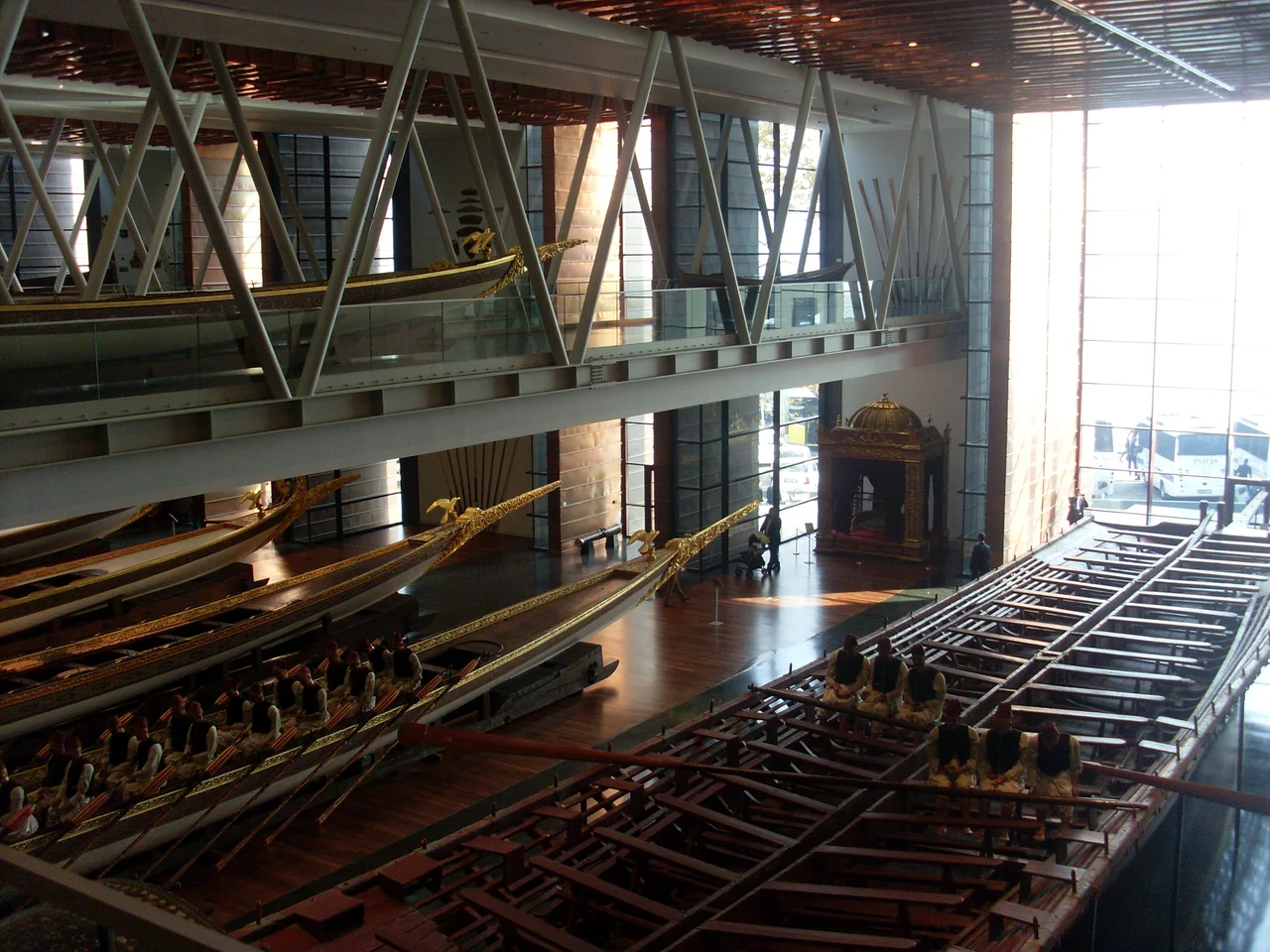
When the Ottoman sultans moved across the Bosphorus, the whole waterway stopped. Every boat, every ferrymen, every fisherman had to hold position as the imperial caïque glided by — gilded, flower-carved, dozens of oarsmen pulling in perfect unison, the sultan seated beneath a lacquered pavilion at the stern. These extraordinary vessels are now at rest in Beşiktaş, inside a purpose-built gallery at the Istanbul Naval Museum where you can walk the length of a 32-meter imperial barge and understand, in a way no painting can convey, what it meant for one empire to command the sea between two continents.
The Boats That Ruled the Bosphorus
The museum's most celebrated treasures are its imperial caïques — ornately decorated ceremonial rowing barges used by Ottoman sultans for travel on the Bosphorus and the Golden Horn. Some stretch more than 32 meters in length. Their hulls are carved with floral arabesques and gilded to reflect both the light of the water and the power of the throne. A small pavilion, sometimes called a sofa, occupied the stern, screened from public view. The oarsmen — scores of them — pulled in practiced unison while all other watercraft were required to stop and yield passage. In 2013, after a five-year renovation, the museum opened a vast two-floor gallery built specifically to house these barges, giving visitors a full view of them at scale. They are the maritime equivalent of a state carriage, and nothing in the museum hits quite the same way.
A Museum Born of Empire
The Istanbul Naval Museum was established in 1897 by Bozcaadalı Hasan Hüsnü Pasha, the Ottoman Minister of the Navy — making it Turkey's first military museum. Its founding purpose was to preserve the memory and material record of the Ottoman Navy at a moment when that navy was changing rapidly. The collection it assembled spans centuries of seafaring history: ship models, figureheads, oil paintings of sea battles, navigational instruments, seals, uniforms, and weapons. Among the most remarkable artifacts is a hull confirmed by AMS radiocarbon dating and dendrochronological research to be the world's oldest continuously maintained wooden vessel. That a piece of wood could survive centuries of salt air and Istanbul's history is itself a kind of miracle.
Admirals in Stone
Along the museum's corridors stand busts of the Ottoman Navy's most celebrated figures. Barbarossa Hayreddin Pasha, who dominated the Mediterranean in the sixteenth century and made the Ottoman fleet a power from Algiers to the Aegean. Turgut Reis, who served under Barbarossa and later led campaigns that terrified the coasts of Italy and Spain. Piri Reis, the cartographer-admiral whose 1513 world map — showing coastlines that Europeans had barely charted — still baffles historians. Piyale Pasha, who extended Ottoman naval reach into the western Mediterranean. These were not decorative admirals. They reshaped the known world's geopolitics, and their busts here feel less like memorials than like a statement of institutional confidence. The propeller of the battlecruiser TCG Yavuz — formerly the German SMS Goeben, seized during the First World War — adds a twentieth-century coda to the display.
Between the Ferry Pier and the Palace Shore
The museum sits on Hayrettin İskelesi Street in Beşiktaş, a neighborhood that has always belonged to Istanbul's maritime life. The Beşiktaş ferry pier is steps away, still busy with commuters crossing to Kadıköy on the Asian shore. The Dolmabahçe Palace, the last great Ottoman royal residence, stands barely half a kilometer south along the Bosphorus waterfront. This location is not accidental — the Navy Ministry and its dependencies clustered here for centuries, where the land narrows between the hills and the water. The museum opens most days from 09:00 to 17:00, closed Mondays, New Year's Day, and the first day of religious holidays. Among the boats displayed inside are the caïques used by Mustafa Kemal Atatürk during his stays at the Florya Marine Mansion — a detail that bridges the museum's Ottoman origins to the early Republic.
What the Collection Holds
Beyond the caïques and the admiral busts, the collection ranges widely. Artillery pieces stand in the courtyard. Naval paintings document sea battles that determined who controlled trade routes across three continents. Model ships built with extraordinary precision trace the evolution of Ottoman warship design from oared galleys to steam-powered ironclads. The museum is both a history of weaponry and a history of craft — of woodworking, of metalwork, of the art of navigation across open water before GPS. Walking through, you move through centuries without quite noticing the transitions. That the world's oldest wooden hull shares a building with the propeller of a twentieth-century warship is strange only until you remember that this city has been doing exactly that — layering eras — for more than two thousand years.
From the Air
The Istanbul Naval Museum sits at 41.042°N, 29.006°E on the European shore of the Bosphorus in the Beşiktaş district. Approaching from the west at 3,000–5,000 feet, the museum is visible along the waterfront just south of the Çırağan Palace and north of the Dolmabahçe Palace — look for the cluster of white buildings between the two palace complexes. The Bosphorus Bridge (15 July Martyrs Bridge) is a prominent landmark 3 kilometers to the northeast. Nearest major airport: LTFM (Istanbul Airport), approximately 35 km northwest. The narrow strait of the Bosphorus running between Europe and Asia is unmistakable from altitude, especially at lower cruise levels where the ferry traffic and tanker lanes are clearly visible.
Nearby Stories
- Kocaeli Peninsula 7.6 km away
- Second Battle of Çatalca 11 km away
- Istanbul's Rural Outskirts 14 km away
- MV Struma 20 km away
- HMAS AE2 36 km away
- Bursa 66 km away
- Sangarius Bridge 71 km away
- Januarius MacGahan 101 km away