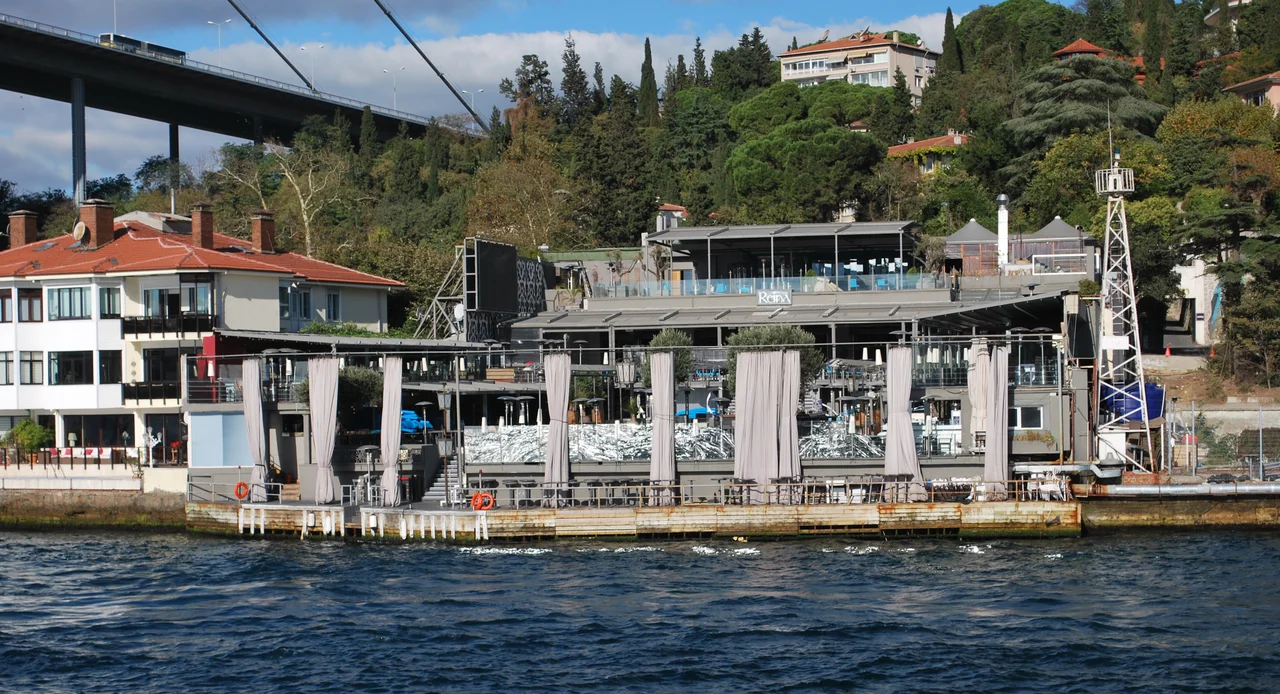

The Reina Nightclub Attack
On the night of 1 January 2017, as the new year was barely an hour old, 39 people lost their lives at the Reina nightclub on the Bosphorus shore in Istanbul's Ortaköy neighborhood. They had come from Saudi Arabia, Lebanon, Tunisia, India, Morocco, Jordan, Iraq, Kuwait, Canada, Israel, Syria, Russia, Belgium, and Turkey — friends, couples, families, colleagues — to celebrate together on one of the city's most beloved waterfronts. A terrorist attack ended their evening and their lives. Seventy-nine others were wounded. This is a record of what happened, and of who they were.
The People Who Were There
About 600 people had gathered at Reina that night, drawn by the nightclub's location on the Bosphorus and the occasion of the new year. Among the 39 killed, 25 were foreign nationals and 11 were Turkish citizens; one body initially remained unidentified. Twenty-five of the victims were men and 14 were women. They represented at least 14 countries. Among them was Abis Rizvi, an Indian Bollywood film producer known for the 2014 film Roar: Tigers of the Sundarbans. Seven Saudi nationals were among the dead, along with three Lebanese, two Tunisians, two Indians, two Moroccans, two Jordanians, two Iraqis, one Kuwaiti, one Canadian, one Israeli, one Syrian, one Russian, and one Turkish-Belgian dual national. The police officer on duty at the club entrance was also killed. Each of these people had a life that extended far beyond the moment they were taken.
The Attack
At approximately 01:15 local time, a gunman entered the Reina nightclub after killing the police officer and a bystander at the entrance. He fired more than 180 rounds during a seven-minute assault. A number of people escaped by jumping into the Bosphorus. After the shooting ended, the attacker went into the kitchen, changed his clothes, and left by blending into the fleeing crowd. He was not immediately apprehended. In the hours that followed, Istanbul's governor Vasip Şahin confirmed the incident as a terrorist attack. The Turkish government ordered a temporary media blackout citing public order concerns. Police set up a cordon around the nightclub. The city that had placed 17,000 officers on duty that night — already on heightened alert following a string of attacks in 2016 — began a citywide manhunt.
Context: A Year of Violence
The Reina attack did not come without warning of the broader environment. Istanbul had endured an extraordinarily violent 2016. In June, a suicide bombing at Atatürk Airport killed 48 people. In December, a bombing near the Vodafone Arena killed 46 more. The Turkish military had recently entered the conflict in Syria — the first direct military confrontation between Turkish forces and ISIL — raising the threat of retaliatory attacks. None of this context diminishes the loss of those who died at Reina. It does help explain the particular weight of grief in Istanbul at the start of 2017: a city that had been mourning repeatedly, and that had hoped, as everyone does on New Year's Eve, that the calendar's turn would mean something.
Accountability
On 9 January 2017, Turkish police identified the suspected shooter as Abdulkadir Masharipov, an Uzbek national born on 2 August 1988. He was arrested on 16 January at an apartment in Istanbul's Esenyurt district, where police found firearms, ammunition, two drones, and approximately $200,000. Masharipov is believed to have entered Turkey illegally through the Iranian border in January 2016. Islamic State claimed responsibility for the attack. In September 2020, a Turkish court sentenced Masharipov to 40 aggravated life sentences. A Turkish appeals court upheld the convictions of 32 defendants connected to the attack in January 2025. In December 2021, another suspect linked to the attack was detained in Bishkek, Kyrgyzstan. The legal proceedings have continued for years — a long, slow process that is one of the few things justice can offer.
Memory
In the days after the attack, tributes gathered outside Reina: flowers, candles, photographs. People from Istanbul and from across the world left messages in more than a dozen languages. The nightclub on the Bosphorus, which had been a place of celebration, became for a time a place of mourning. That the victims came from so many countries — that their families had to grieve across so many time zones, in so many languages — was part of what made the loss feel so wide. The Reina nightclub closed permanently after the attack. The shore where it stood is still there, and the Bosphorus still moves past it, as it always has, indifferent to the events on its banks. The memory of the 39 people who died there belongs to those who loved them, and to any honest account of the city's recent history.
From the Air
The Reina nightclub was located at approximately 41.050°N, 29.033°E on the European shore of the Bosphorus in the Ortaköy neighborhood of Istanbul. The site sits just south of the iconic Bosphorus Bridge (15 July Martyrs Bridge), whose two towers are visible from considerable altitude and provide unmistakable orientation. The Ortaköy Mosque, a landmark on the waterfront, is visible from the air at lower altitudes. Nearest major airport: LTFM (Istanbul Airport), approximately 30 km to the northwest. The Bosphorus strait itself — the narrow waterway separating Europe and Asia — is the dominant geographic feature visible from any approach to this part of the city.
Nearby Stories
- Kocaeli Peninsula 7.6 km away
- Second Battle of Çatalca 11 km away
- Istanbul's Rural Outskirts 14 km away
- MV Struma 20 km away
- HMAS AE2 36 km away
- Bursa 66 km away
- Sangarius Bridge 71 km away
- Januarius MacGahan 101 km away