
June 2016 Istanbul Bombing
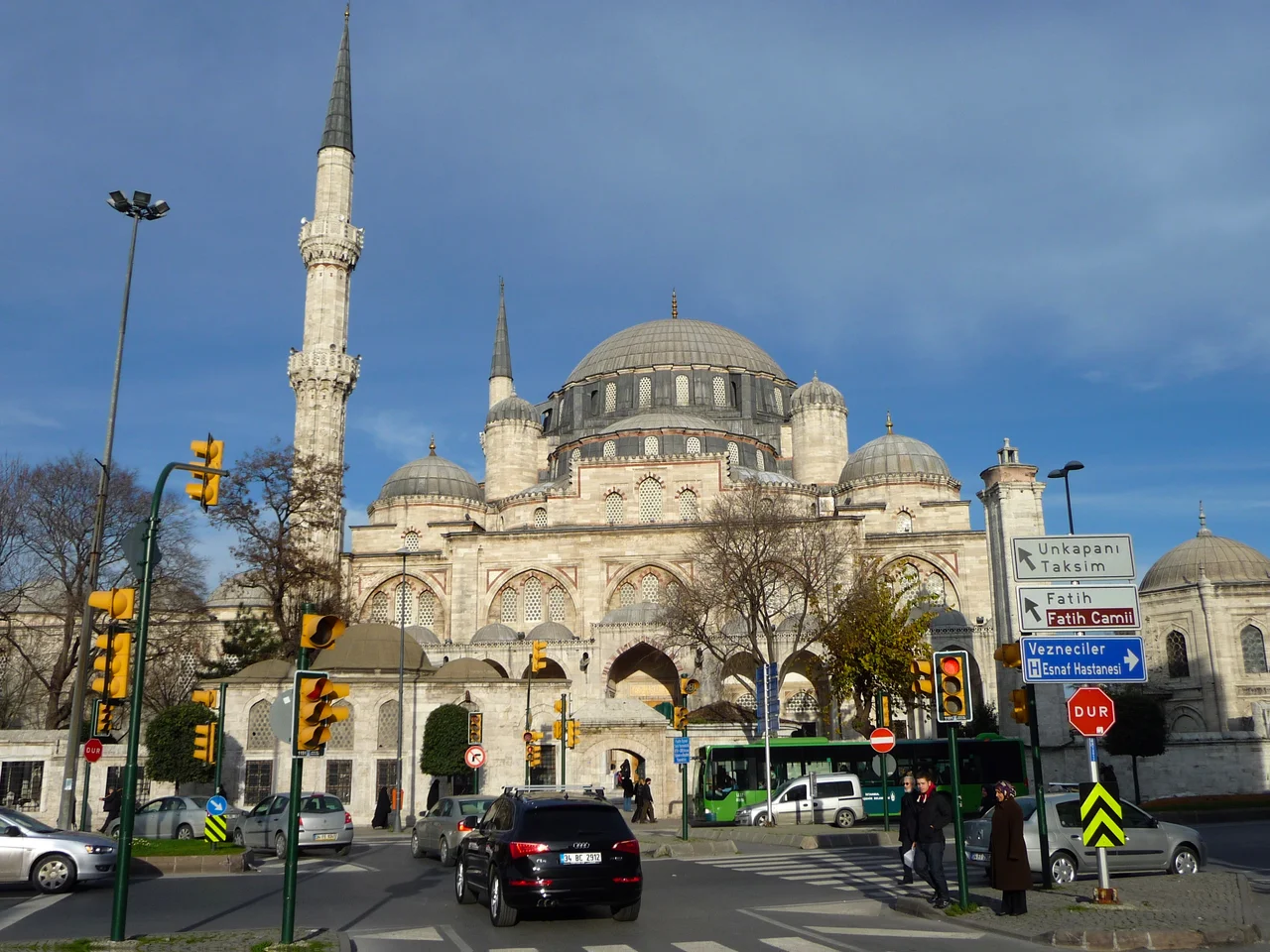
The second day of Ramadan fell on a Tuesday that year, the 7th of June 2016. By 08:40 in the morning, the streets of Vezneciler were filling with the ordinary rhythms of a weekday in Istanbul — students heading to nearby Istanbul University, commuters passing the 16th-century Şehzade Mosque, which has stood in this quarter since the time of Suleiman the Magnificent. A bus carrying police officers was moving through the district when a car bomb detonated. Twelve people died: police officers and civilians both. Dozens more were wounded. Three of the injured were in serious condition. The blast shattered windows over a wide area; fragments reached the dormitories of students living nearby.
The People Lost
Among those who died were seven police officers going about the work of keeping a city safe, and civilians who happened to be near a bus on a Tuesday morning. Turkish President Recep Tayyip Erdoğan, who went to Haseki Hospital to be with the injured in the hours after the attack, said what was most important to say plainly: these were human beings who were killed. Whatever category a terrorist might draw around a target — soldier, police officer, civilian — the state's interest, he said, begins and ends with people. Foreign Minister Mevlüt Çavuşoğlu noted that the attack came on the second day of Ramadan, a month when families across the country were gathering for iftar in the evenings. The timing added a particular grief to the day's violence.
A City Already Bleeding
Turkey in 2016 was enduring one of the bloodiest stretches in its modern history. Two deadly bombings in Istanbul — in January and March of that year — had already been attributed to the Islamic State. In Ankara, bombings in February and March had killed dozens; both were claimed by the Kurdistan Freedom Hawks (TAK), which described itself as an offshoot of the outlawed Kurdistan Workers' Party, the PKK. By June, the country was on high alert. Security forces were stretched. Beyazıt Square, a major tourist and civic landmark, was just steps from the Vezneciler site. When the car exploded that morning, it landed in a district already shadowed by months of mourning.
Responsibility and Its Complexities
No organization immediately claimed the Vezneciler attack. In the hours after the bombing, security analysts named three possibilities: the PKK, the Islamic State, and the Revolutionary People's Liberation Party/Front (DHKP-C). Within days, the Kurdistan Freedom Hawks announced that the bomber was Eylem Yaşa, aged 32, codenamed Eylem Nawroz, a member of TAK's Brigade of the Immortal who had joined the organization in 2011. She was from Diyarbakır but had lived most of her life in Antalya. Attribution in attacks like this rarely resolves cleanly in public understanding; what can be said clearly is that the attack was carried out against people who did not choose to be targets, and that the perpetrators have since faced accountability: three were sentenced to life imprisonment.
Aftermath and Memory
In the immediate aftermath, the avenue around the site was closed to traffic and the Vezneciler metro station shut down. Selahattin Demirtaş, then co-leader of the pro-Kurdish Peoples' Democratic Party, called for a summit of all party leaders to find a way out of the cycle of bloodshed, saying that all of them should resign if they failed. Condolences and statements of solidarity came from India, the United States, and the European Union. The Şehzade Mosque, its windows damaged by the blast, continued to stand — as mosques in this neighborhood have through centuries of upheaval. The neighborhood of Vezneciler has since returned to its daily life, the site of the attack absorbed back into the ordinary texture of a city that has had to carry a great deal of grief.
From the Air
Coordinates: 41.012°N, 28.959°E. The Vezneciler district lies in the Fatih peninsula of Istanbul's European side, clustered around the historic university quarter south of the Golden Horn. The 16th-century Şehzade Mosque — one of Mimar Sinan's masterworks, with its distinctive cascade of domes — is the most identifiable landmark from the air near this site. Beyazıt Square and the Istanbul University campus are immediately adjacent. Istanbul Airport (LTFM) is approximately 40 km to the northwest. Viewing altitude: 2,000–3,000 feet along the Golden Horn approach offers a clear line of sight to the Fatih mosque cluster.
Nearby Stories
- Kocaeli Peninsula 7.6 km away
- Second Battle of Çatalca 11 km away
- Istanbul's Rural Outskirts 14 km away
- MV Struma 20 km away
- HMAS AE2 36 km away
- Bursa 66 km away
- Sangarius Bridge 71 km away
- Januarius MacGahan 101 km away