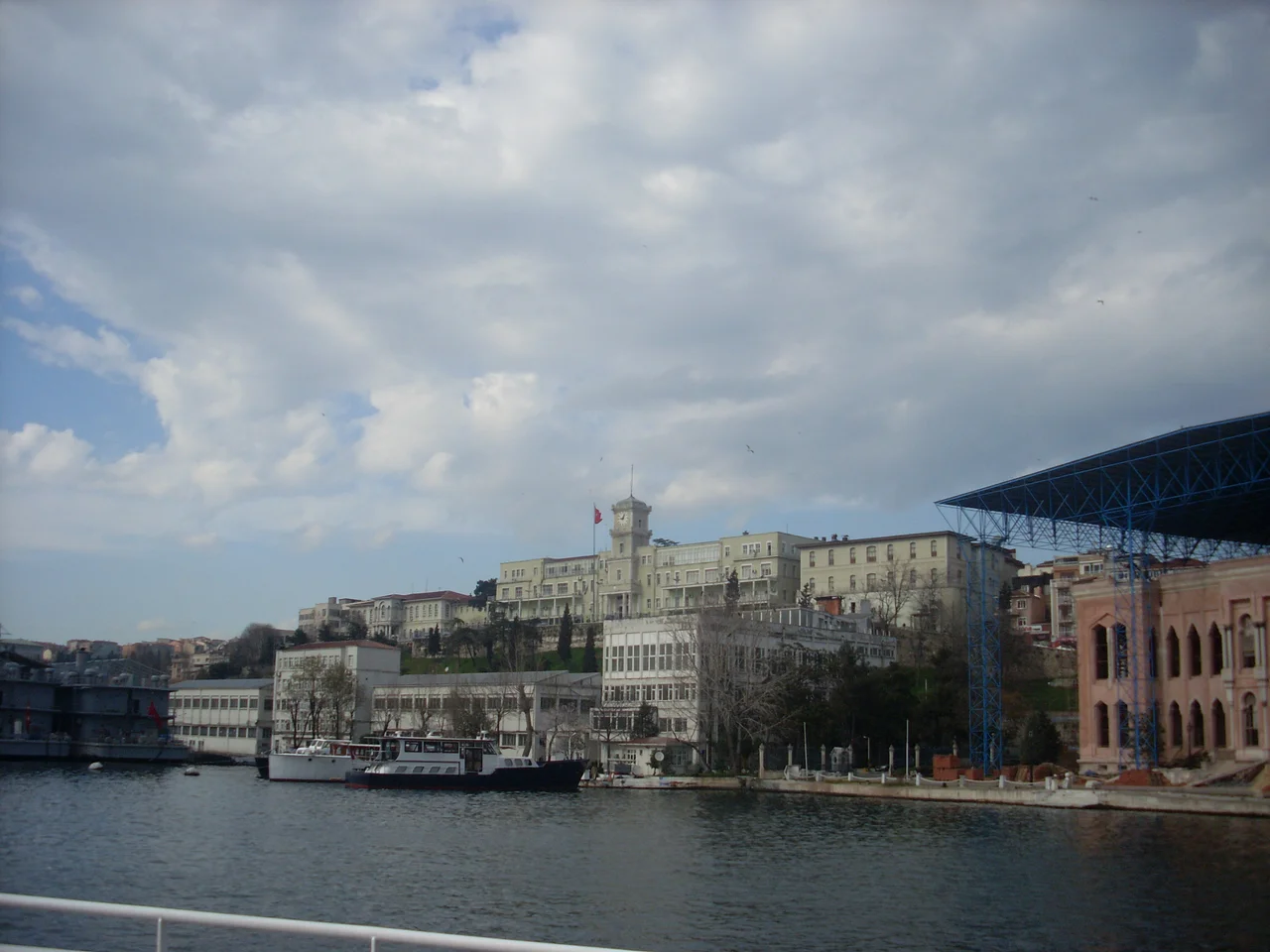

Kasımpaşa, Beyoğlu
Kasımpaşa is the lowest-valued property on the Istanbul edition of the Monopoly board. This is, in the vocabulary of a board game, a statement about real estate. But it also captures something real about the neighborhood's self-image — a place that has always been saltier, harder-edged, and less impressed with itself than the districts across the Golden Horn. It is where sailors lived when the Ottoman Navy was the third largest in the world. It is where a sixteenth-century commander, rewarded for capturing Buda for Suleiman the Magnificent, gave his name to the area. And it is, by a fact that continues to surprise visitors, where Turkey's current president, Recep Tayyip Erdoğan, was born and grew up.
Ships Dragged Over Land
The story of how Kasımpaşa became a naval district begins with one of the most audacious logistics operations in medieval warfare. In 1453, Sultan Mehmed II needed to breach the defenses of the Golden Horn — the Byzantine chain stretched across its mouth was preventing his fleet from attacking Constantinople from the water. His solution was to have his ships pulled overland. Timbers were laid on greased wooden tracks, and Ottoman galleys were hauled out of the Bosphorus near Dolmabahçe and dragged over the hill, to be relaunched into the Golden Horn at what would become Kasımpaşa. It worked. Constantinople fell.
Kasımpaşa takes its name from a commander of Suleiman the Magnificent's early sixteenth-century campaigns who was rewarded with the area after capturing Buda for the sultan in 1530. The area was developed into the home of the Imperial Arsenal and docks of the Ottoman Navy, which at its peak housed 120 ships. Sultan Ahmed I had a wooden Shipyard Palace — the Tersane Sarayı — built here so he would have a comfortable place to rest when he came to practice archery. The only surviving piece of that early seventeenth-century palace is the Aynalıkavak Kasrı pavilion, which stands in wooded grounds near the Golden Horn and contains a small museum of musical instruments.
When the Third Navy in the World Declined
A Turkish Naval High School was founded at Kasımpaşa in 1773, teaching geometry and navigation to naval and merchant captains aboard a galleon anchored in the Horn. The great admiral Cezayirli Gazi Hasan Paşa — his name marking him as Algerian-born — built a massive barracks complex here in 1785, the Kalyoncu Kışlası, which survives to this day. His statue stands facing the Kasımpaşa ferry terminal, an Ottoman dignitary with a lion at his side.
At its peak, under Sultan Abdülaziz, the Ottoman Navy had 21 battleships and 173 other warships — the third largest naval force in the world, after the British and French fleets. Then came the economic crisis of 1875, which destabilized the empire's finances and sparked the Great Eastern Crisis in the Balkans. A navy that large became a liability the treasury could no longer sustain. The shipyard at Kasımpaşa grew quieter, then quieter still. Decline came not in a single moment but in a long unraveling.
In the 1860s, the Ottoman-Venetian Jewish banker Abraham Salomon Camondo built a waterfront palace here. The Camondo Palace, designed by the Ottoman-Armenian architect Sarkis Balyan, later became the headquarters of the Ottoman Ministry of the Navy, and in November 1922, after the Armistice of Mudanya ended the Turkish War of Independence, it became the headquarters of the Istanbul Naval Command.
Fire, Pogrom, and Transformation
Kasımpaşa's twentieth century was not gentle. The neighborhood was struck by British bombing during World War I in 1918. In 1821 a fire had already destroyed much of the district. But the event that left the deepest wound in the community memory is the riots of September 1955 — the Istanbul pogrom — when organized mobs attacked Greek-owned homes and businesses across the European side of the city. Greek dwellings in Kasımpaşa were attacked and looted that night. The Greek community that had lived in the neighborhood for generations did not fully recover.
The neighborhood that emerged from those mid-century upheavals was more solidly working-class than before, and more homogeneous. Sailors and shipyard workers set its character. The old arsenal continued ship repairs well into the modern era before it, too, began to wind down. When the Istanbul Metropolitan Municipality began investing in the area in the early twenty-first century, it built football stadiums and sports facilities and libraries — infrastructure for the residents who were actually there, not monuments to what the neighborhood had been.
A Shore Being Remade
The Kasımpaşa waterfront is in the midst of its latest transformation. The Haliçport-Tersane Istanbul project — a large-scale conversion of the old shipyard shore into a complex of shops, hotels, restaurants, and a marina — is remaking the edge of the Golden Horn. Some of the historic shipyard buildings are being incorporated; others are being replaced. The Sadberk Hanım Museum is planned to move here from its current location on the Bosphorus.
The mosque in the center of the neighborhood's shopping district, the Güzelce Kasım Paşa Camii, also known as the Cami-i Kebir, was originally designed by Mimar Sinan in 1533 to 1534, though it was completely rebuilt in the nineteenth century after fire. Its Büyük Hamam — the large bathhouse attached to the complex — is still in service.
Kasımpaşa Spor, the neighborhood football club founded in 1921, now plays in Turkey's top division, the Süper Lig, at a 13,500-seat stadium opened in 2005. The neighborhood that named the bottom square on the Istanbul Monopoly board has spent five centuries proving that the bottom square matters.
From the Air
Kasımpaşa is located at approximately 41.03°N, 28.97°E on the northern shore of the Golden Horn, within the Beyoğlu district on Istanbul's European side. From altitude, it is identifiable as the waterfront district directly above the Golden Horn's inner curve, between the Atatürk Bridge to the west and Karaköy to the southeast. Istanbul Airport (LTFM) is approximately 25 km to the northwest. The Aynalıkavak Kasrı pavilion and the former naval ministry building are visible landmarks on the waterfront for orientation.
Nearby Stories
- Kocaeli Peninsula 7.6 km away
- Second Battle of Çatalca 11 km away
- Istanbul's Rural Outskirts 14 km away
- MV Struma 20 km away
- HMAS AE2 36 km away
- Bursa 66 km away
- Sangarius Bridge 71 km away
- Januarius MacGahan 101 km away