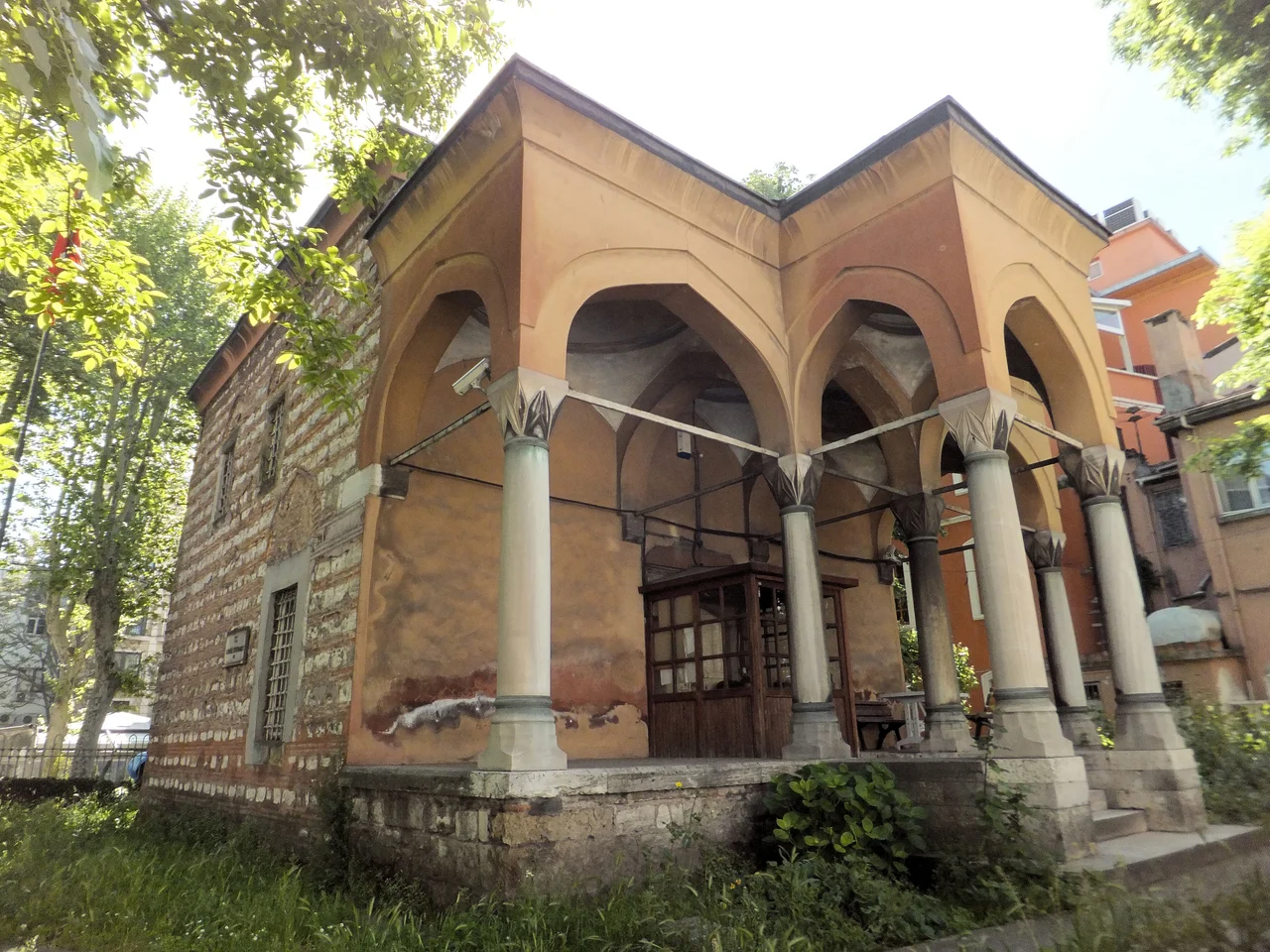

Köprülü Library
When Köprülü Mehmed Pasha founded a library in Istanbul in 1678, he staffed it with three librarians, one binder, and one janitor. That staffing list is a small window into how seriously the institution was taken from the start. This was not a private collection donated to a mosque's care, nor a scholar's personal library opened grudgingly to visitors. It was a purpose-built public library — the first of its kind in the Middle East — and it was designed to function as one.
The Köprülü Dynasty and Its Library
The Köprülü family dominated Ottoman politics for much of the second half of the 17th century. Köprülü Mehmed Pasha himself served as Grand Vizier from 1656 to 1661, reviving an empire that had grown dysfunctional under a series of weak rulers. His son Köprülüzade Fazıl Ahmed Pasha succeeded him and served as Grand Vizier until 1676. The family's political authority was exceptional; so was its cultural ambition.
The library that Köprülü Mehmed Pasha founded in 1678 — two years after Fazıl Ahmed Pasha's death, in memory of the family's legacy — stands in the Fatih district of Istanbul, near the Çemberlitaş neighborhood. It was built as a freestanding institution, not appended to a mosque or madrasa, and the first books were donated by the Köprülü family itself. Subsequent donations and purchases from Fazıl Ahmed Pasha, Haci Ahmet Pasha, and Mehmet Asim Bey expanded the collection over time. What the family started, the family continued to build.
3,790 Manuscripts
The Köprülü Library holds 3,790 manuscripts in Turkish, Arabic, and Persian, along with approximately 1,500 printed works. Scholars consider it one of the most important Islamic manuscript collections in the world. The catalogue was prepared by Ramazan Şeşen, Cevat İzgi, and Cemil Akpınar and published in 1986 — a project that took sustained scholarly effort to complete.
The collection reflects the intellectual range of the Ottoman world at its 17th-century peak: legal texts, religious works, history, poetry, science, philosophy. Many manuscripts are unique or extremely rare. For researchers working on Ottoman, Arabic, or Persian literary and intellectual history, the Köprülü Library is not a curiosity but a destination. It sits in a building small enough to walk past without noticing, holding materials that scholars travel from across the world to consult.
The Dome and Its Inscriptions
The building itself is a compact jewel of Ottoman library architecture. Set in a small garden whose three sides open to streets, it is constructed with alternating courses of stone and brick — a decorative technique common in Ottoman religious and civic buildings. A dome sits on an octagonal exterior rim, covering a pendentive square plan inside. Six marble pillars support a spire-arch arcade topped with four smaller domes. The entrance, reached by a four-step staircase on the western side, leads through a low-pitched door in the central axis.
Inside, the dome's surface and its pendentives are decorated with calligraphic penwork in brown, black, and red. Among the ornamental curves and flower designs, the word Maşallah — "God has willed it" — is written alongside the date 1181 Hijri (corresponding to 1667–1668 CE). On the inner door, additional inscriptions record restoration dates: 1289 Hijri (1872) and 1327 Hijri (1911). The building has been repaired at least twice, but the inscriptions mean we know exactly when. The dome still covers the same collection of manuscripts it was built to protect.
Still Open After Three and a Half Centuries
What is remarkable about the Köprülü Library is not just its age but its continuity. Founded in 1678, it has functioned as a library ever since — through the decline of the Ottoman Empire, through the transition to the Turkish Republic, through the urbanization that transformed Istanbul from a capital of one civilization into a metropolis of another. The institution that Köprülü Mehmed Pasha created with three librarians, a binder, and a janitor is still operating on essentially the same terms: a specialized repository of manuscripts, managed by staff, open to scholars.
In an age when great institutions are valued partly for their grandeur — their vast buildings, their famous collections, their tourist traffic — the Köprülü Library asks for none of that attention. It sits in its garden in Fatih, its dome slightly worn, its manuscripts behind locked cabinets, its librarians waiting for the next researcher to arrive. That it has survived intact for 348 years is either unremarkable or extraordinary, depending on how you think about the odds.
From the Air
The Köprülü Library is located at approximately 41.008°N, 28.973°E in the Fatih district of Istanbul's historic peninsula, near the Çemberlitaş area and not far from the Grand Bazaar. The building is small and set in a garden — easily overlooked in the dense urban fabric from street level, though the dome is visible from above. From the air at 3,000–5,000 feet, the historic peninsula's skyline is dominated by larger monuments; this library sits a few hundred meters east of the Column of Constantine. The nearest airport is Istanbul Airport (LTFM), approximately 36 km to the northwest on the European side.
Nearby Stories
- Kocaeli Peninsula 7.6 km away
- Second Battle of Çatalca 11 km away
- Istanbul's Rural Outskirts 14 km away
- MV Struma 20 km away
- HMAS AE2 36 km away
- Bursa 66 km away
- Sangarius Bridge 71 km away
- Januarius MacGahan 101 km away