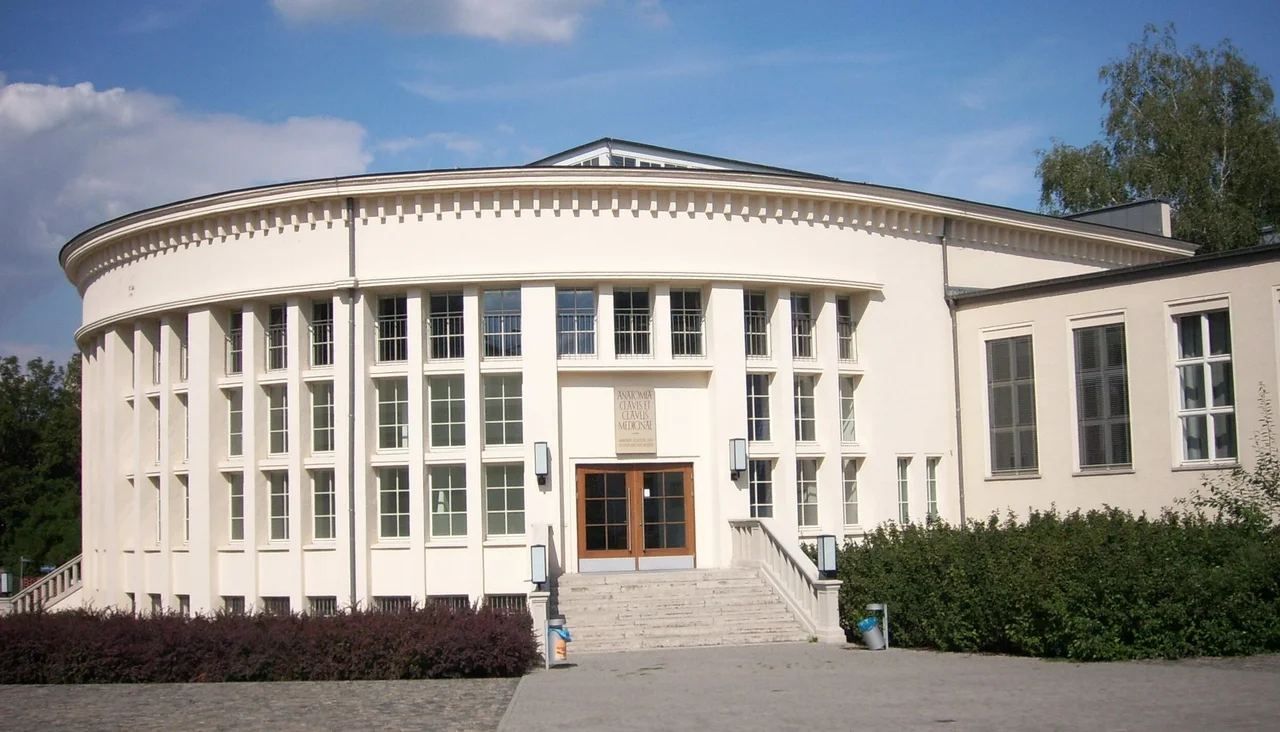

Leipzig University
The university was born from a quarrel. In 1409, German-speaking masters and students at Prague's Charles University - Europe's oldest German-language university - lost a vote over the Bohemian-versus-foreign balance of academic power and walked out en masse. They needed somewhere to go. Frederick I, Elector of Saxony, and his brother William II, Margrave of Meissen, had a city, Leipzig, and a desire to put it on the intellectual map. On 2 December 1409 they signed the foundation charter for a new university, gave the Prague exiles a place to teach, and accidentally founded one of the great universities of the German-speaking world. Six hundred and seventeen years later, Leipzig University is the second-oldest German university in continuous operation. It enrolls about 30,000 students. Ten Nobel laureates have been associated with it - most recently Svante Paabo, who won the 2022 Prize in Medicine for sequencing the Neanderthal genome and discovering the Denisovans.
A Roll Call
Read the alumni list and the German intellectual canon walks past. Gottfried Wilhelm Leibniz, the polymath who invented calculus simultaneously with Newton, enrolled at Leipzig at fourteen and earned his bachelor's at fifteen. Johann Wolfgang von Goethe spent three years here (1765-1768) studying law and falling in love and writing his earliest published lyrics; he set scenes of Faust in Auerbachs Keller, the Leipzig restaurant where he had drunk as a student. Friedrich Nietzsche took his doctorate here and taught classical philology before leaving for Basel. Robert Schumann studied law before abandoning it for music. Richard Wagner enrolled briefly. Tycho Brahe, the Danish astronomer who measured the heavens before there were telescopes, came in the 1560s. Werner Heisenberg, who had formulated the uncertainty principle in his twenties, served as Leipzig's professor of theoretical physics for two decades and was rector for the academic year 1933-34, in the most morally compromised season of any German university. Angela Merkel earned her doctorate in quantum chemistry here in 1986, three years before the regime that had trained her would collapse outside her old lecture halls.
The Augusteum and the Paulinerkirche
The university's central building from the 1830s was the Augusteum, a neoclassical block facing the Augustusplatz. Beside it stood the Paulinerkirche - the Pauliner Church - which had served as the university chapel since the Reformation. In 1968, the East German regime, which had no use for a Gothic church on its flagship socialist campus, dynamited the Paulinerkirche on Walter Ulbricht's order. The demolition was protested by faculty and students; the protests went nowhere. A new university building rose on the site, modernist and assertive. After reunification, a long debate produced a compromise: the Paulinum, completed in 2012, a new building whose facade alludes to the destroyed church, with interior space for both academic ceremonies and religious use. The original altar from the demolished church was restored and installed inside. Two new organs were built for it. The architectural conversation between what the GDR took down and what the reunified Germany put up has become one of the most studied campus rebuilding projects in Europe.
The Resistance Voice
Leipzig was where Nazi-era political resistance found university footholds when it could. Carl Friedrich Goerdeler, the city's mayor from 1930, resigned in 1937 when his Nazi deputy ordered the destruction of Felix Mendelssohn's statue while Goerdeler was out of town; he later became a leader of the conservative resistance and was executed in 1945 for involvement in the 20 July plot. Hans Litten, the lawyer who in 1931 had cross-examined Hitler in court for three hours and exposed Nazi violence in legal proceedings, had spent time at Leipzig before being held in Lichtenburg and other camps. Werner Heisenberg's wartime physics work has been debated for eighty years - whether his theoretical calculations were sincere efforts toward a German atomic weapon or quiet sabotage of one - but his Leipzig institute kept producing students who would shape postwar physics on both sides of the wall.
Around the Nikolaikirche
Three blocks from the central campus stands the Nikolaikirche, where in 1989 the Monday peace prayers had been held since 1983 by Pastor Christian Fuhrer. By autumn of that year the prayers had become protest gatherings. On 9 October 1989, an estimated 70,000 people walked from the Nikolaikirche around the inner ring of the city, carrying candles and chanting 'Wir sind das Volk' - 'we are the people.' The regime had positioned police and Stasi units, hospital beds had been requisitioned, and many of the marchers genuinely believed they would be shot. They were not. The October march broke the regime's nerve in Leipzig, and within a month the Berlin Wall fell. The university students and faculty who marched were not the only people there - workers, families, and pensioners filled the ring road - but they had spent decades being taught in Marxist-Leninist faculties what dialectical materialism said about historical change, and on that night they made some of it happen themselves. Today the campus around the Augustusplatz is one of the most visited public spaces in Saxony, the Paulinum's altar still in place, the Nikolaikirche three minutes' walk away.
From the Air
Located at 51.34 degrees N, 12.38 degrees E in central Leipzig, immediately west of Augustusplatz and integrated into the dense urban fabric of the inner ring. The Paulinum's distinctive gabled facade is the most recognizable element from the air. Nearest major airport: EDDP (Leipzig/Halle) about 18 km northwest. The Monument to the Battle of the Nations, rising 91 m about 4 km southeast, is a useful navigation landmark when scanning the broader city.
Nearby Stories
- Colditz Castle 23 km away
- Lutherhaus 24 km away
- Naumburg Cathedral 31 km away
- Battle of Jena-Auerstedt 35 km away
- Kingdom of Saxony 52 km away
- Moritzburg Castle 54 km away
- Einstein Tower 78 km away
- Gardelegen Massacre 102 km away