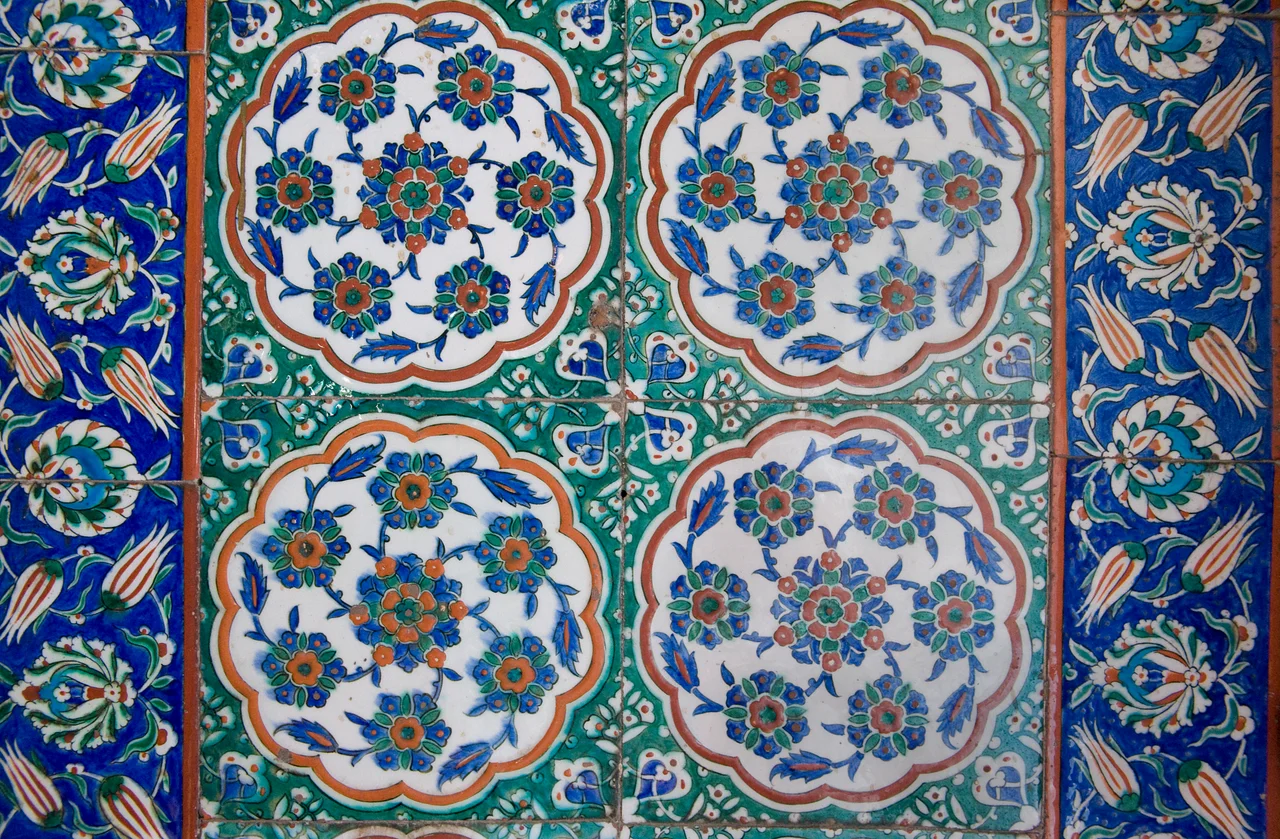

Mesih Mehmed Pasha Mosque
In 1584, Mimar Sinan went on hajj to Mecca. He was in his nineties, the most celebrated architect in the Ottoman world, and while he was away — absent from the imperial design offices for the duration of his pilgrimage — one of his deputies began a mosque in the Fatih district commissioned by a rising vizier named Mesih Mehmed Pasha. Whether Sinan designed it before he left, supervised it on his return, or left the whole job to his deputy Mehmed Subaşı is a question that has never been definitively answered. Sinan included the mosque in one draft of his autobiography and quietly removed it from a later version. The mosque stands regardless, completed in 1585–86, one of the last buildings associated with the greatest architect of the Ottoman age.
The Vizier Who Built It
Mesih Mehmed Pasha had traveled far before commissioning this mosque. He spent nearly six years in Cairo as governor-general of Egypt — a post of enormous administrative complexity, governing the wealthiest province of the empire. He returned to Istanbul in 1581, climbed steadily through the vizierial ranks, and held the post of grand vizier for exactly four months, from 1 December 1585 until 15 April 1586. He died in 1589, two years after obtaining permission to be buried beside the mosque he had built. That burial location — not in a dedicated tomb but in the open forecourt, at the center of the mosque's rectangular courtyard — was his own choice. Today, visitors cross his grave to enter the building.
A Mosque on a Slope
The site posed a practical challenge. The land in Fatih slopes, and the eastern side of the plot stands higher than the western. To create a level floor, the mosque's western side was raised on a vaulted substructure that accommodates a row of shops — a characteristic Ottoman solution that used commercial rental income to support religious endowments. The entrance from the street below passes through a domed gatehouse. The forecourt, bounded on three sides by an arcade of small domes, gives the approach a measured, processional quality. Beneath the northern arcade, a series of taps for ritual ablutions lines the wall — the fountain you would expect at a mosque's center replaced here by the tomb of the patron himself.
The Architecture of Dome and Light
The main dome covers 12.8 meters in diameter, resting on a drum pierced by 24 windows that flood the interior with light. Eight stabilizing turrets circle the drum, anchored to internal piers. Five half-domes complete the exedra system: one behind the mihrab niche that orients prayer toward Mecca, and one in each corner, giving the interior its characteristic late-Sinan sense of expanding space rather than enclosure. The outer aisles, running along each side, are roofed by three small domes each. Windows at the lower levels are grouped into large framing arches, and the quality of Iznik tiles — documented in surviving photographs — shows the high standards of the Murad III era. The north facade presents a double portico of five arches, the inner row of columns supporting five more small domes above.
A Late Work, An Open Question
What exactly Sinan's hand contributed here will likely never be known with certainty. He was prolific across a career spanning six decades, responsible for hundreds of structures across the empire — from the Süleymaniye to the Selimiye, mosques that define the Ottoman skyline. At the end of that career, attribution becomes complicated. Deputies worked from his templates; he may have reviewed and revised; the foundation inscription records only a completion date, not the full story of the design. That uncertainty is itself a kind of legacy — evidence of an architectural office functioning at imperial scale, where the master's influence pervades work he may never have personally touched.
From the Air
The Mesih Mehmed Pasha Mosque sits at approximately 41.022°N, 28.943°E in the Fatih district on the European side of Istanbul. Istanbul Airport (LTFM) lies to the northwest; approaching from that direction, the historic peninsula's mosques emerge from the skyline as distinctive silhouettes — domes and minarets grouped along the ridge of the old city. Fatih occupies the central spine of the peninsula, and at 3,000–4,000 feet, the density of mosque rooflines in this quarter is striking. The Mesih Mehmed Pasha Mosque is smaller than the great imperial mosques and sits within a residential street grid, visible to careful eyes.
Nearby Stories
- Kocaeli Peninsula 7.6 km away
- Second Battle of Çatalca 11 km away
- Istanbul's Rural Outskirts 14 km away
- MV Struma 20 km away
- HMAS AE2 36 km away
- Bursa 66 km away
- Sangarius Bridge 71 km away
- Januarius MacGahan 101 km away