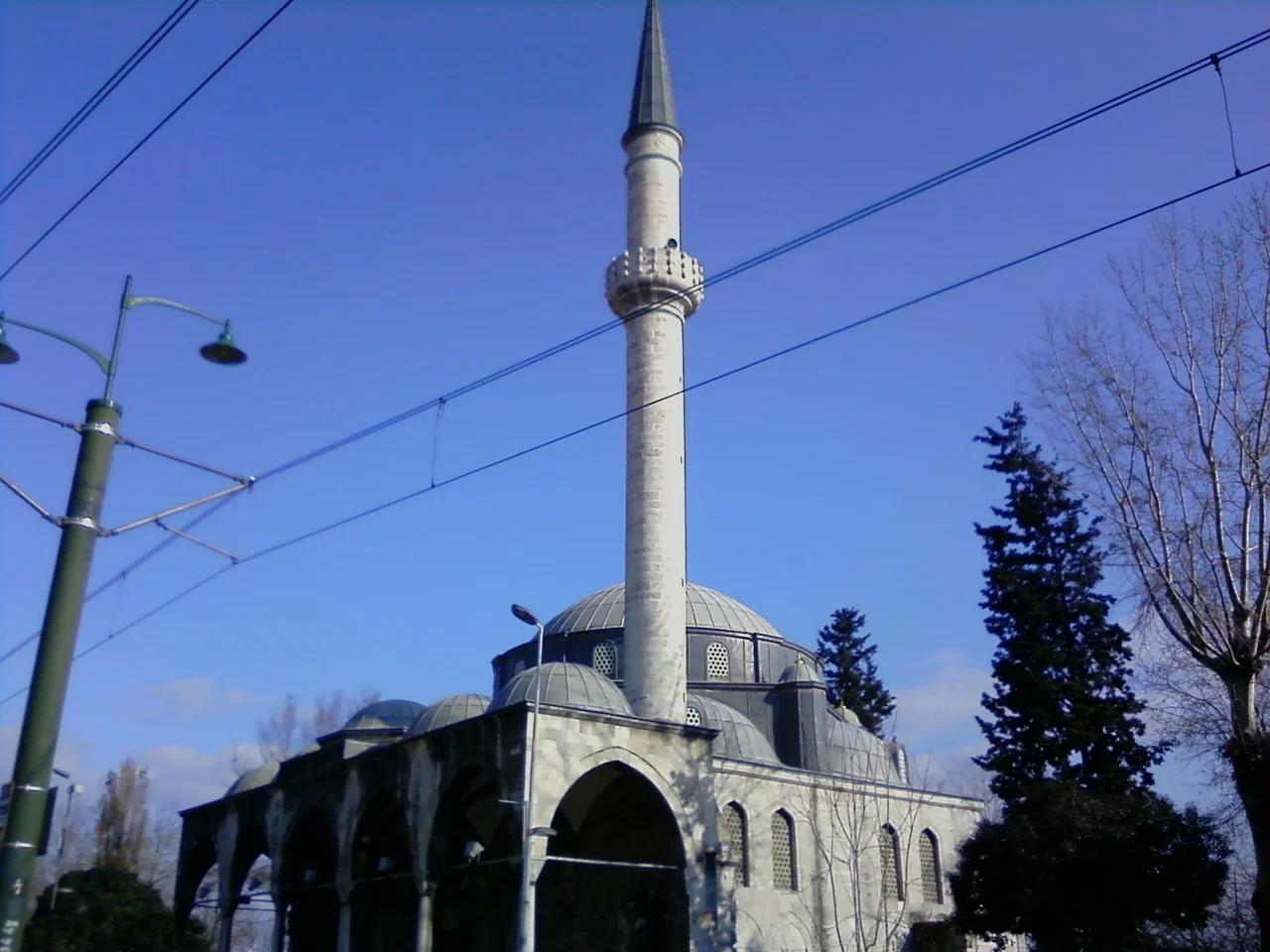

Molla Çelebi Mosque
The Bosphorus has a way of making everything it reflects look better. But the Molla Çelebi Mosque on the Fındıklı shore — also called Fındıklı Camii, or simply "the Hazelnut" — earns its reputation independently of the water behind it. Designed by the imperial architect Mimar Sinan in the sixteenth century, commissioned by Kazasker Mehmet Vusuli Efendi, the chief judge of Istanbul, it stands on Meclisi Mebusan Street where the European bank of the Bosphorus meets the city's middle. At evening, when the sun drops toward the Asian hills and the strait turns amber and gold, the mosque's stone catches the light in a way that visitors have been noting for centuries.
Sinan on a Difficult Shore
Mimar Sinan completed hundreds of buildings across the Ottoman Empire, but the Molla Çelebi Mosque presented a particular problem: the site was shallow. The Fındıklı waterfront does not allow for the kind of depth that Sinan's grandest mosques rely on — the long approach, the forecourt that prepares the eye, the gradual revelation of the dome. Here he had to work with a compressed north-south axis, a plot that was wider than it was deep. His solution was to project the mihrab — the prayer niche that indicates the direction of Mecca — into an apse extending outward from the middle of the qibla wall. This was, according to architectural historians, the first time Sinan used this specific arrangement. The apse creates interior depth without requiring more exterior footprint: a small innovation with lasting influence.
The Hazelnut on Meclisi Mebusan
The mosque has acquired several names over the centuries. Molla Çelebi Mosque, after its patron's honorific title, is the formal one. Fındıklı Mosque refers to the neighborhood, Fındıklı itself meaning hazelnut — the trees that once lined this stretch of shoreline. "The Hazelnut," used affectionately by locals, captures something of the building's character: compact, smooth, quietly satisfying. The entrance arcade has four domes; a single slim minaret rises at the right corner, with a sherefe — the projecting balcony from which the call to prayer is given — partway up. The sides of the building are covered by semi-domes that help the structure breathe laterally, compensating for what it lacks in depth.
Color on Stone
The interior rewards close attention. The minbar, the elevated pulpit from which the imam addresses the congregation, is decorated with kalem işi — polychrome wall painting, applied with fine brushwork, in patterns that combine geometric precision with organic movement. The mihrab in its projecting apse echoes the same decorative vocabulary, so that the two focal points of the prayer hall — pulpit and niche — speak to each other across the carpeted space. Ottoman mosques of the classical period could be austere in their stonework and exuberant in their tile and paint; the Molla Çelebi Mosque falls on the exuberant side, the color holding up after more than four centuries of Istanbul's weather and light.
Between the Funicular and the Ferry
Today the mosque sits at a busy intersection of modern Istanbul — the Kabataş funicular station is close by, the ferry port just down the shore, the tramway a short walk away. From the waterside, looking back toward the building from a ferry deck or from the Bosphorus crossing, the mosque reads clearly against the urban texture behind it: white stone, dome, minaret, the familiar silhouette. The neighborhood has grown dense around it since Sinan's time, the wooden houses and gardens replaced by concrete and glass, but the mosque remains the same scale it has always been. Sinan built for the long view. The Bosphorus still delivers it.
From the Air
The Molla Çelebi Mosque is located at 41.0321°N, 28.9906°E on the European waterfront of the Bosphorus strait, in the Fındıklı neighborhood of Beyoğlu. From the air, the Bosphorus is the dominant landmark — the mosque sits right on the waterfront, a few hundred meters north of the Dolmabahçe Palace complex and south of the Kabataş ferry terminal. The single minaret and dome are visible against the shoreline at low to medium altitudes. Istanbul Airport (LTFM) is approximately 25 kilometers to the northwest. For the best aerial view, approach from the Bosphorus at 1,500–2,500 feet, looking east toward the Asian shore.
Nearby Stories
- Kocaeli Peninsula 7.6 km away
- Second Battle of Çatalca 11 km away
- Istanbul's Rural Outskirts 14 km away
- MV Struma 20 km away
- HMAS AE2 36 km away
- Bursa 66 km away
- Sangarius Bridge 71 km away
- Januarius MacGahan 101 km away