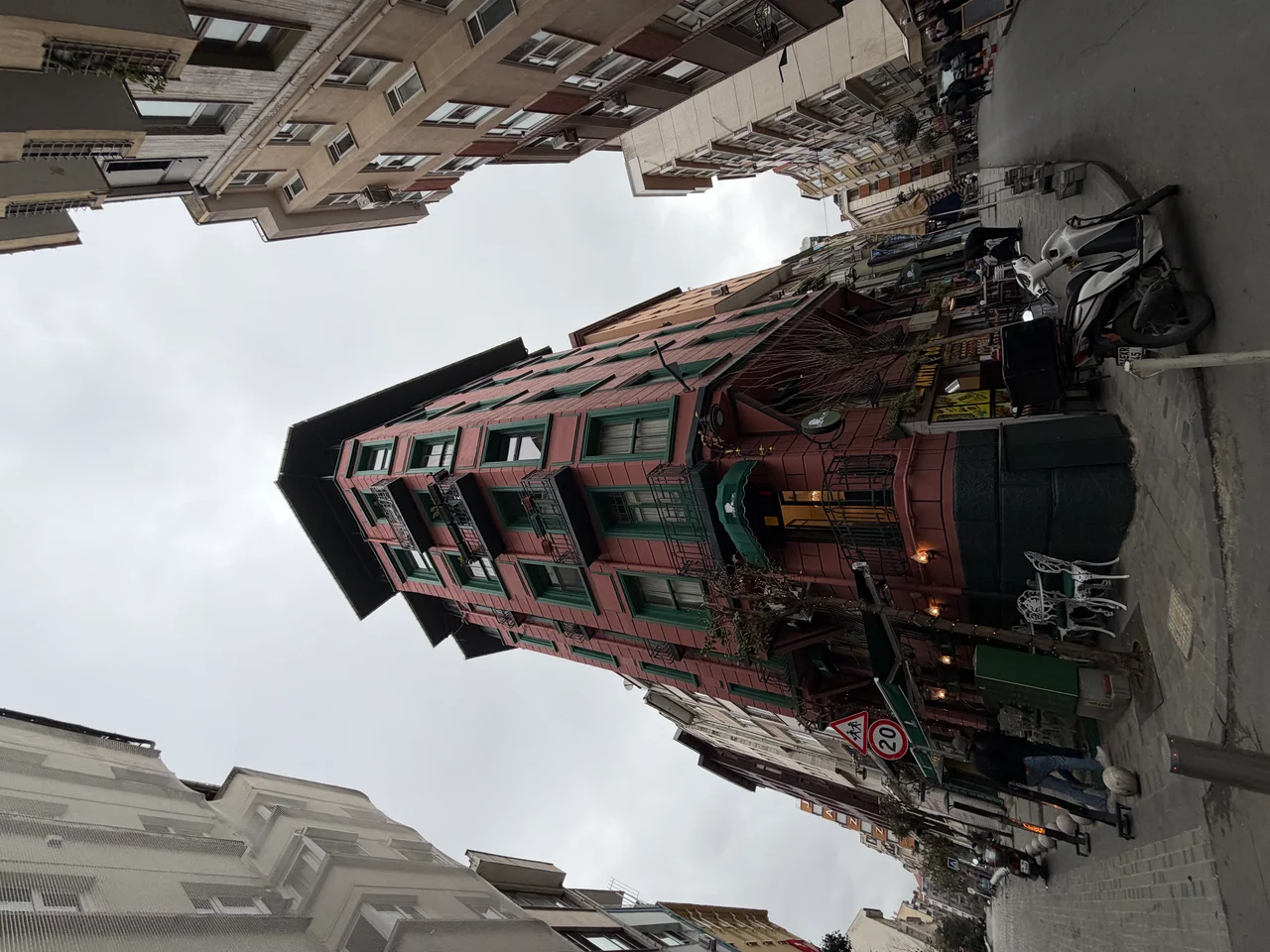

Nişantaşı
The neighborhood is named for stones that marked where arrows fell. In the Ottoman era, when sultans and nobles practiced archery on the open ground north of the old city, inscribed stones were set at the landing points of notable shots — recording the archer's name, the date, and the distance. Nişantaşı: 'aiming stone' or 'target stone' in Turkish. Some of those stones still stand in the quarter today, small obelisks with Ottoman inscriptions that have outlasted empires, wars, and waves of fashion. Few neighborhoods announce their origins so precisely — or carry them so lightly.
Founded by a Sultan's Ambition
Nişantaşı as a formal residential quarter dates to the mid-19th century, when Ottoman Sultan Abdülmecid I decided to extend the city northward and encourage settlement on the open ground that had been used for archery practice. He erected a pair of small obelisks to define the quarter's boundaries, then commissioned two anchor buildings to give it civic identity: the Neo-Classical Teşvikiye Police Station and the Neo-Baroque Teşvikiye Mosque, completed in 1854.
The neighborhood's subsidiary name, Teşvikiye, is itself a piece of this history — the word means 'Encouragement' in Ottoman Turkish, a direct reference to the sultan's campaign to persuade Constantinopolitans to settle there. The mosque that anchors the quarter became a landmark in its own right. Two Ottoman archery target stones dating from the late 18th and early 19th centuries stand in its courtyard; a more famous example, known as Anıt Taş and shaped as a small obelisk, marks the corner of Teşvikiye Avenue and Vali Konağı Avenue nearby.
The Quarter That Absorbed the World
Nişantaşı's elegant apartment blocks — many built in the Art Nouveau and early 20th-century styles that still line its streets — became home to a cosmopolitan population that reflected the final Ottoman decades and the early Turkish Republic. Greeks, Jews, Armenians, and Levantine families established themselves alongside Turkish residents.
After the Balkan Wars of 1912–1913, many Turks from Macedonia, particularly from Thessaloniki (Selânik, an Ottoman metropolis until 1912), settled in the quarter. Among them was the family of the poet Nâzım Hikmet, who would become Turkey's most celebrated 20th-century literary voice. In 1923, following the Greek-Turkish population exchange, many Dönme — members of a community with complex Sephardic Jewish and Muslim roots — arrived from Thessaloniki and settled in the apartments left by departing Greek families. Their descendants still form a close-knit community in Nişantaşı today. The neighborhood has absorbed each wave of newcomers without fully losing the memory of those who came before.
Where Stories Are Set
Nobel laureate Orhan Pamuk grew up in Nişantaşı and lived there for much of his adult life. The neighborhood runs through his novels like a recurring character — its streets, apartment buildings, and social atmosphere form the physical and emotional landscape of works like 'The Museum of Innocence' and his memoir 'Istanbul.' For Pamuk, Nişantaşı was where the westernized Turkish bourgeoisie enacted its ambitions and anxieties, where modernity and memory lived side by side in the same apartment blocks.
Journalist Ece Temelkuran compared the quarter to Greenwich Village in Manhattan — a neighborhood that is simultaneously fashionable and intellectual, a place where writers and artists live among boutiques and restaurants without either camp quite colonizing the other. The comparison is apt: Nişantaşı has long been home to both serious culture and serious shopping, and it has never seemed embarrassed by the combination.
Notable Residents and Dark Moments
The Maçka Palas, an apartment building designed by Giulio Mongeri in 1922 that now houses the Park Hyatt Hotel, was home at various times to Celâl Bayar (Turkey's third president), the poet and politician Abdülhak Hamid Tarhan, and a goalkeeper for Galatasaray. Vedat Tek, one of the pioneers of the First National Architecture movement, designed and built his own house on Vali Konağı Avenue in 1913–14; its facade of lancet windows, tiled panels, and Seljuk-style stone roundels still stands.
Nişantaşı also holds a sombre place in modern Turkish history. In 1979, Abdi İpekçi — editor-in-chief of the newspaper Milliyet and one of Turkey's most respected journalists — was shot and killed near the Teşvikiye Mosque by Mehmet Ali Ağca, the man who two years later would attempt to assassinate Pope John Paul II in St. Peter's Square. A memorial marks the spot. The funeral of Ahmet Ertegun, the Turkish-American founder of Atlantic Records, was held in Istanbul in December 2006. History, in Nişantaşı, tends to arrive without announcement.
The Quarter Today
Today Nişantaşı is Istanbul's most consistently upmarket neighborhood: boutiques and international fashion brands line Abdi İpekçi Avenue (named for the slain journalist), department stores draw shoppers from across the city, and cafés fill the ground floors of those Art Nouveau apartment buildings. The wooded Maçka Park anchors the quarter's southern edge; the Beşiktaş ferry terminal is a short walk east, toward the Bosphorus shore.
The target stones stand where they have always stood, indifferent to the fashions around them. Tourists pass them on the way to boutiques without always noticing the Ottoman inscriptions that record a long-ago arrow's flight. But the stones are the neighborhood's oldest residents, and in a place this layered — sultan's archery ground, cosmopolitan apartment district, literary backdrop, political stage, fashion destination — that kind of depth is exactly what Nişantaşı offers to anyone who looks for it.
From the Air
Nişantaşı sits at approximately 41.052°N, 28.991°E in the Şişli district on the European side of Istanbul, roughly 3 km north of the Golden Horn. From Istanbul Airport (LTFM) approaching from the northwest, the district is visible as part of Istanbul's dense European urban fabric, situated inland from the Bosphorus and north of the Beyoğlu ridge. The Bosphorus Bridge (First Bosphorus Bridge, also called the 15 July Martyrs Bridge) is a useful landmark to the east, while Taksim Square and its distinctive circular road layout lie to the south. At 3,000 feet on a clear day, the wooded green of Maçka Park is identifiable at the quarter's southern edge. Istanbul Airport (LTFM) is the nearest major airport, approximately 35 km to the northwest.
Nearby Stories
- Kocaeli Peninsula 7.6 km away
- Second Battle of Çatalca 11 km away
- Istanbul's Rural Outskirts 14 km away
- MV Struma 20 km away
- HMAS AE2 36 km away
- Bursa 66 km away
- Sangarius Bridge 71 km away
- Januarius MacGahan 101 km away